
Stock lists
Rankings computed from market data and SEC filings, refreshed daily — measured, not opinions. Every list carries returns from 1 day to 5 years and sortable valuation columns.
Winners & losers
Top performing stocks
50 stocksThis year's 50 biggest large-cap winners. No penny-stock noise.
Stocks in a drawdown
How far every large cap trades below its 52-week high — and the last time it was this deep.
Worst performing stocks
50 stocksThe year's 50 biggest large-cap decliners. Someone has to be last.
Top performing ETFs
50 ETFsThe year's best ETF returns, leveraged and inverse funds excluded.
The biggest
Biggest capex spenders
100 stocksThe largest capital-expenditure budgets in absolute dollars — where the AI build-out actually shows up.
Biggest buyback programs
100 stocksThe most cash spent repurchasing stock over the trailing year, net of shares issued.
Biggest companies by market cap
100 stocksThe top 100 by market cap — and the trillion-dollar club.
Biggest companies by revenue
100 stocksRanked by actual sales from SEC filings. A very different top 10.
Most profitable companies
100 stocksThe top 100 by bottom-line profit. Revenue is vanity; this is the scoreboard.
Biggest companies by free cash flow
100 stocksCash actually generated after capex — the strictest of the size rankings.
Biggest ETFs
50 ETFsThe 50 largest ETFs by assets, with what they cost to own.
Income & value
Highest realized shareholder yield
50 stocksShares actually retired plus dividends — the cash-over-market-cap version flatters fallen stocks.
Highest fundamental return
50 stocksEarnings growth plus cash returned — the annual return the business made, before any re-rating.
Highest realized buyback yield
50 stocksShares actually retired over the past year — the buyback measure a collapsed stock price can't flatter.
Highest dividend stocks
50 stocksThe 50 highest dividend yields among US-listed large caps, each one checked against dividends actually paid in the past year.
Dividend growth stocks
50 stocksLarge caps that have raised the dividend every year for 10 or more years, ranked by how fast the payment has grown over five years.
25+ years of dividend increases
Every US-listed large cap that has raised its dividend for 25 or more consecutive years in our record, longest streak first.
Monthly dividend stocks & ETFs
Every stock and fund in the universe that pays twelve times a year, ranked by yield — covered-call income funds, bond funds and the monthly-paying REITs.
Value stocks
50 stocksThe cheapest large caps by earnings multiple — double-checked across two data sources.
Cheapest by price to free cash flow
50 stocksLow P/FCF large caps — the cash-based sibling of the value screen.
Sectors & themes
Magnificent 7
7 stocksThe seven megacaps that drive the market — Apple, Microsoft, Alphabet, Amazon, Nvidia, Meta, Tesla.
Dow Jones stocks
30 stocksAll 30 members of the Dow Jones Industrial Average, with returns and valuations.
AI stocks
35 stocksThe AI build-out, measured — chips to power plants, one table.
Semiconductor stocks
23 stocksThe chip industry end to end — designers, the foundry and equipment chain, memory, analog.
Energy stocks
The complete S&P 500 energy sector, yields included.
Tech stocks
All 71 S&P 500 tech stocks, from semis to software.
More visualizations
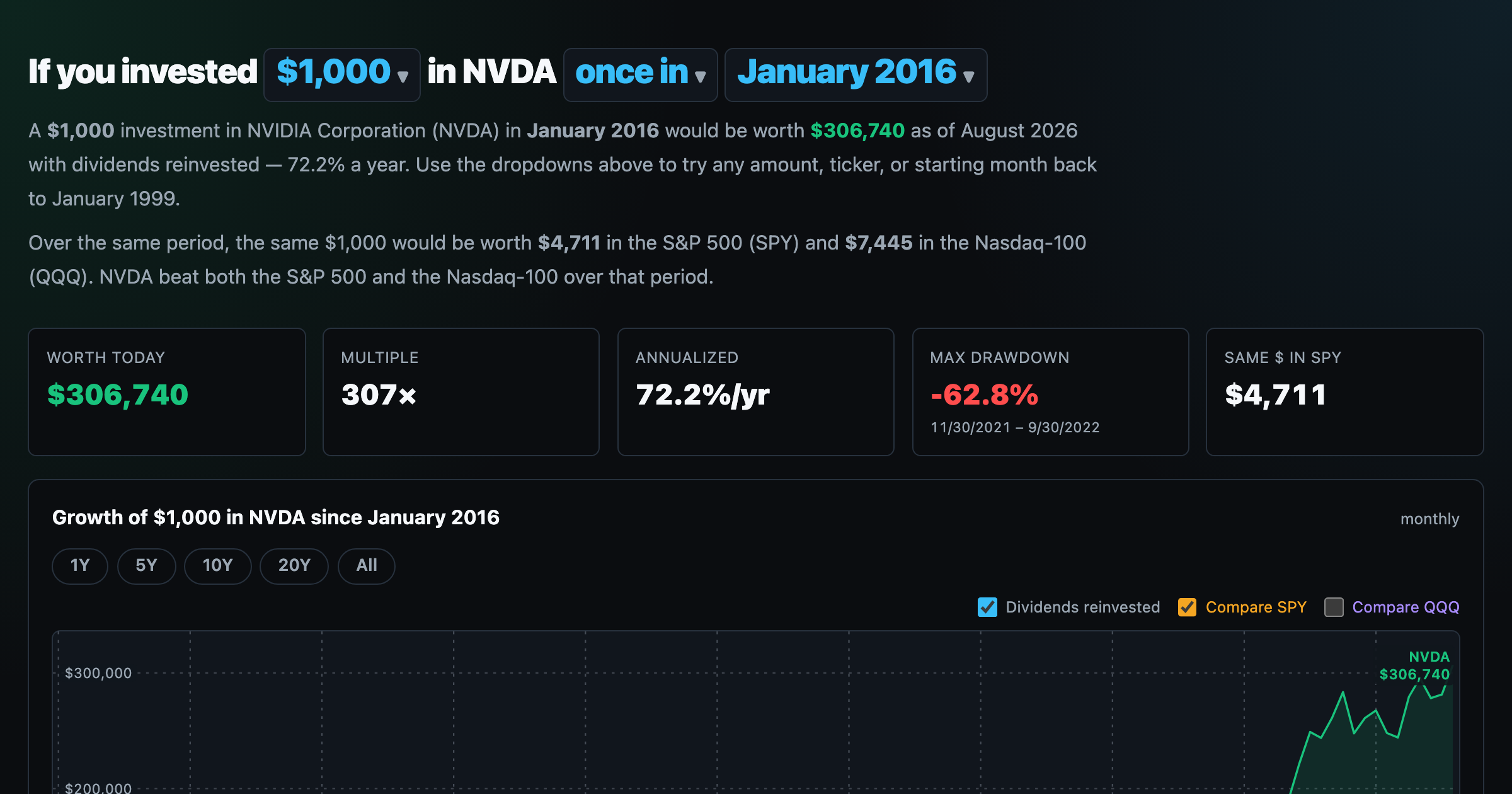
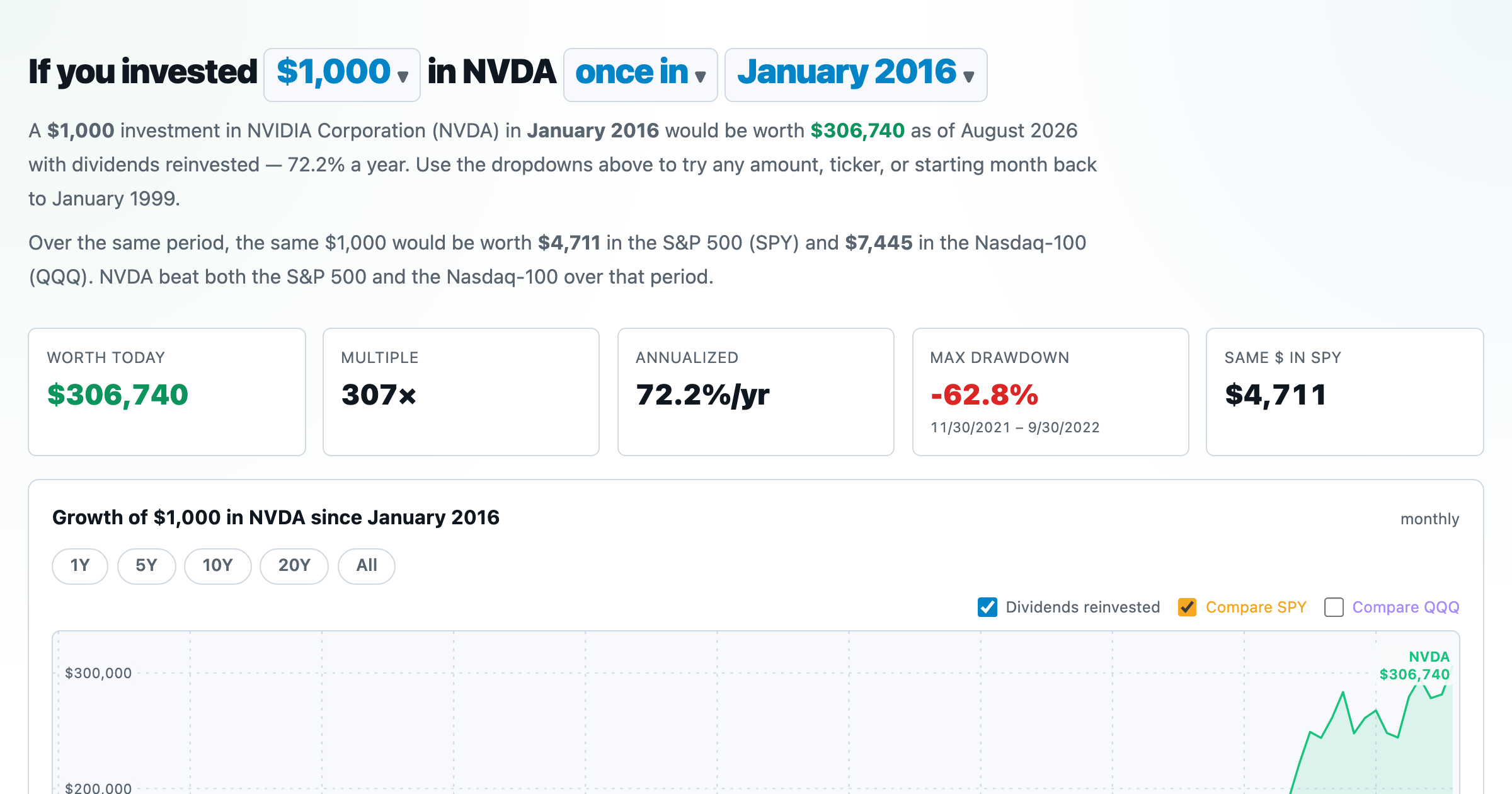
What $1,000 in any stock or ETF would be worth today.
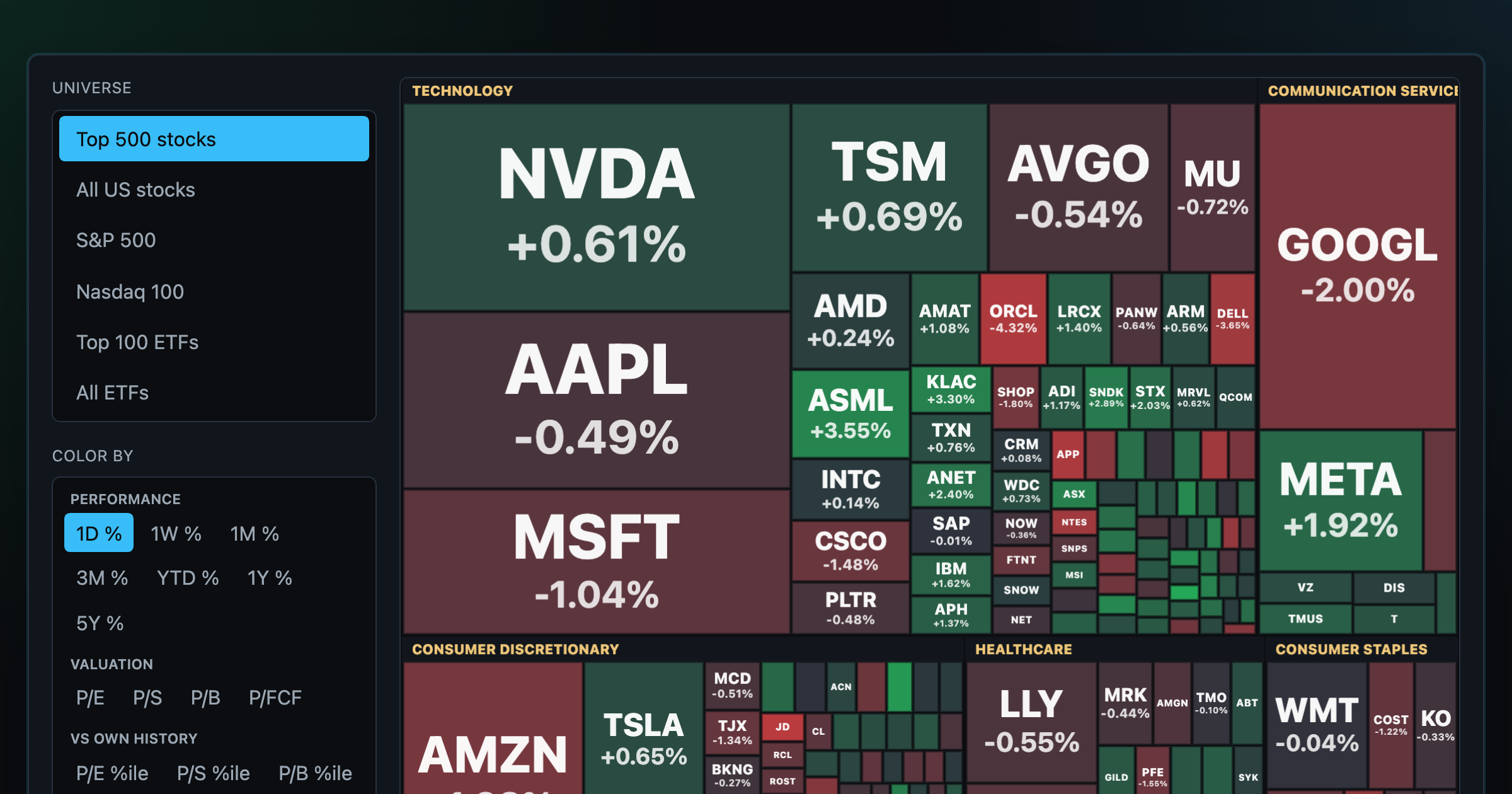
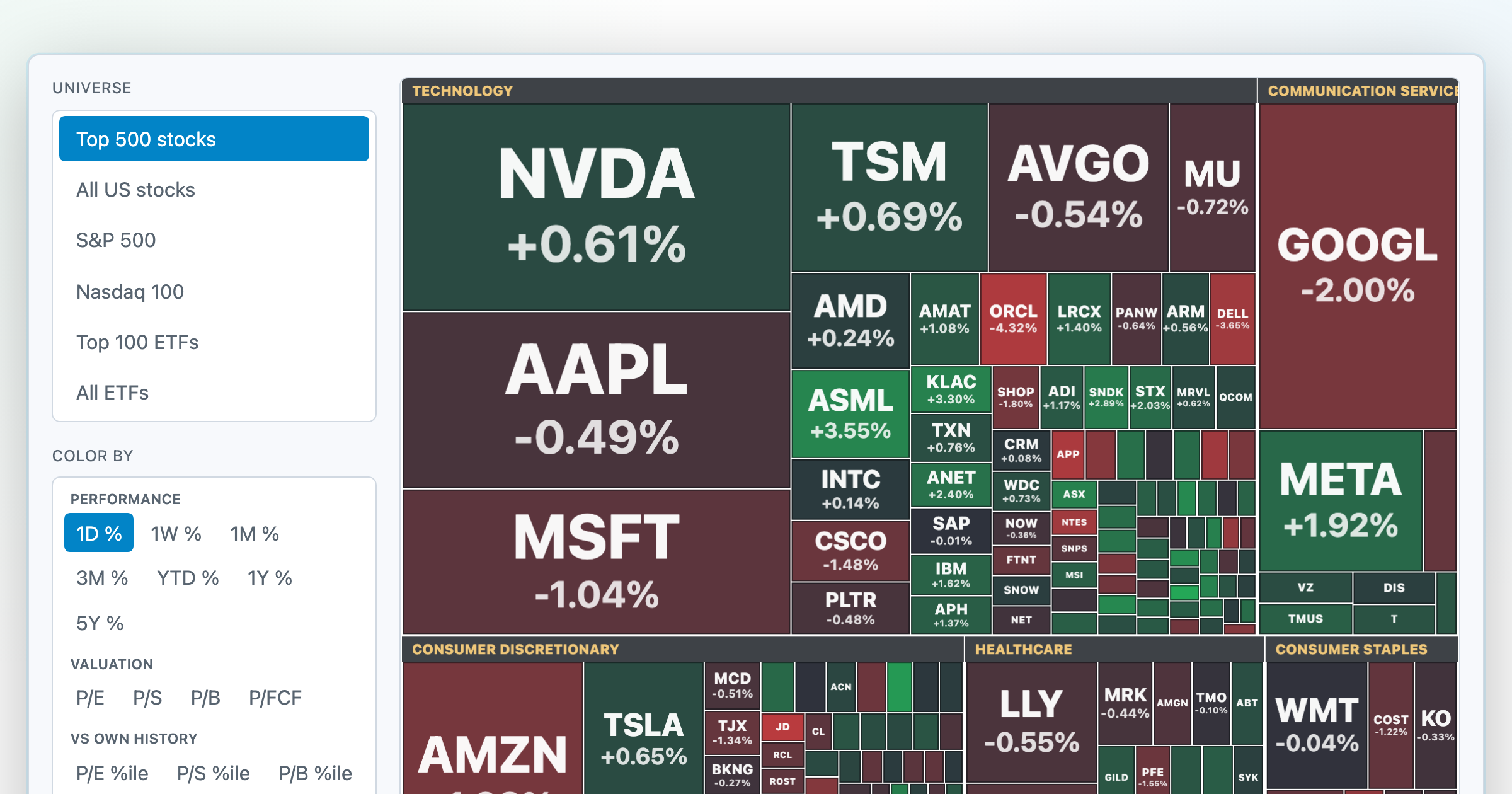
Every S&P 500 company sized by market cap — color by return or valuation.
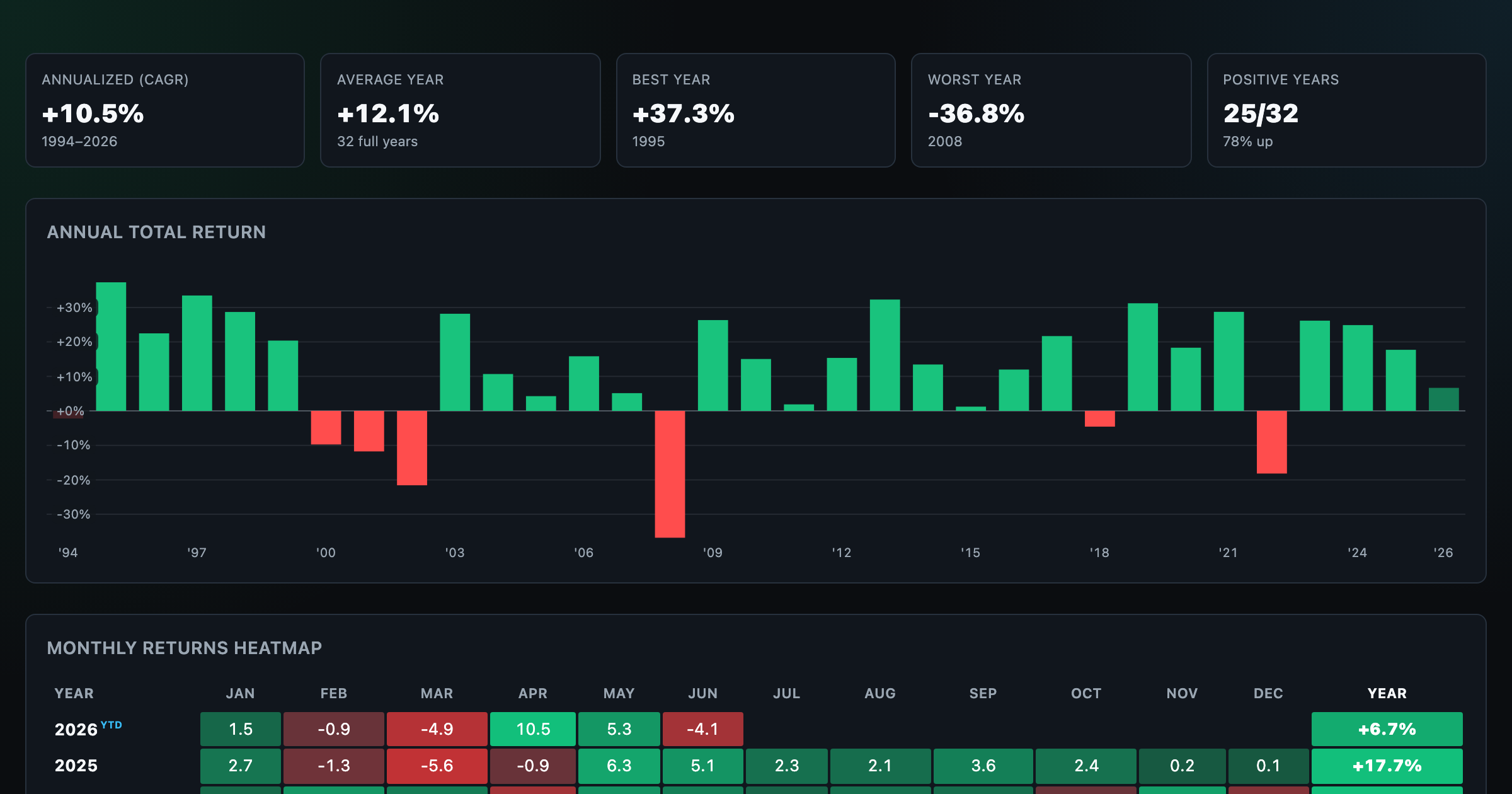
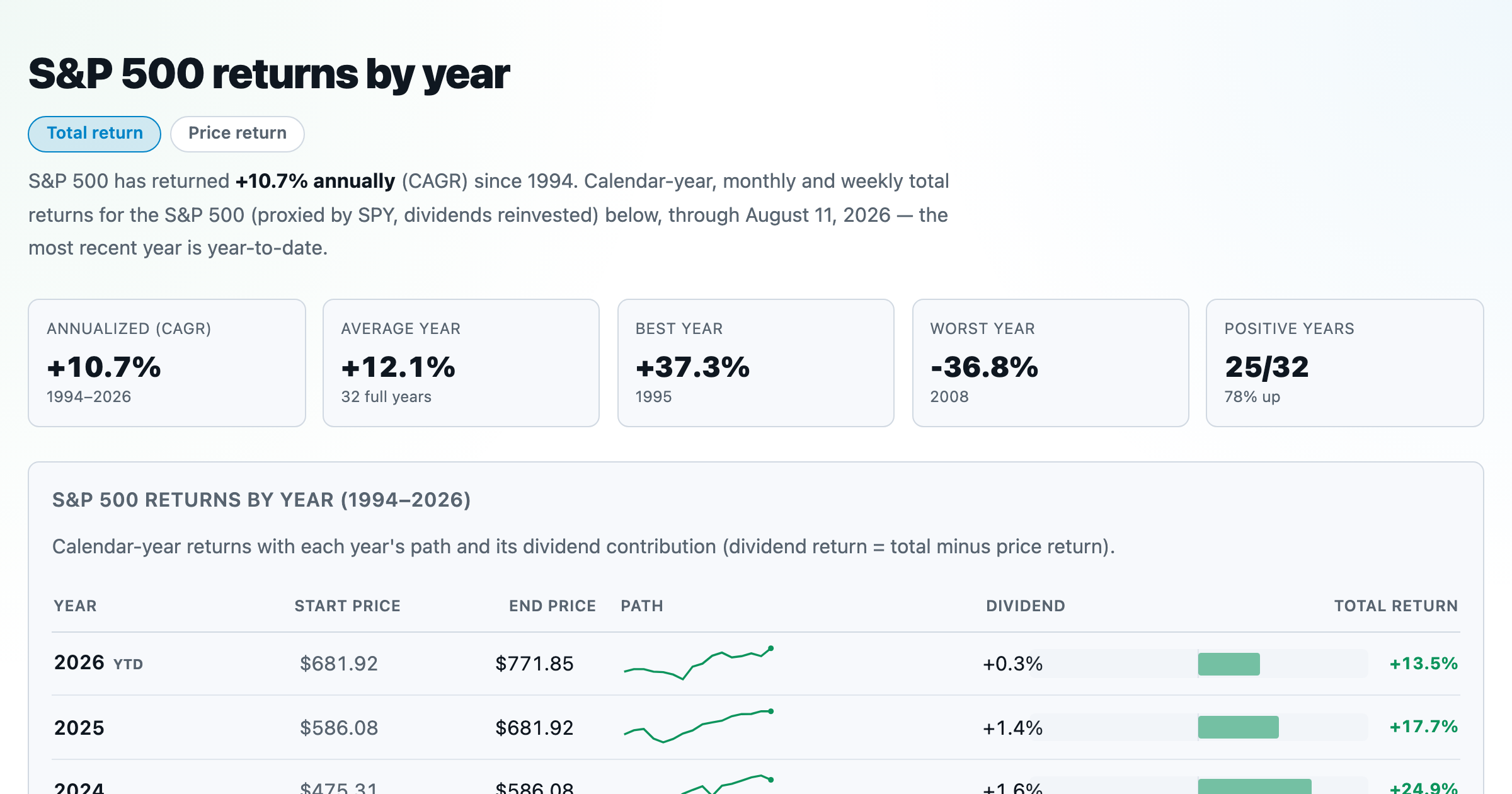
S&P 500 returns by year, month, week and trailing period — total or price return.
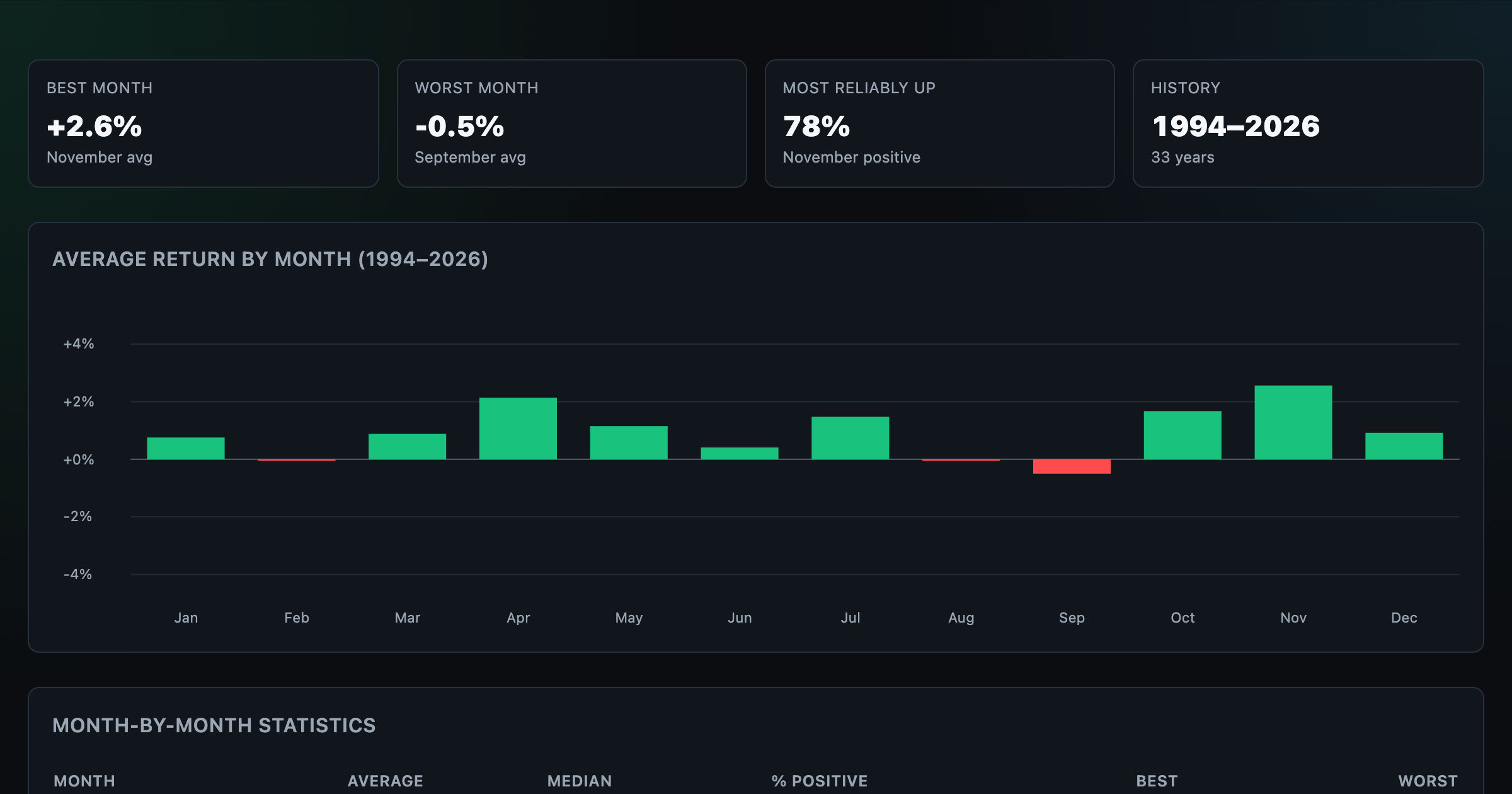
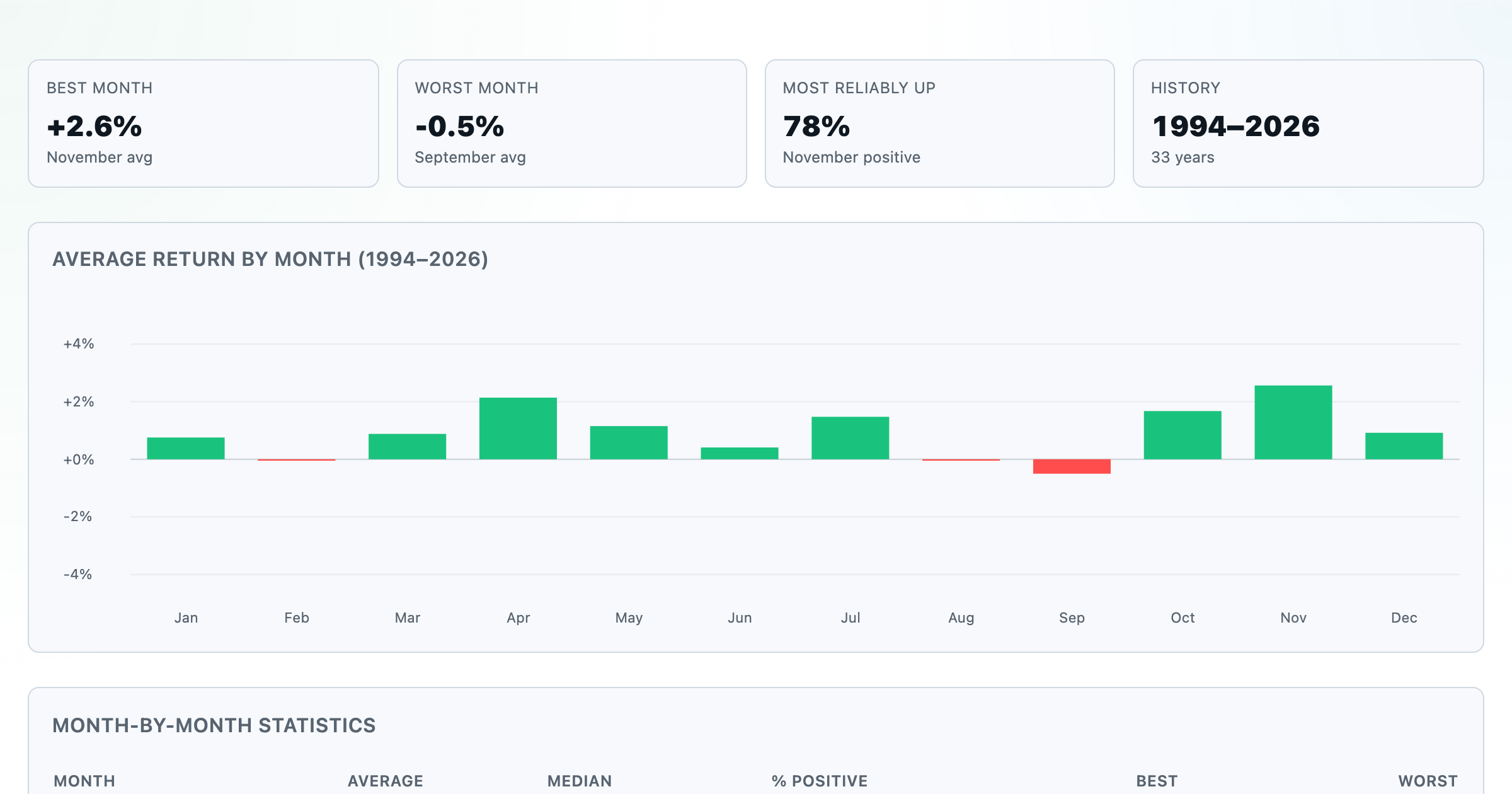
Which month is best for stocks? Average return of every calendar month, for any ticker.
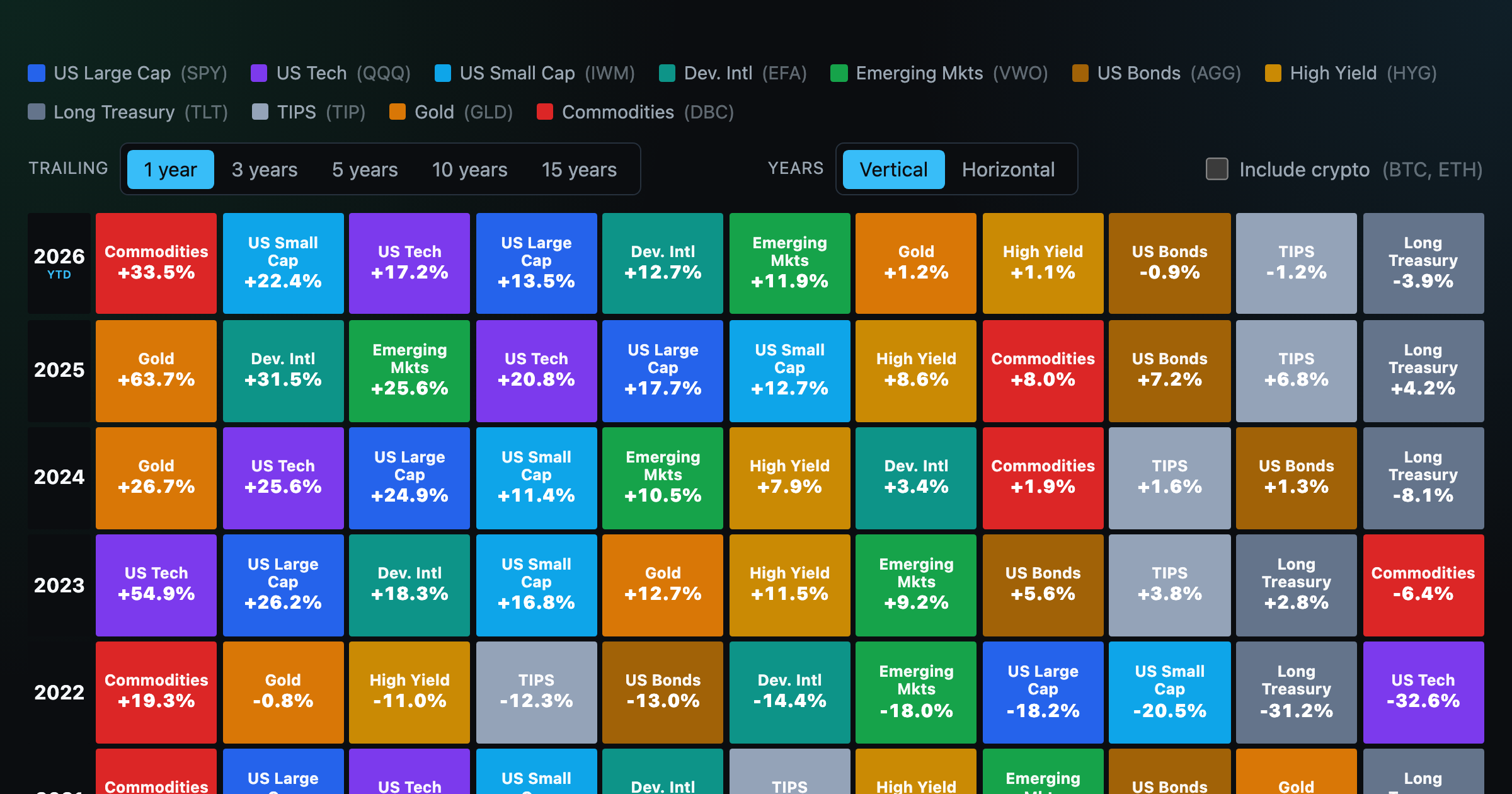
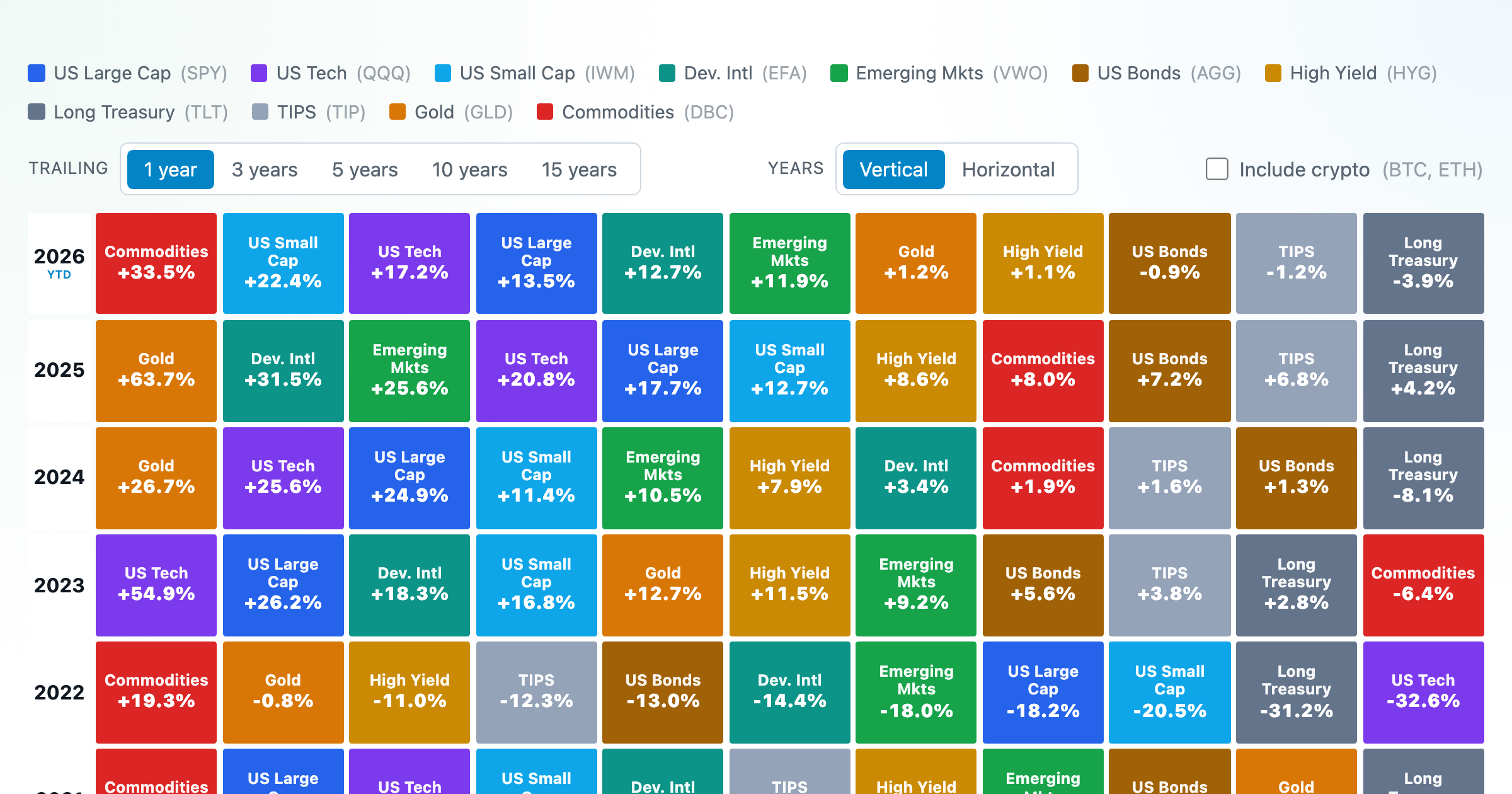
Asset-class returns ranked year by year — the Callan chart / asset allocation quilt.
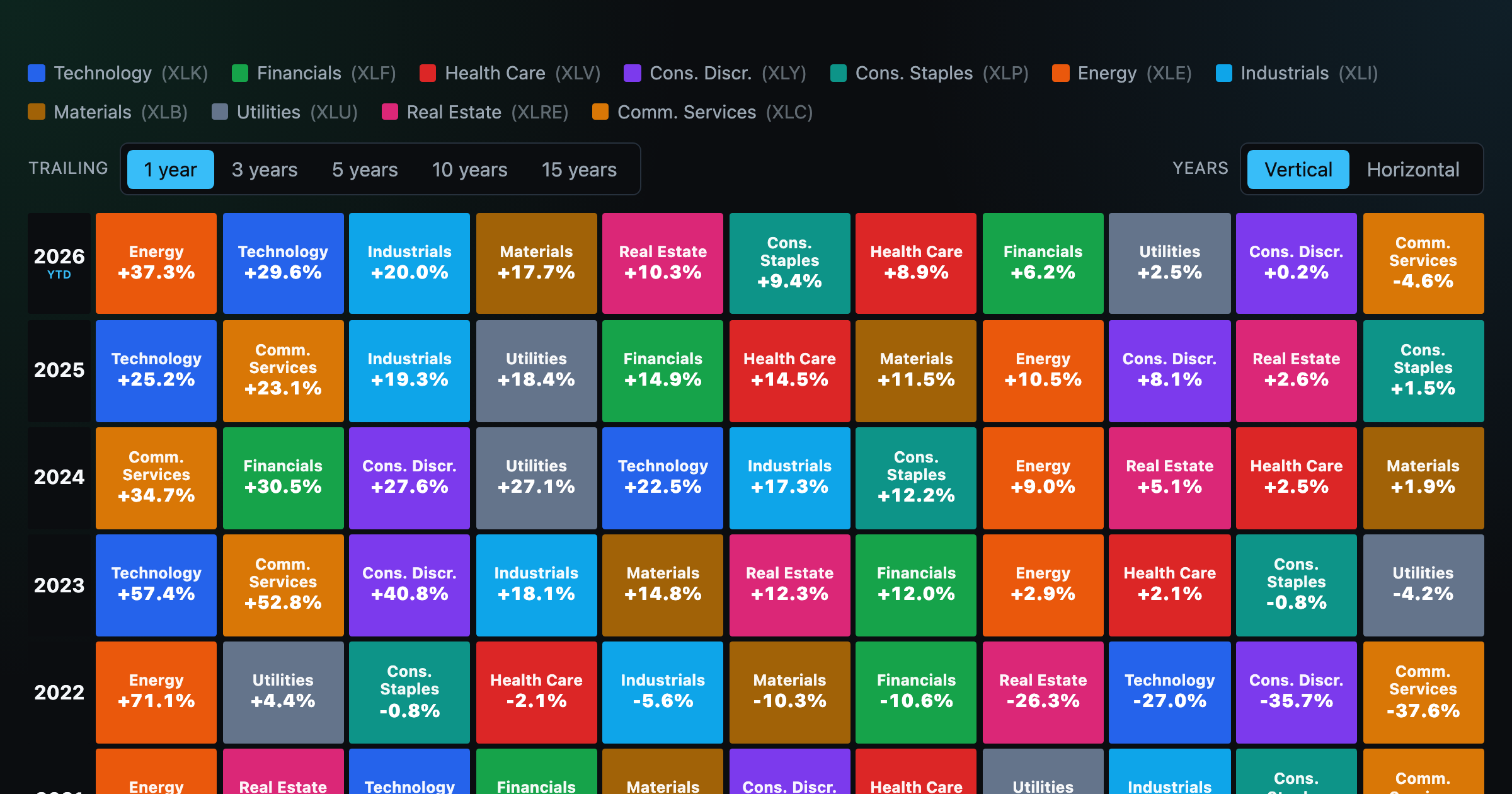
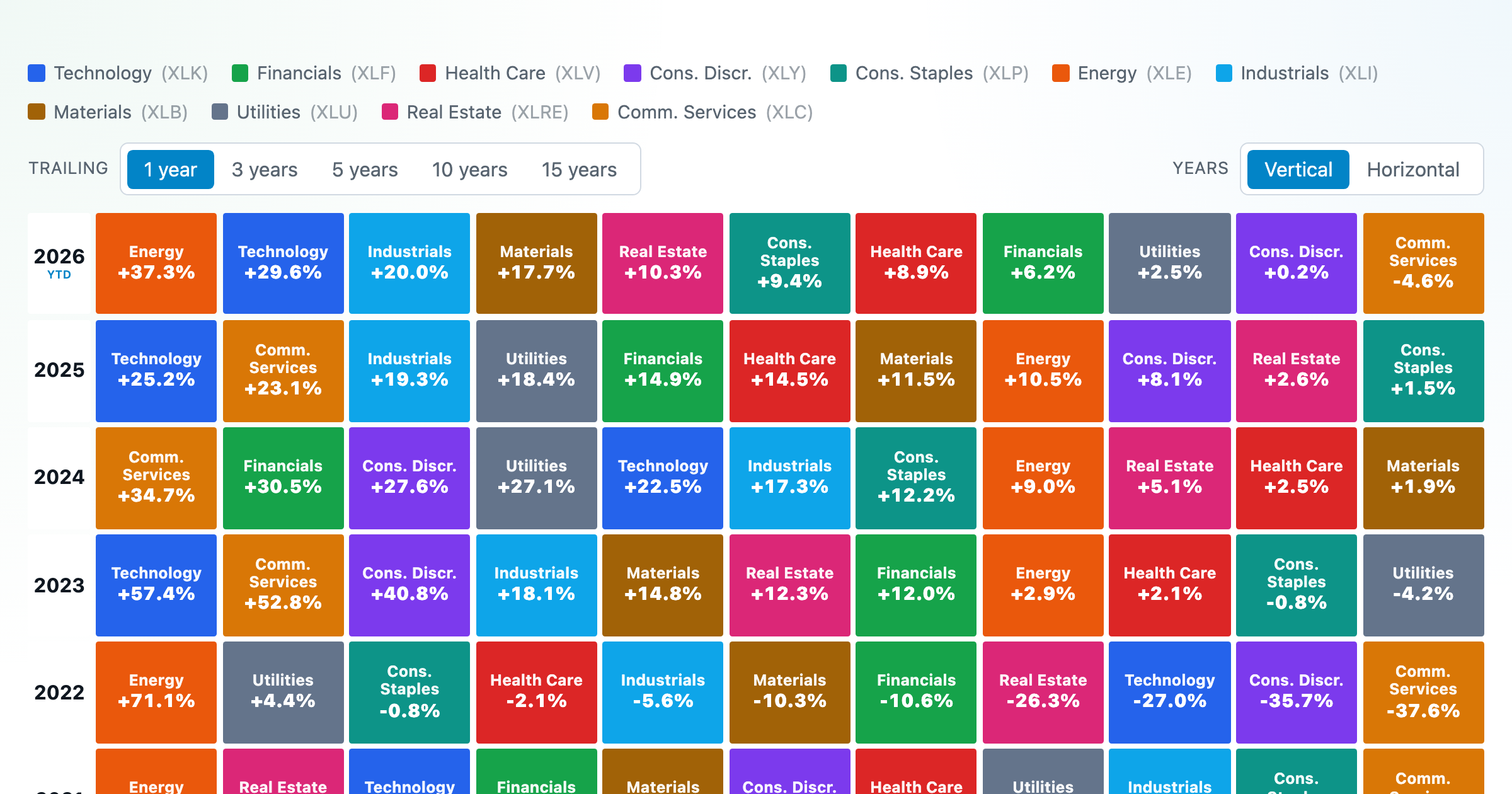
The 11 S&P 500 sectors ranked year by year — a sector quilt chart, back to 1999.
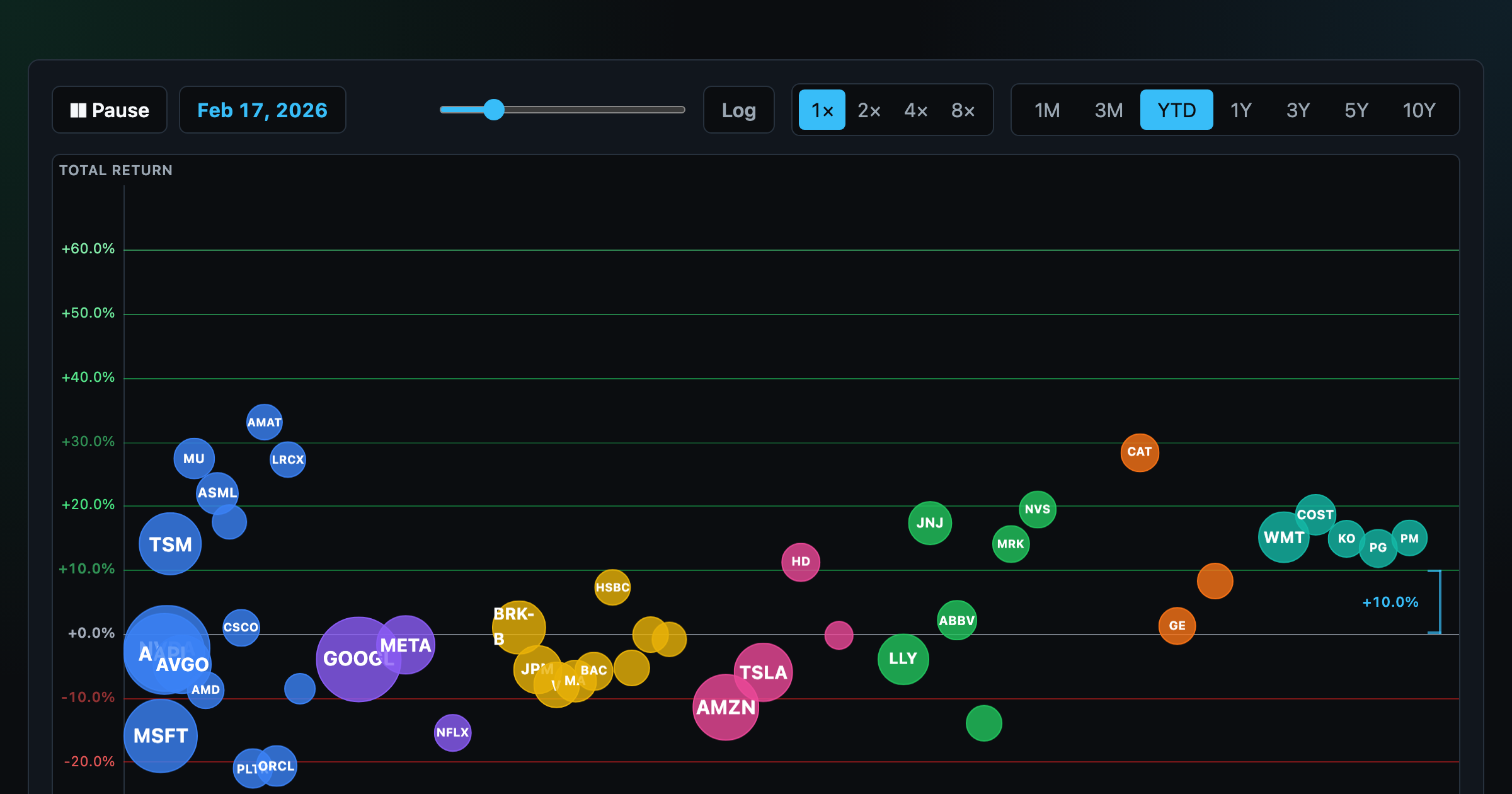
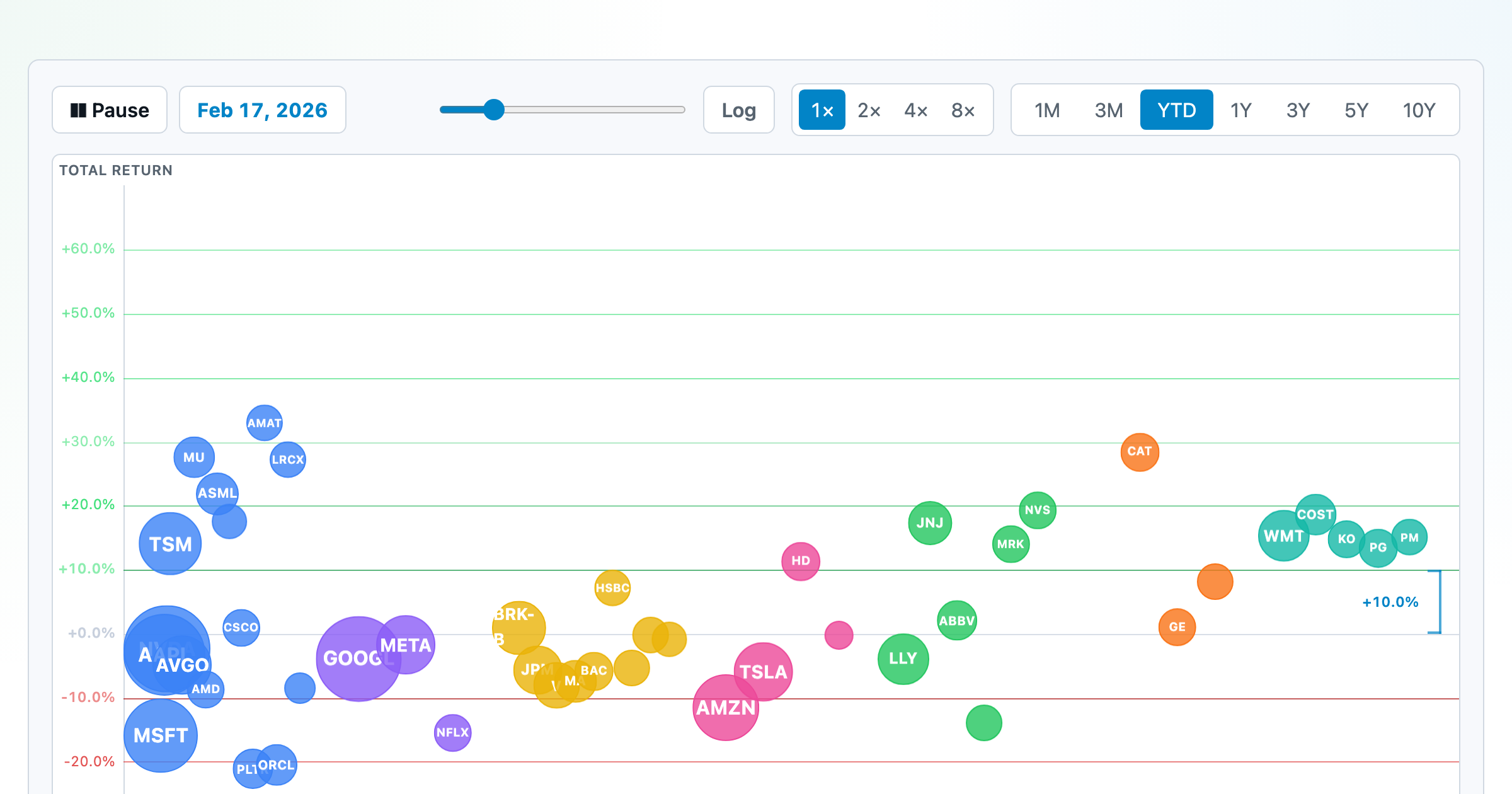
The biggest US companies as animated bubbles, rising and falling with their total return over time.
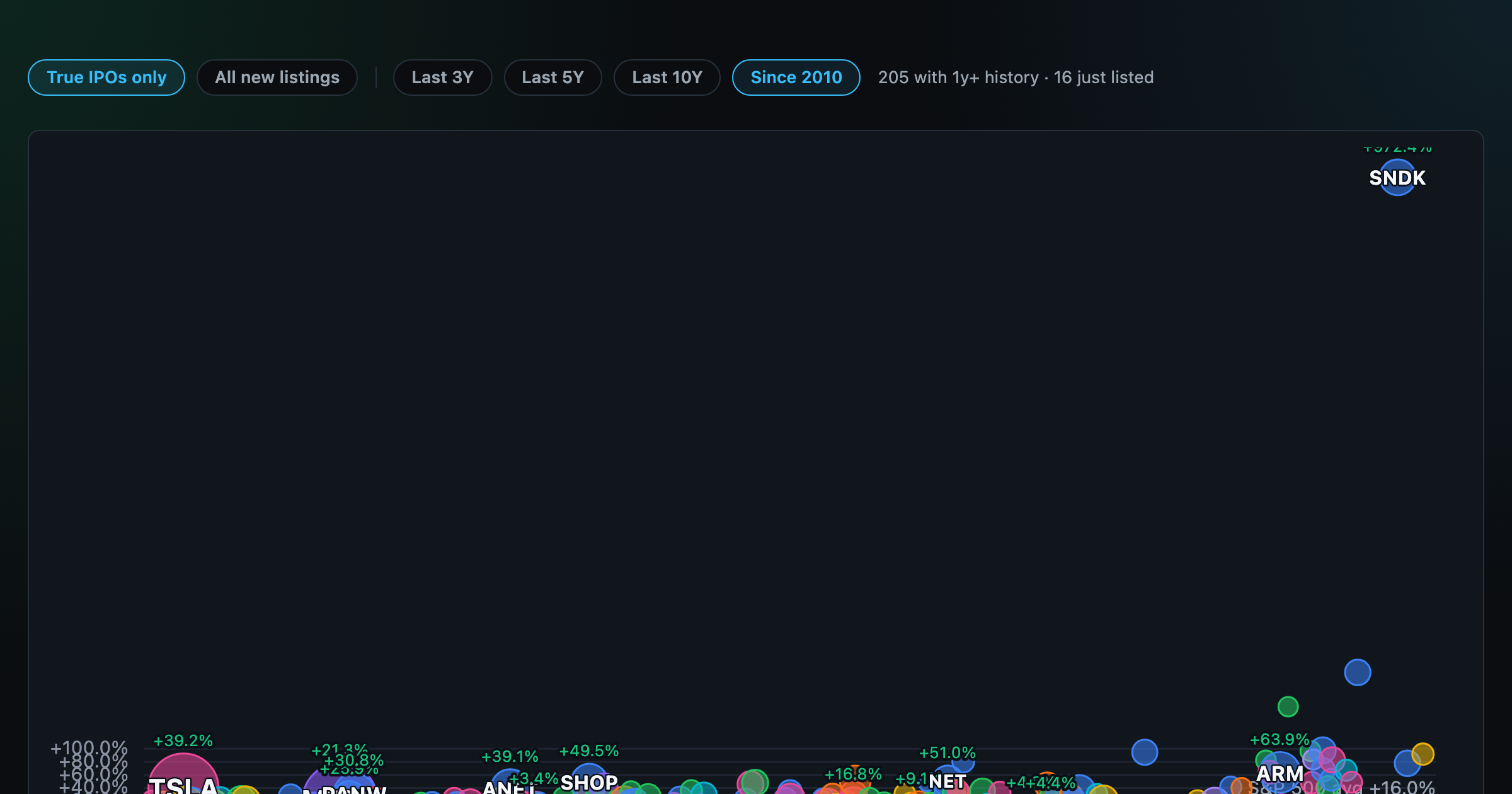
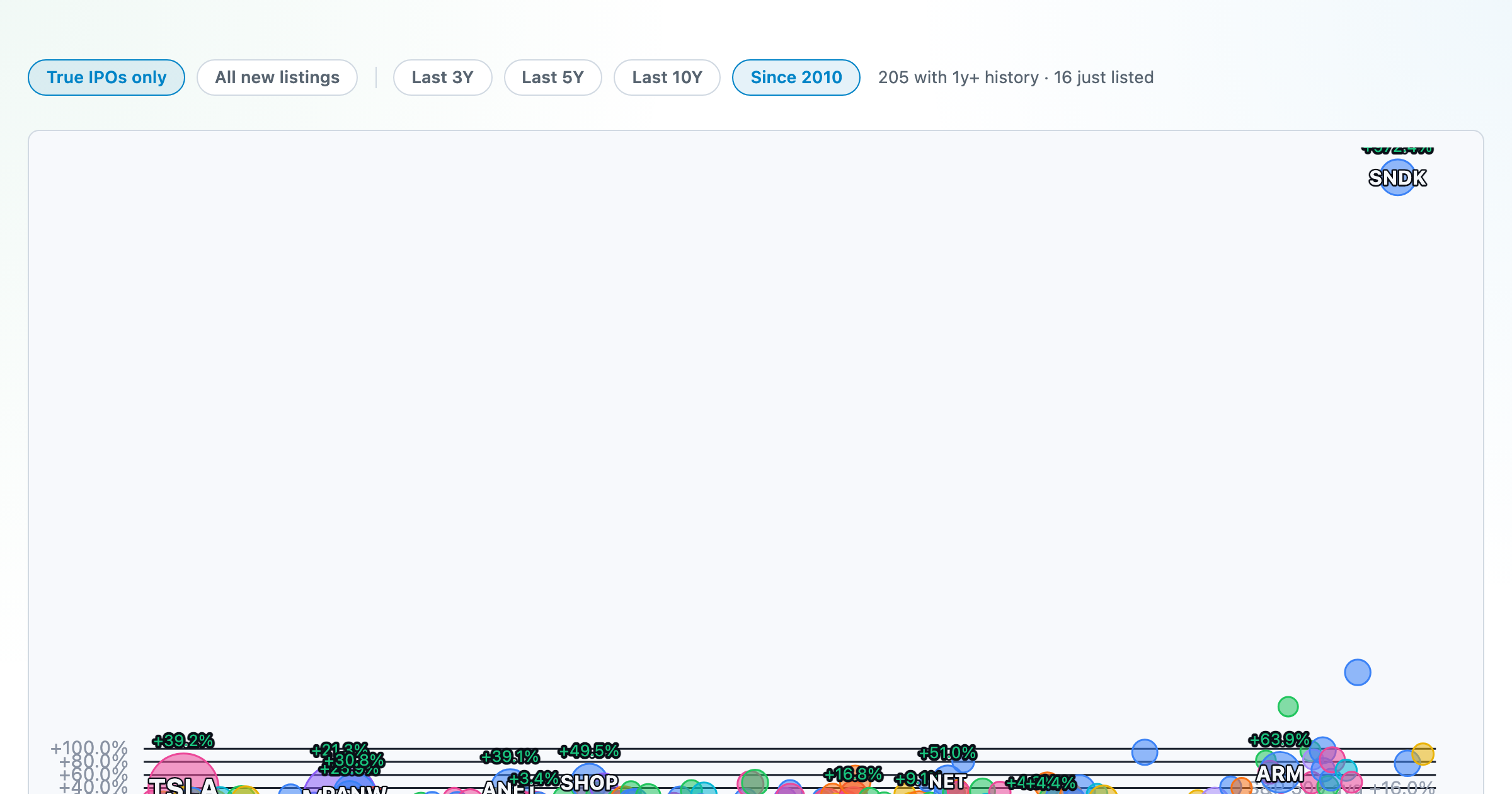
How recent stock-market debuts have performed since listing — annualized, vs the S&P 500, by IPO vs spin-off.
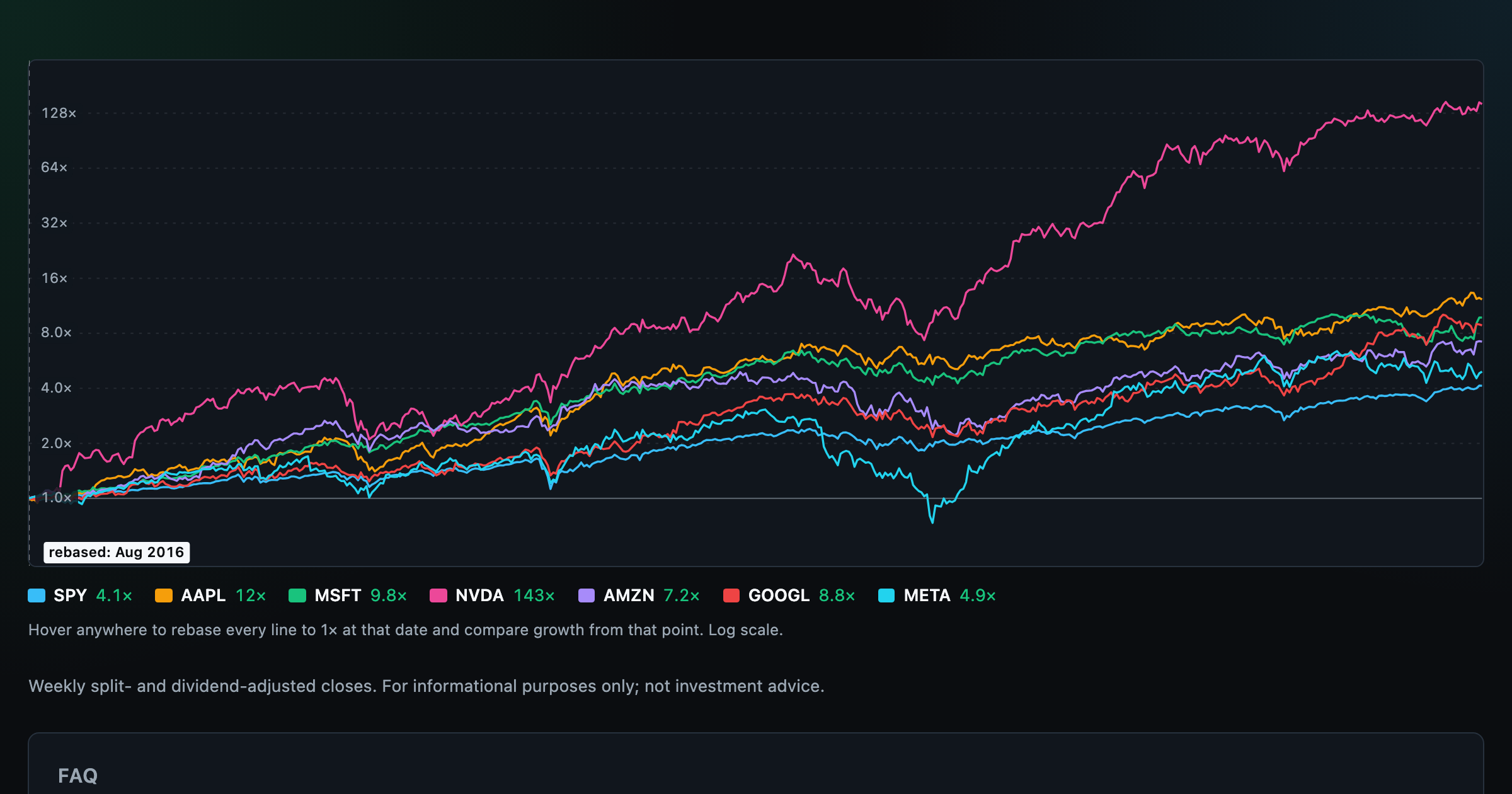
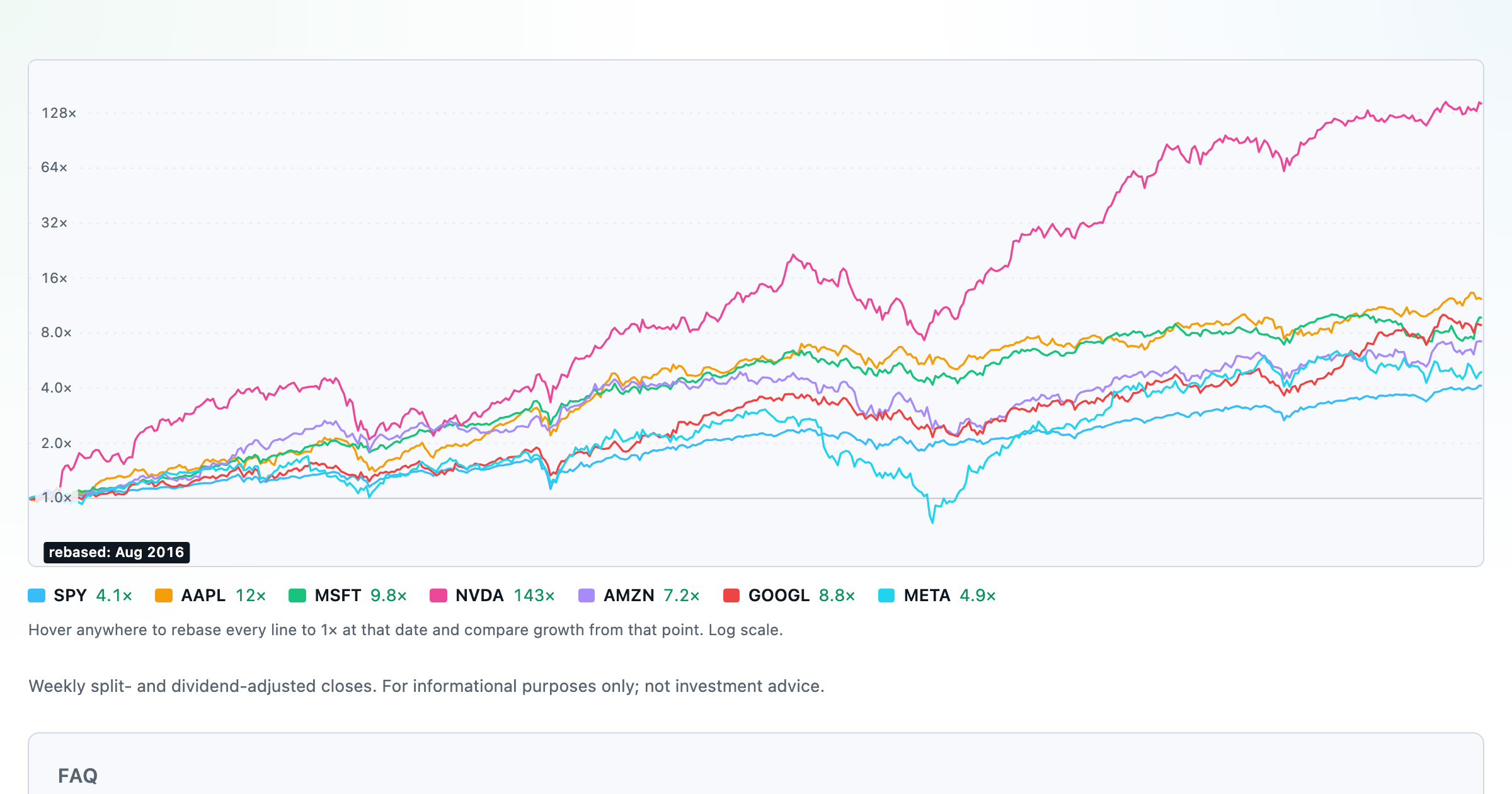
Compare megacaps vs the S&P 500, rebased to 1× at any date you hover.
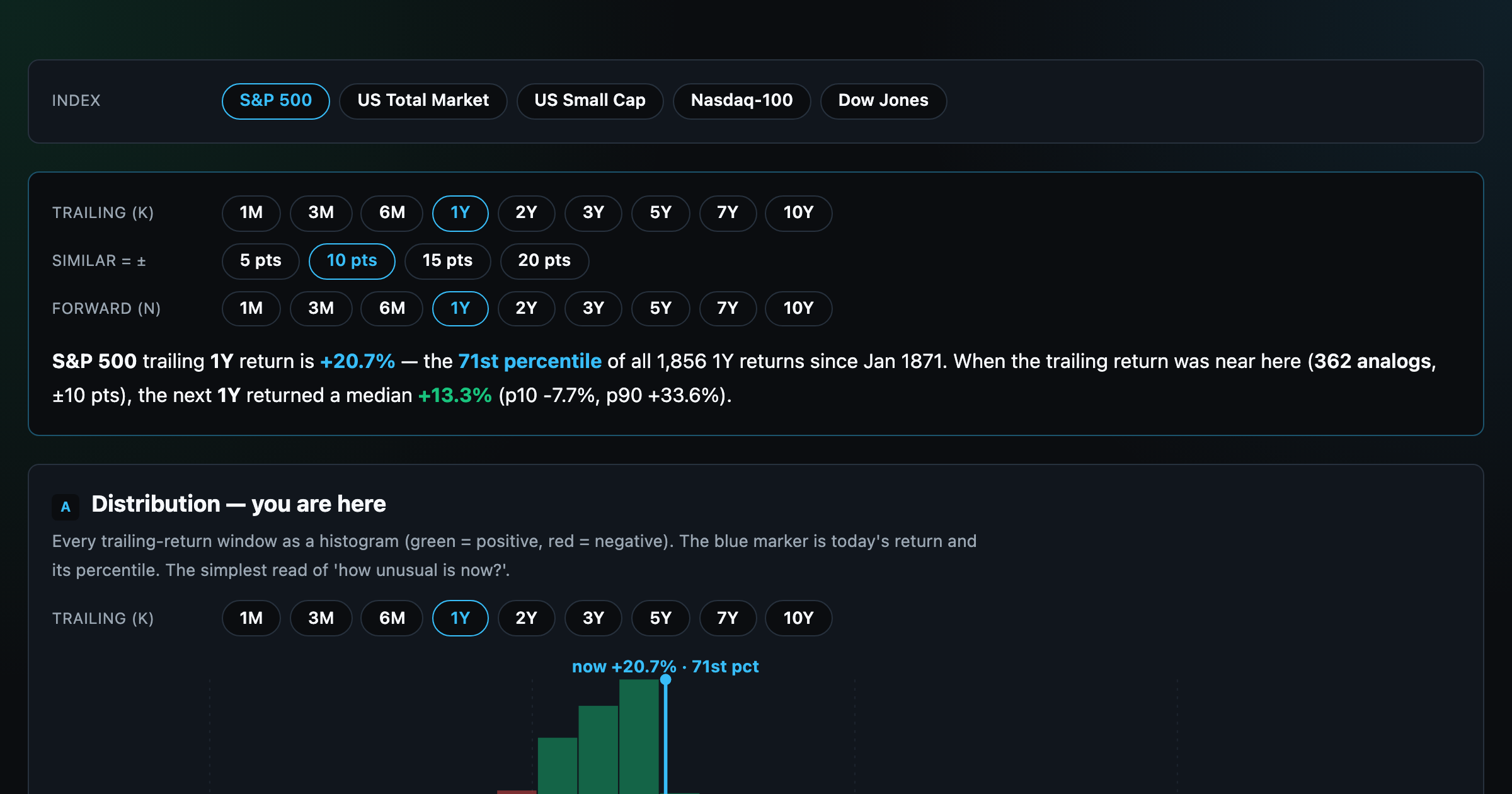
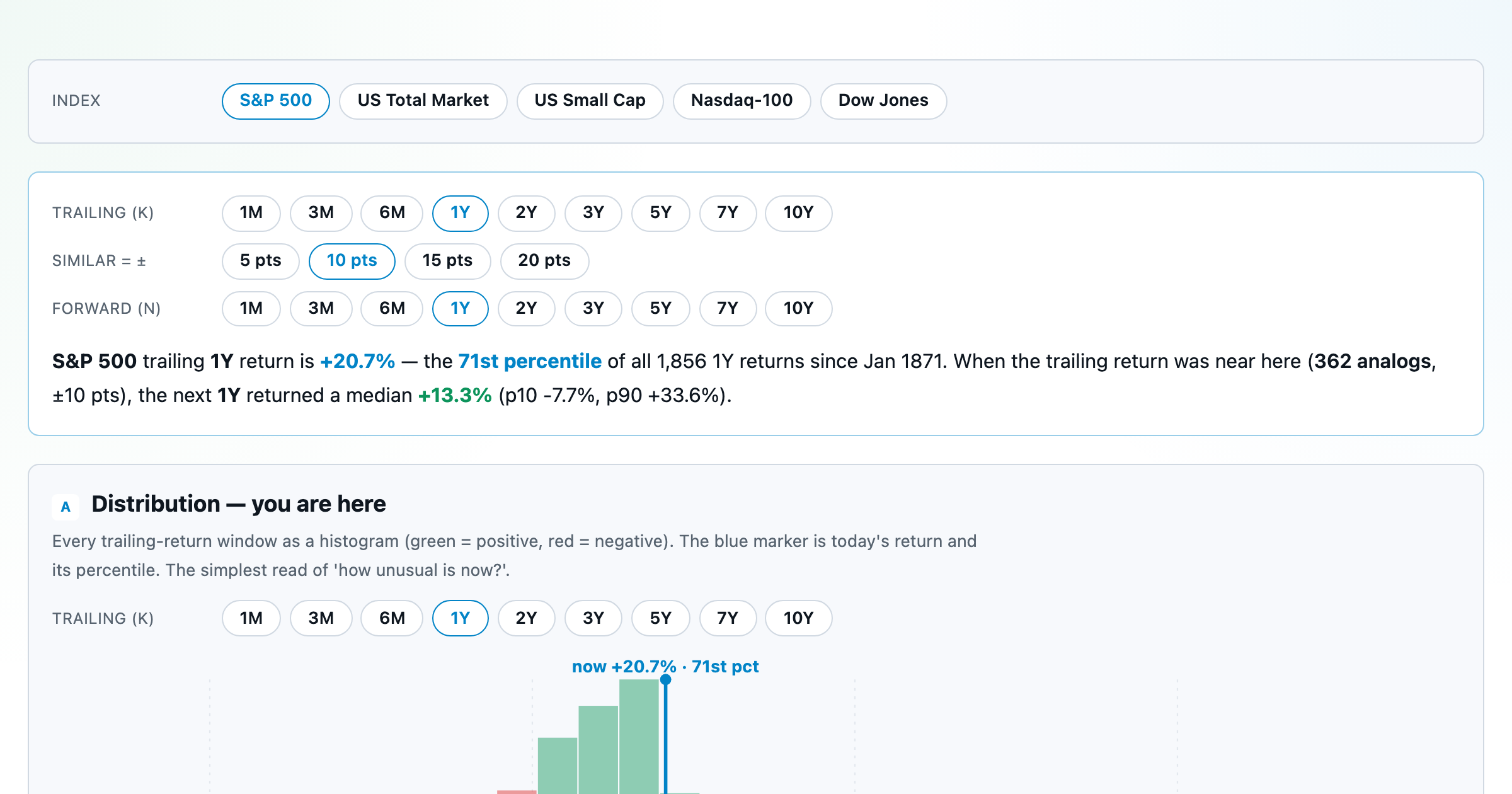
Where today's S&P 500 return ranks against all history — and the forward returns that followed similar moments.
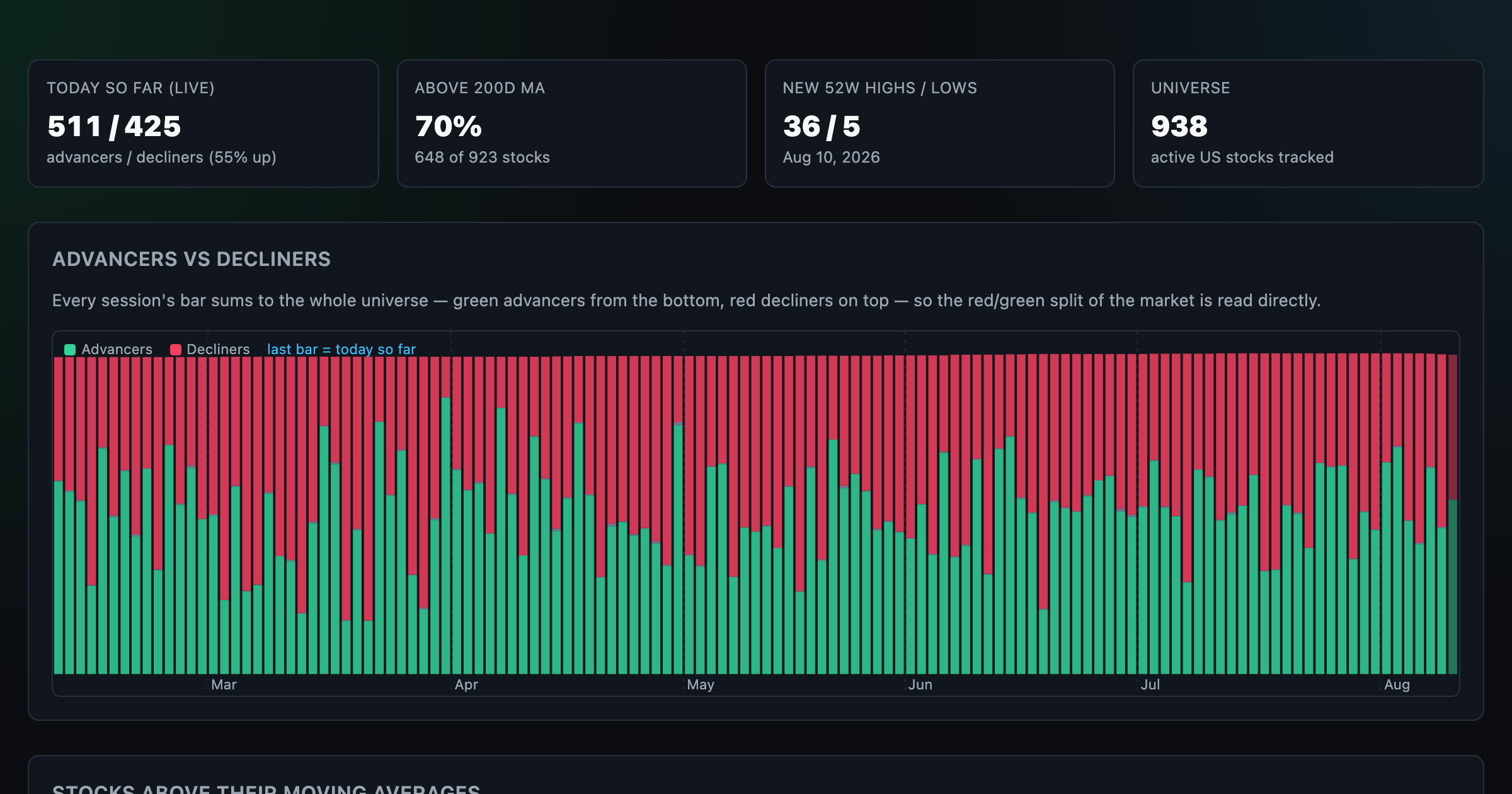
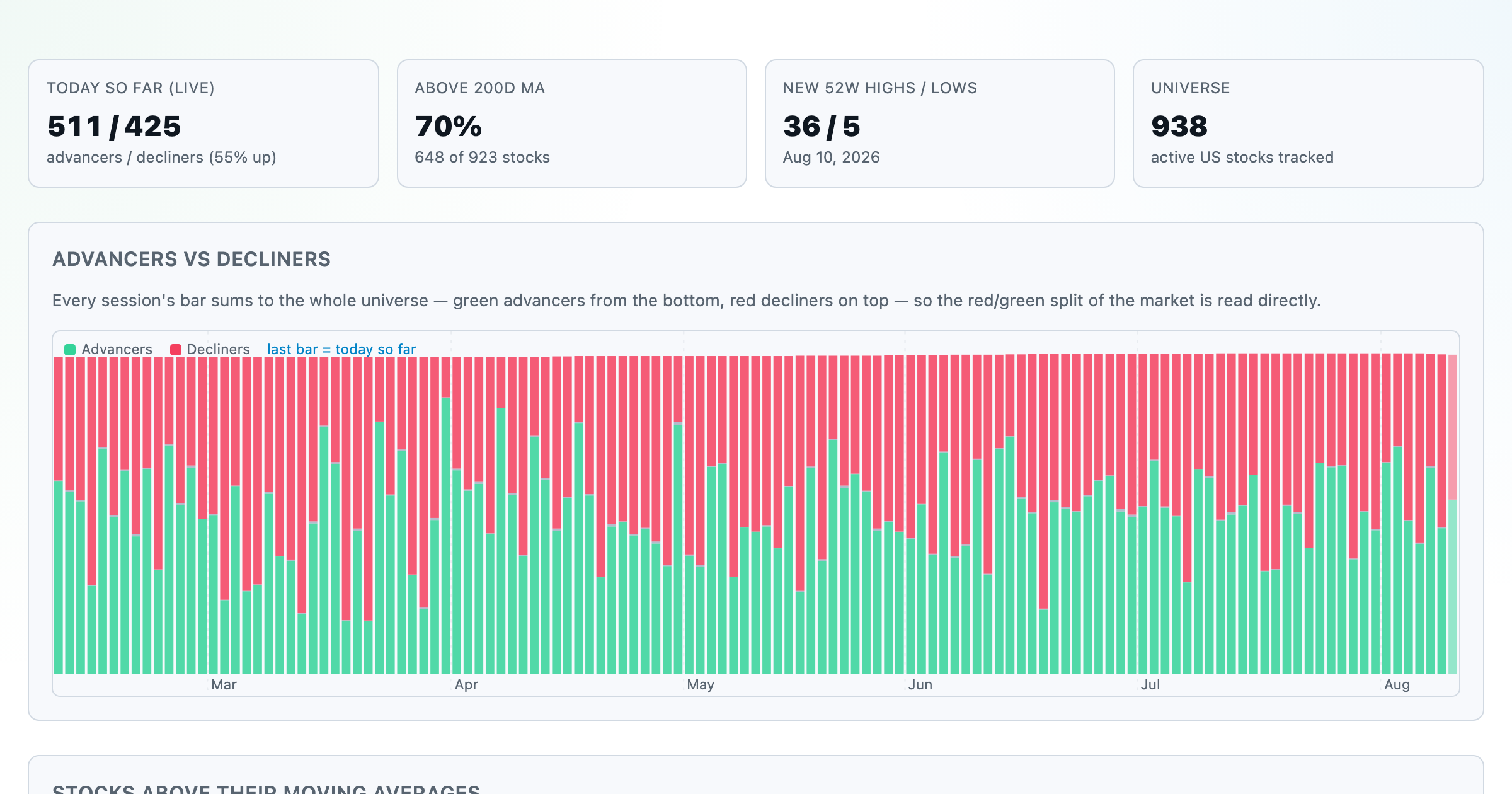
Advancers vs decliners over time, % of stocks above their moving averages, new highs vs lows, and breadth across every trailing window.
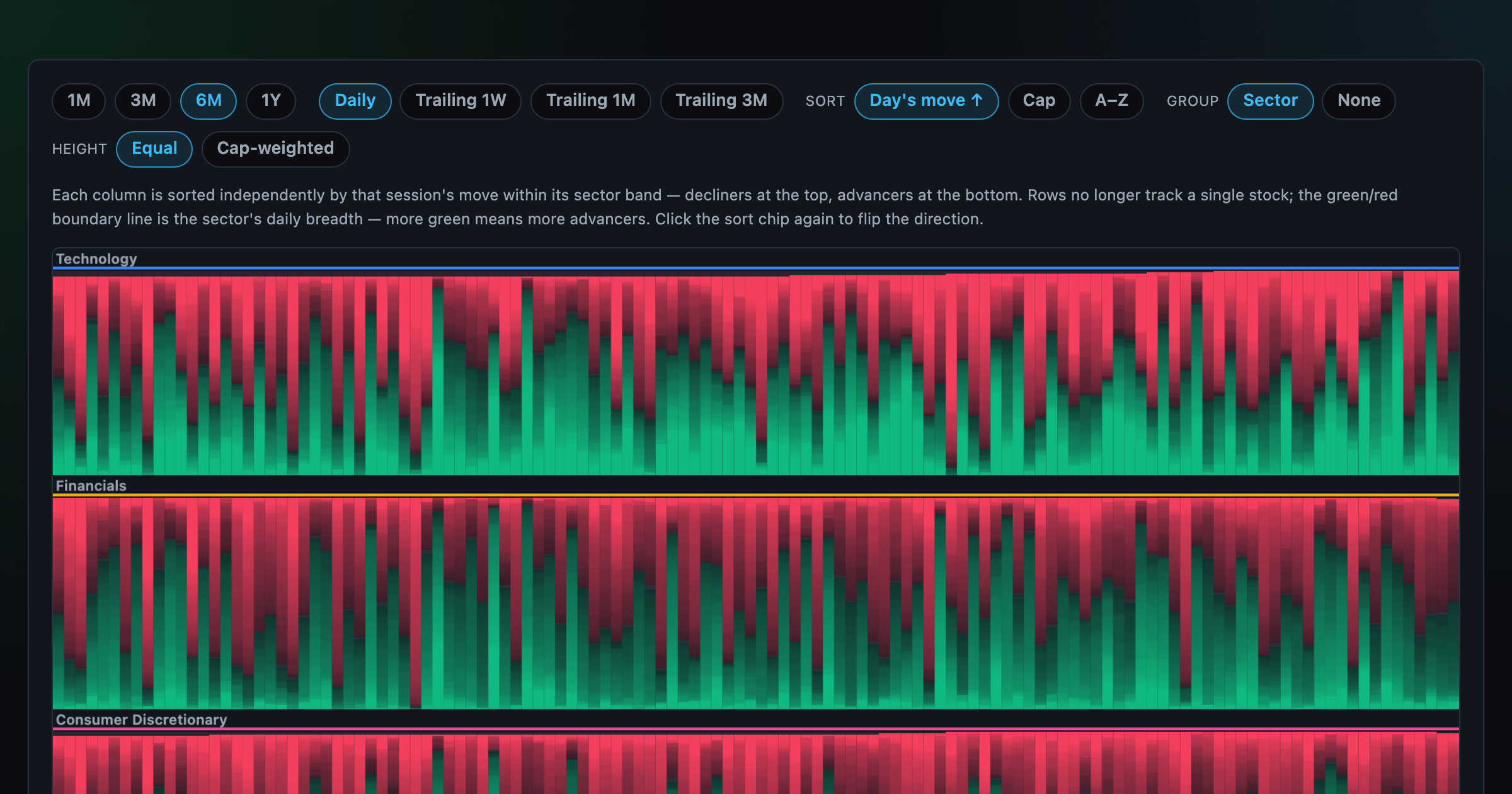
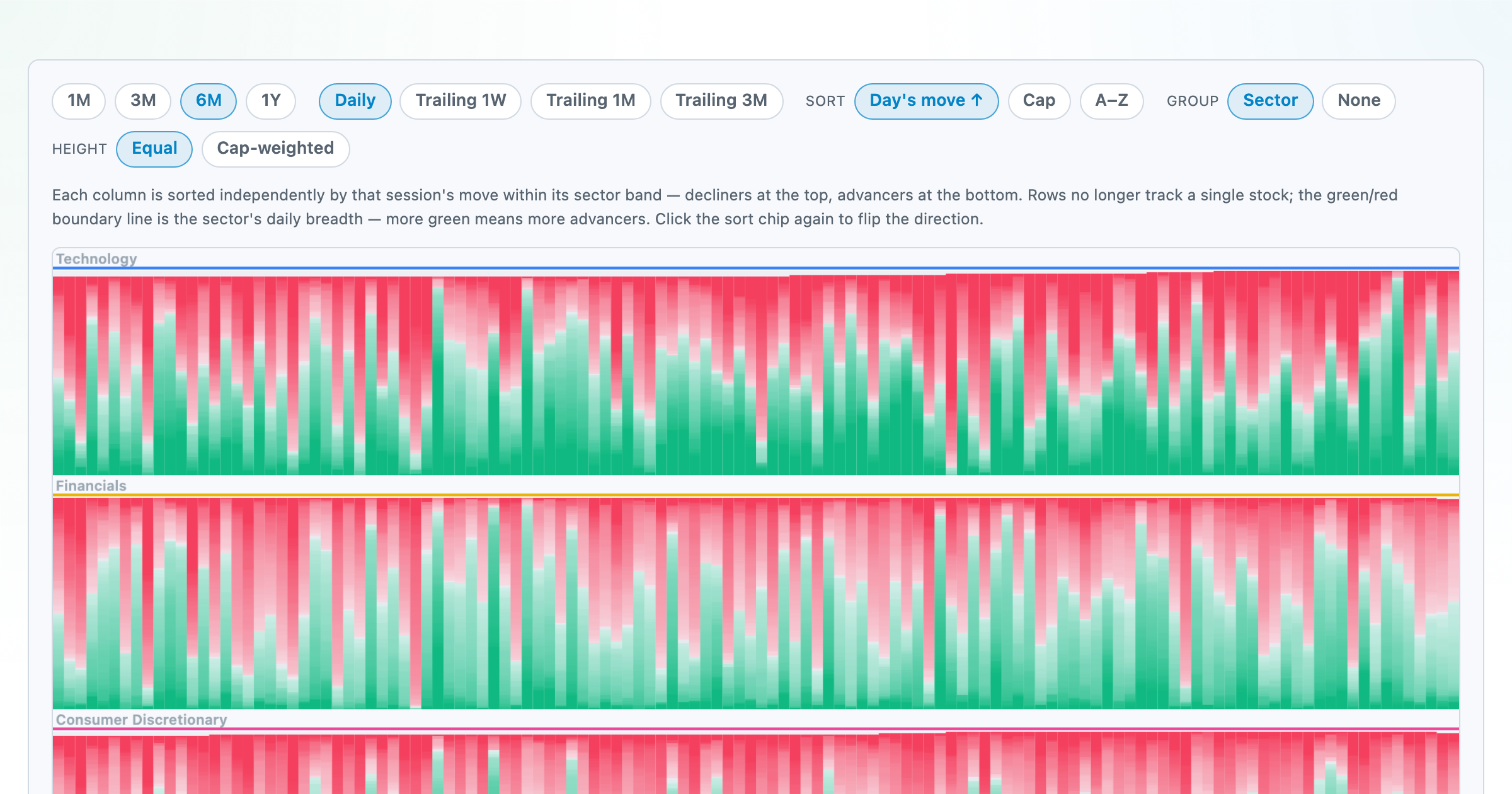
Every stock as a row, every day as a column — market selloffs are vertical stripes, sector routs are blocks.
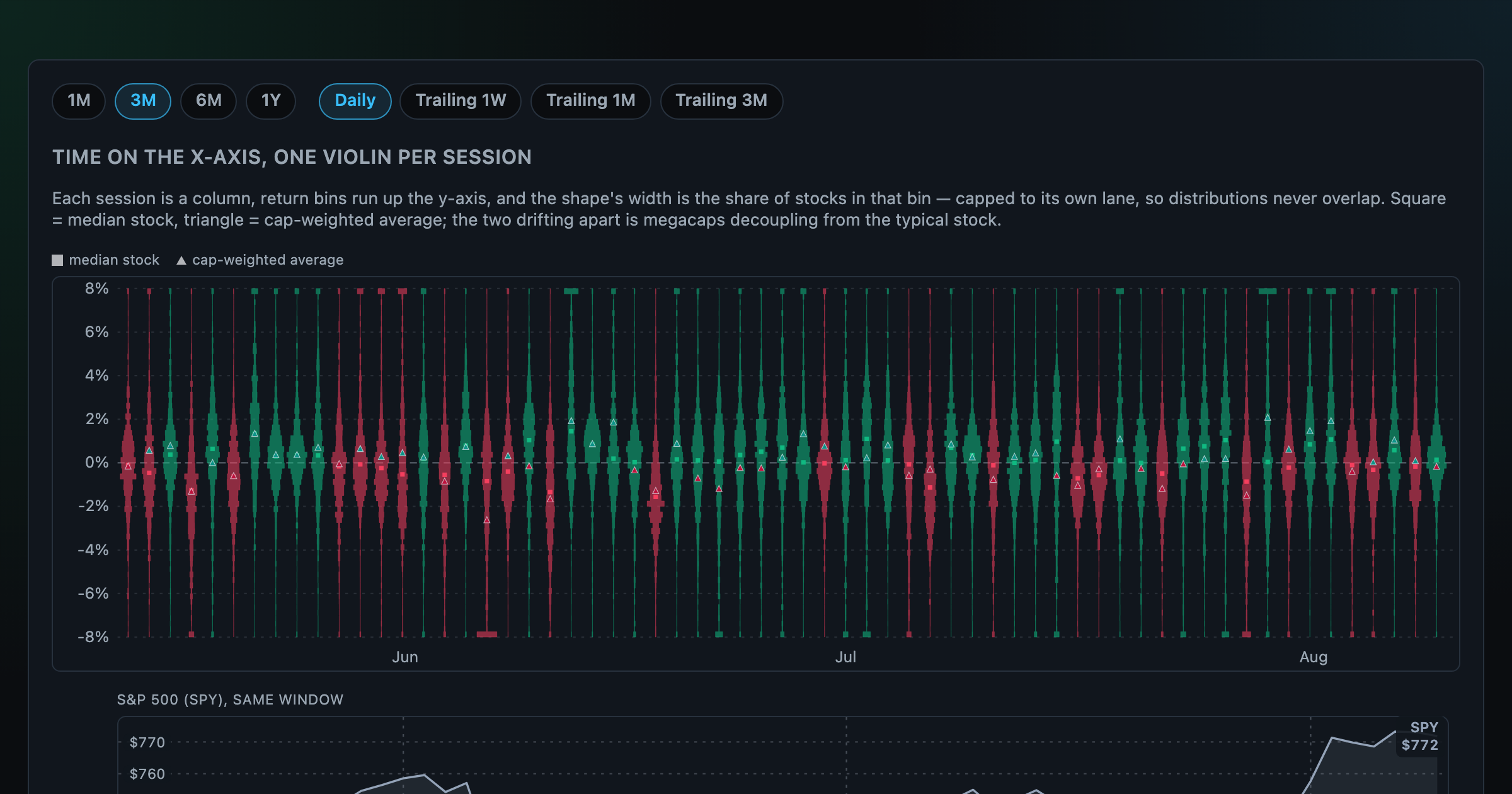
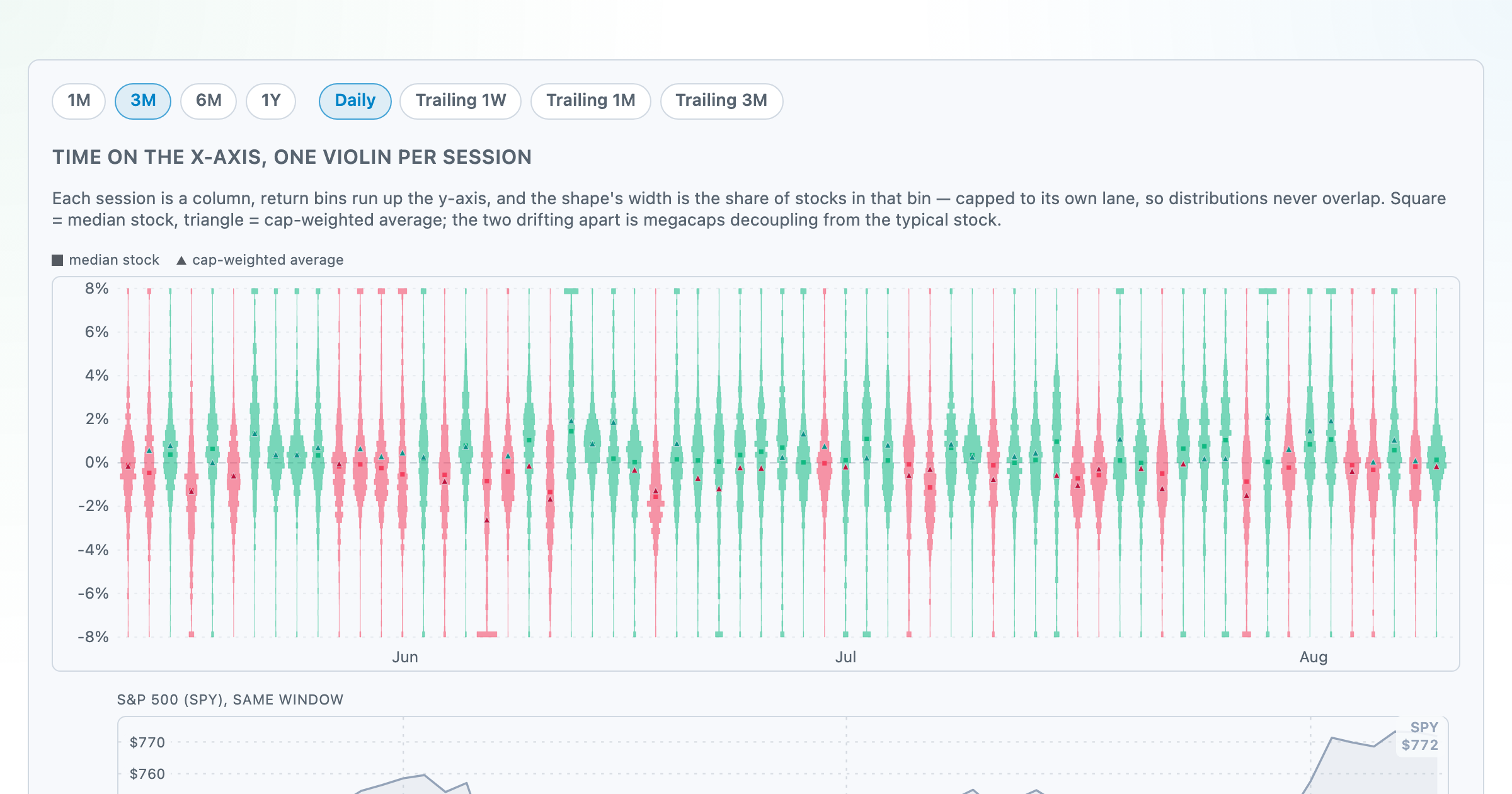
Each session's full distribution of stock returns as an upright violin, with the S&P 500 on the same axis — shifts, dispersion, and fat tails at a glance.
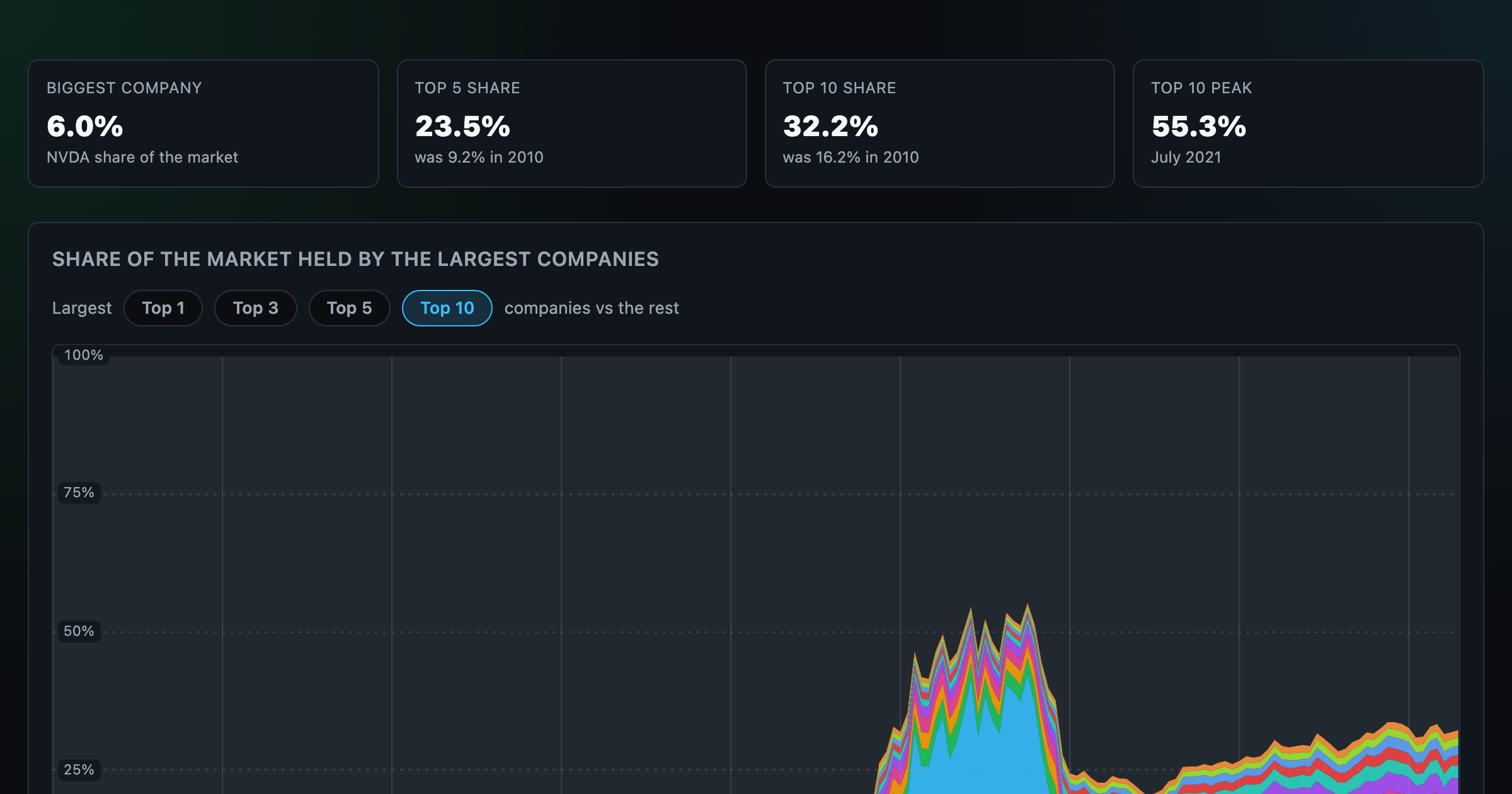
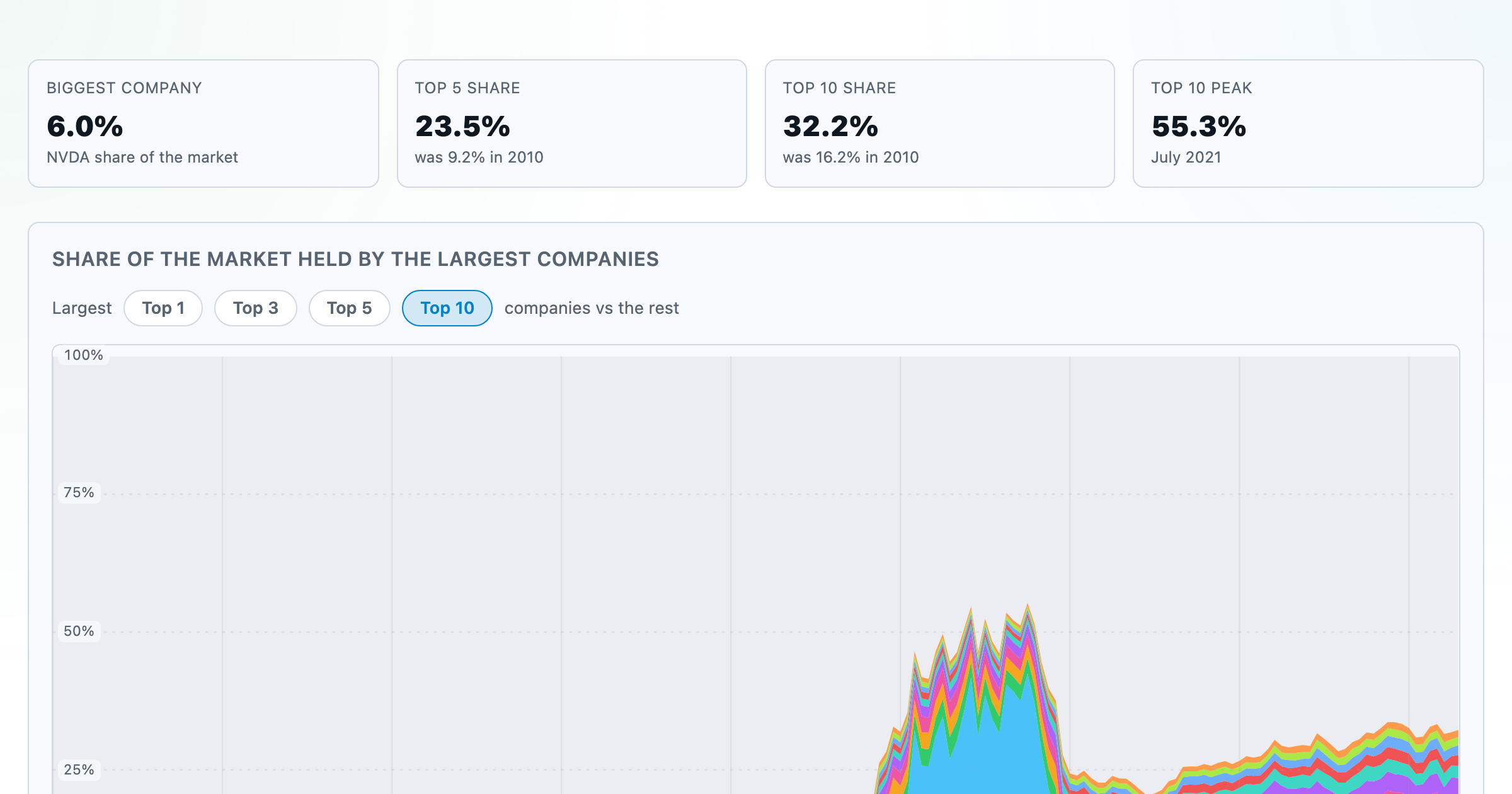
How top-heavy is the market? The top 1–10 companies' share of total market value, month by month since 2010.
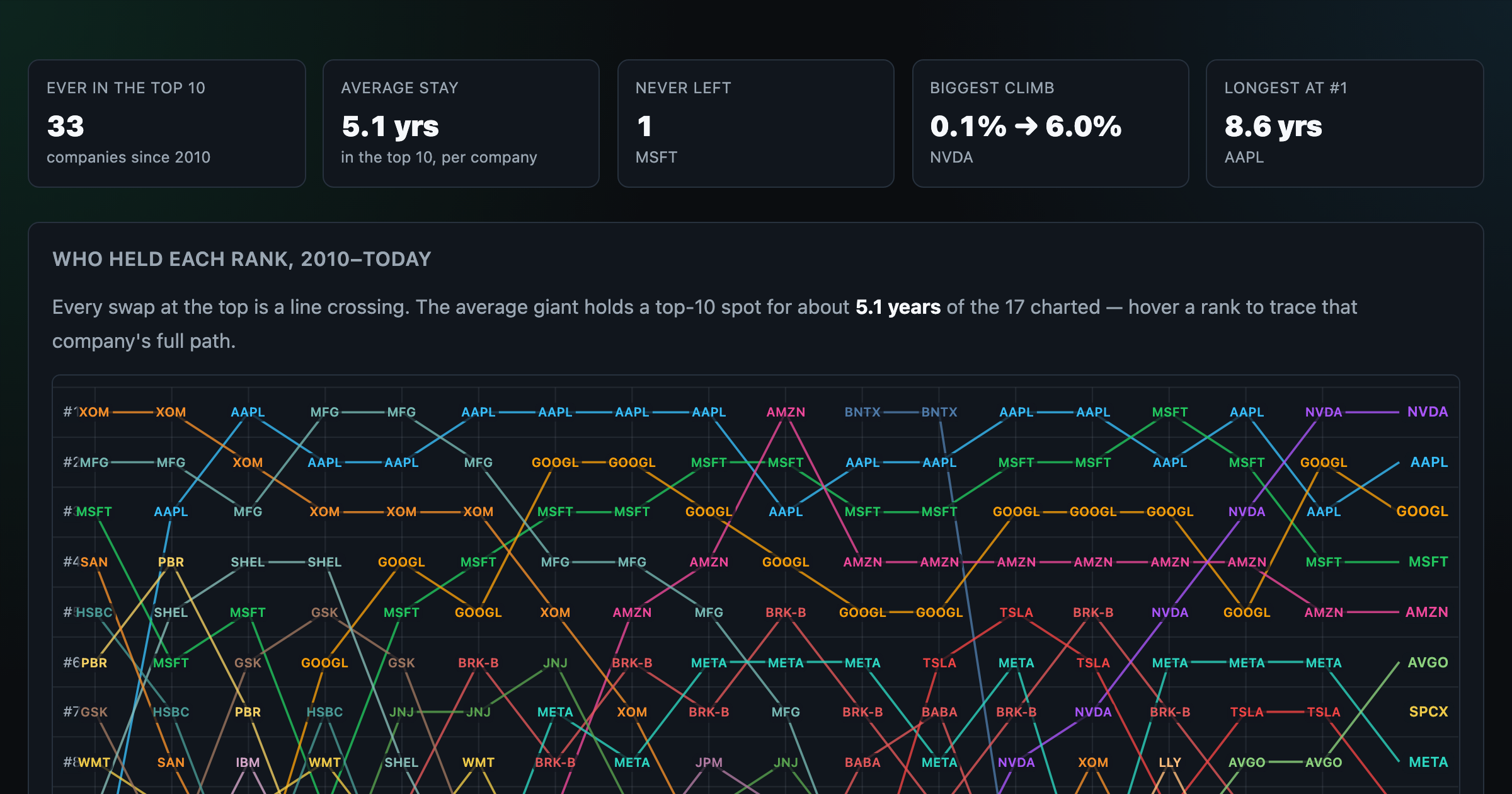
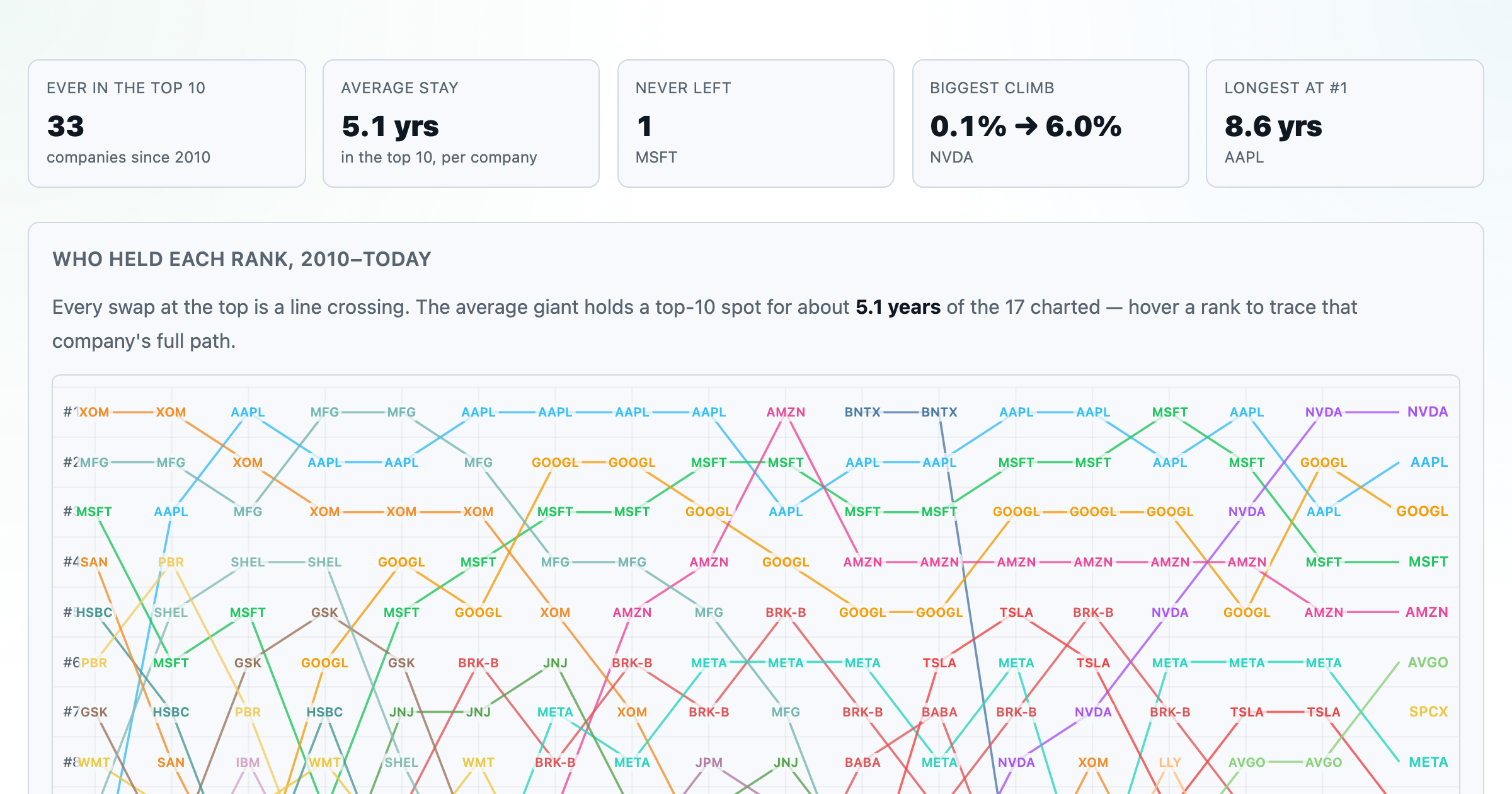
Every company that ever cracked the market's top 10 since 2010 — who climbed, who faded, who never left.
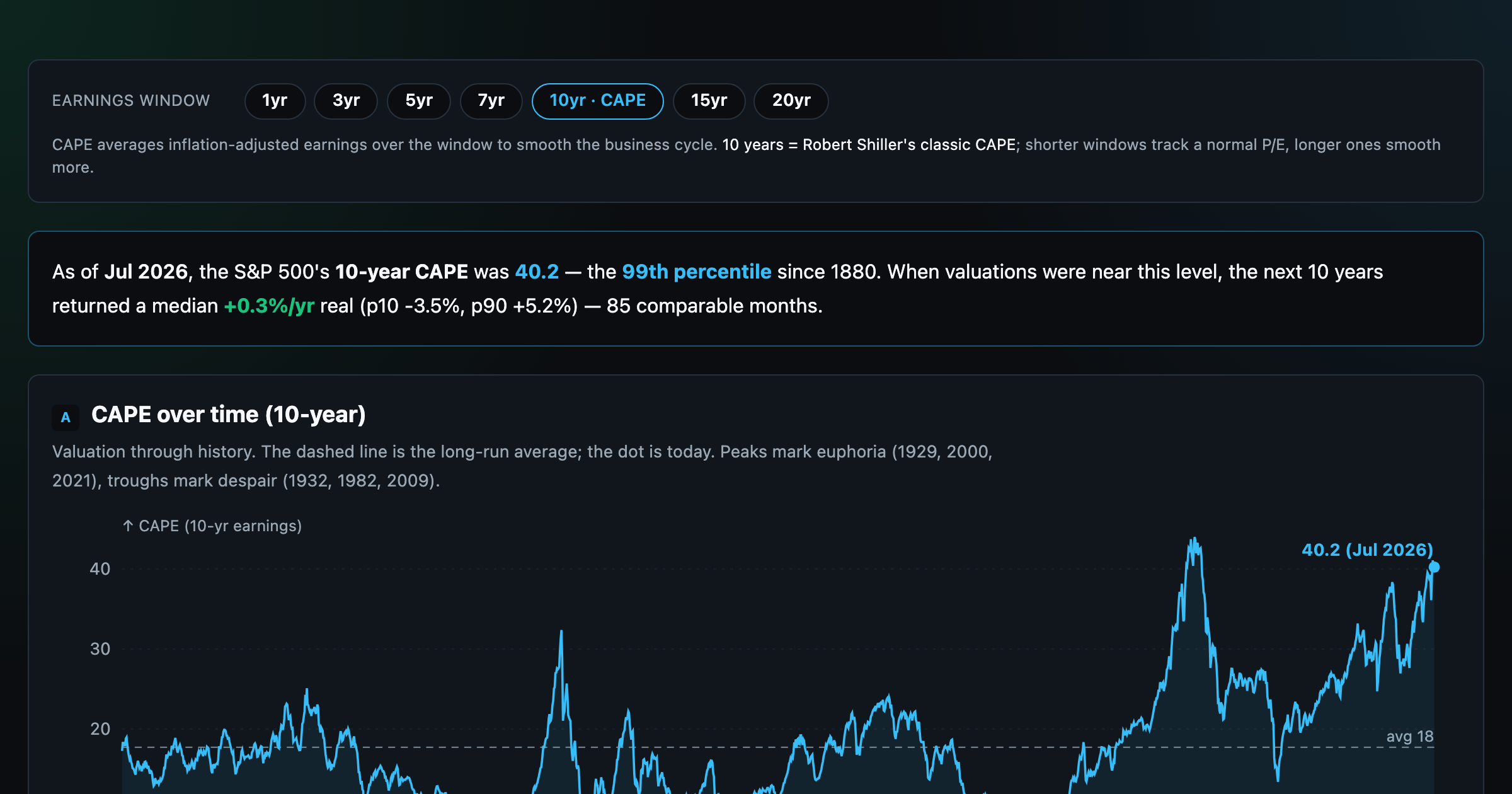
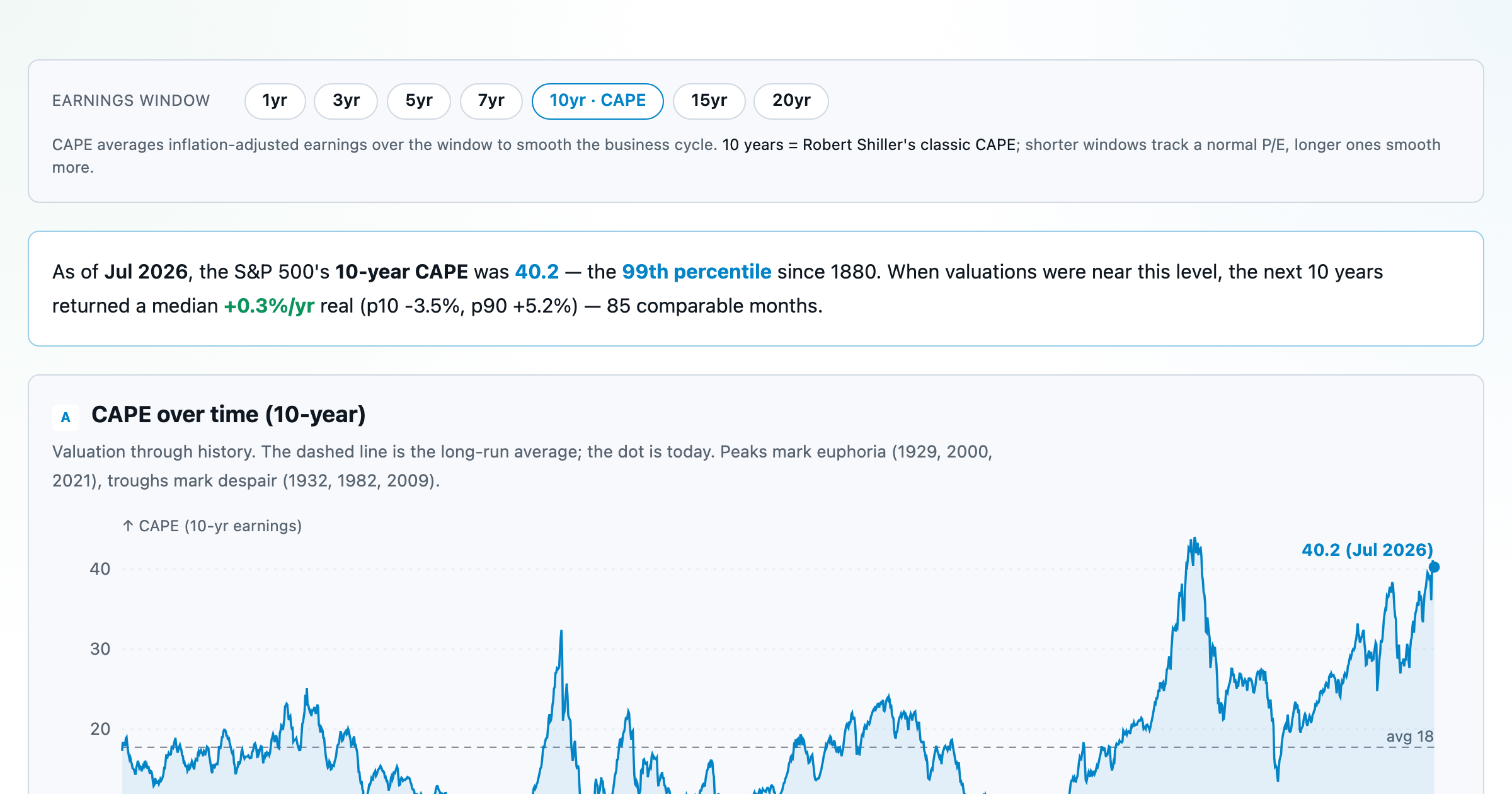
Is the market expensive? The Shiller CAPE back to 1871 and what valuations have meant for the next decade.
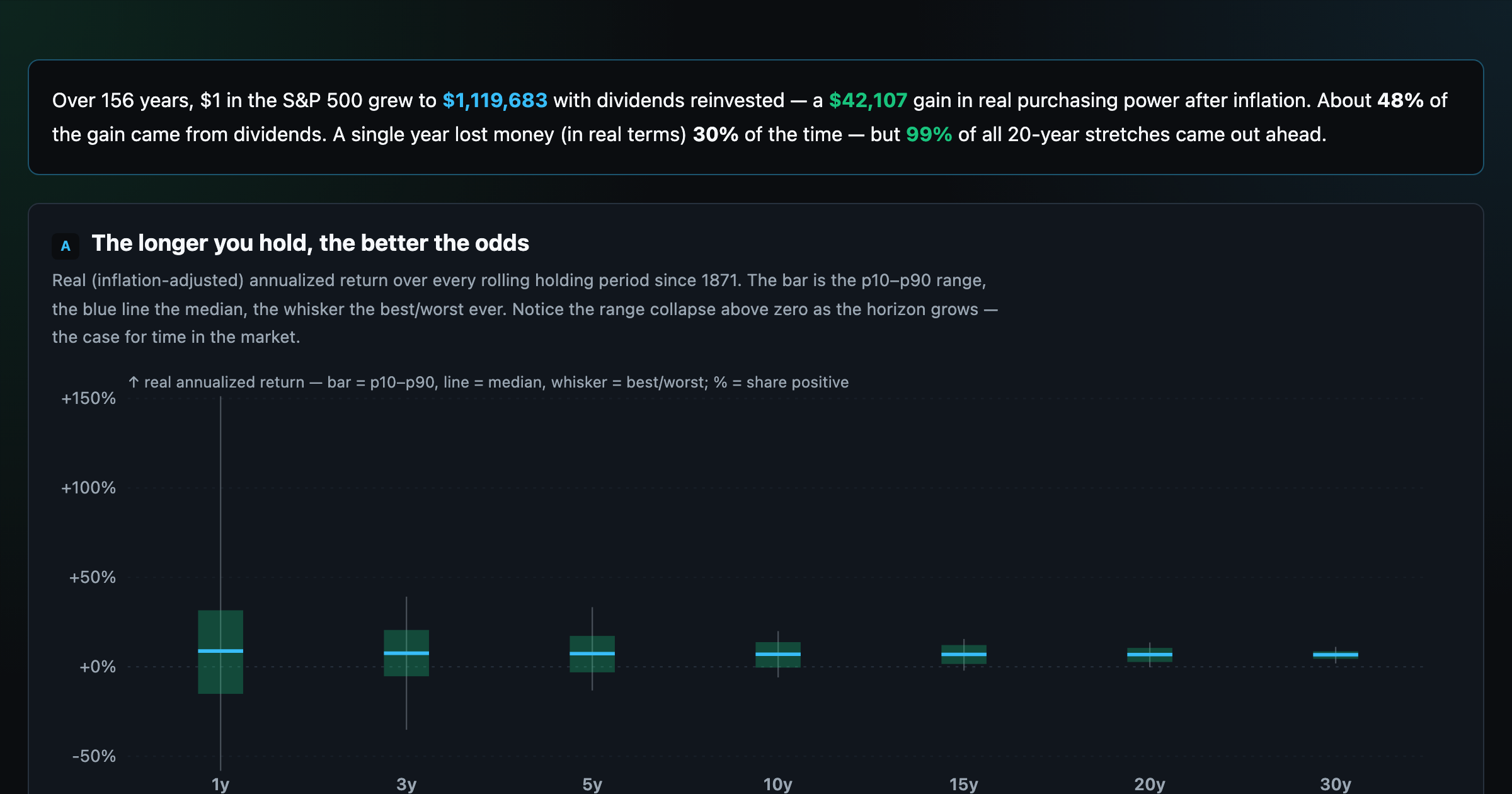
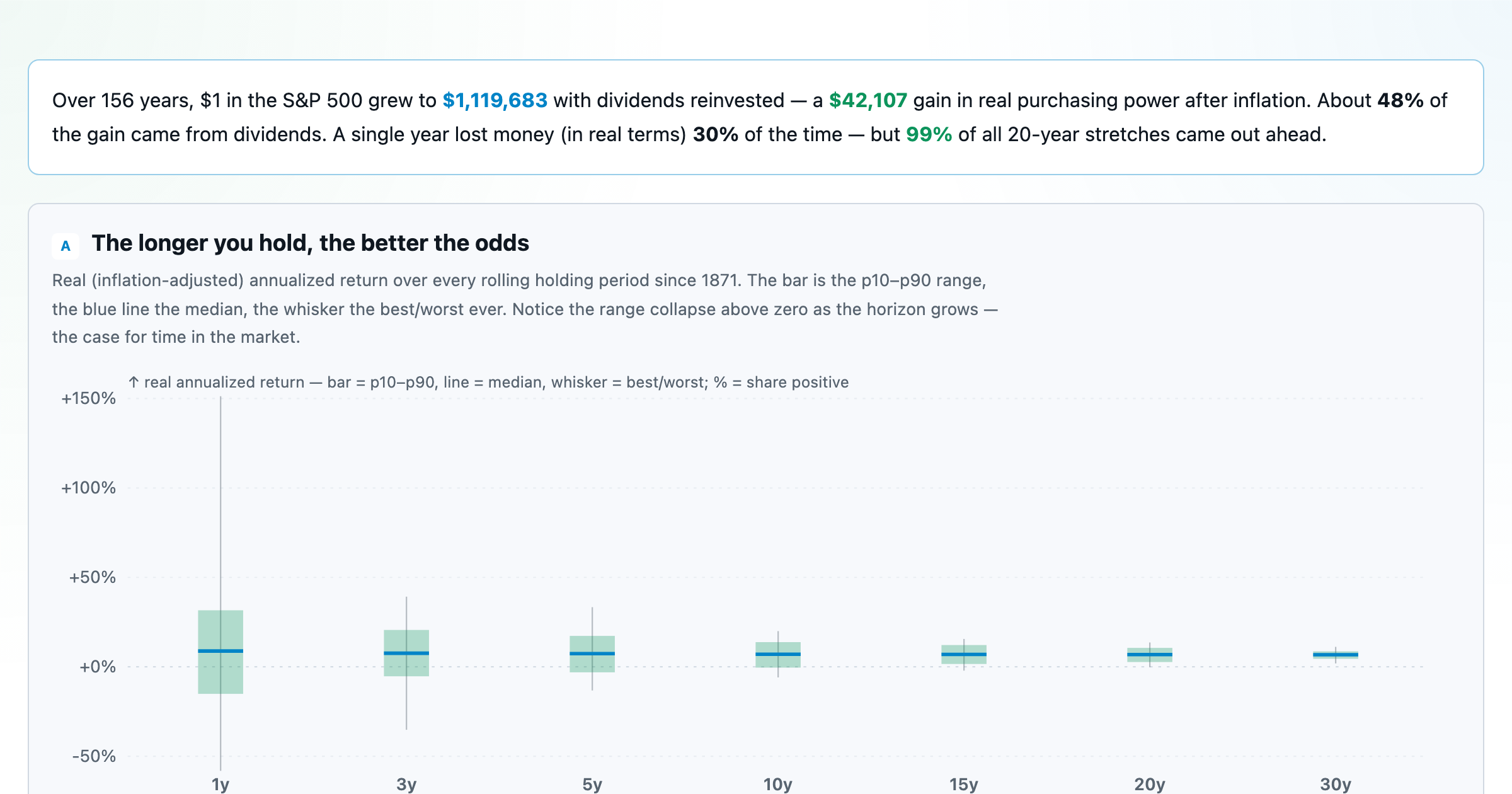
The S&P 500 since 1871 — odds of gain by holding period, real drawdowns, and the growth of $1.
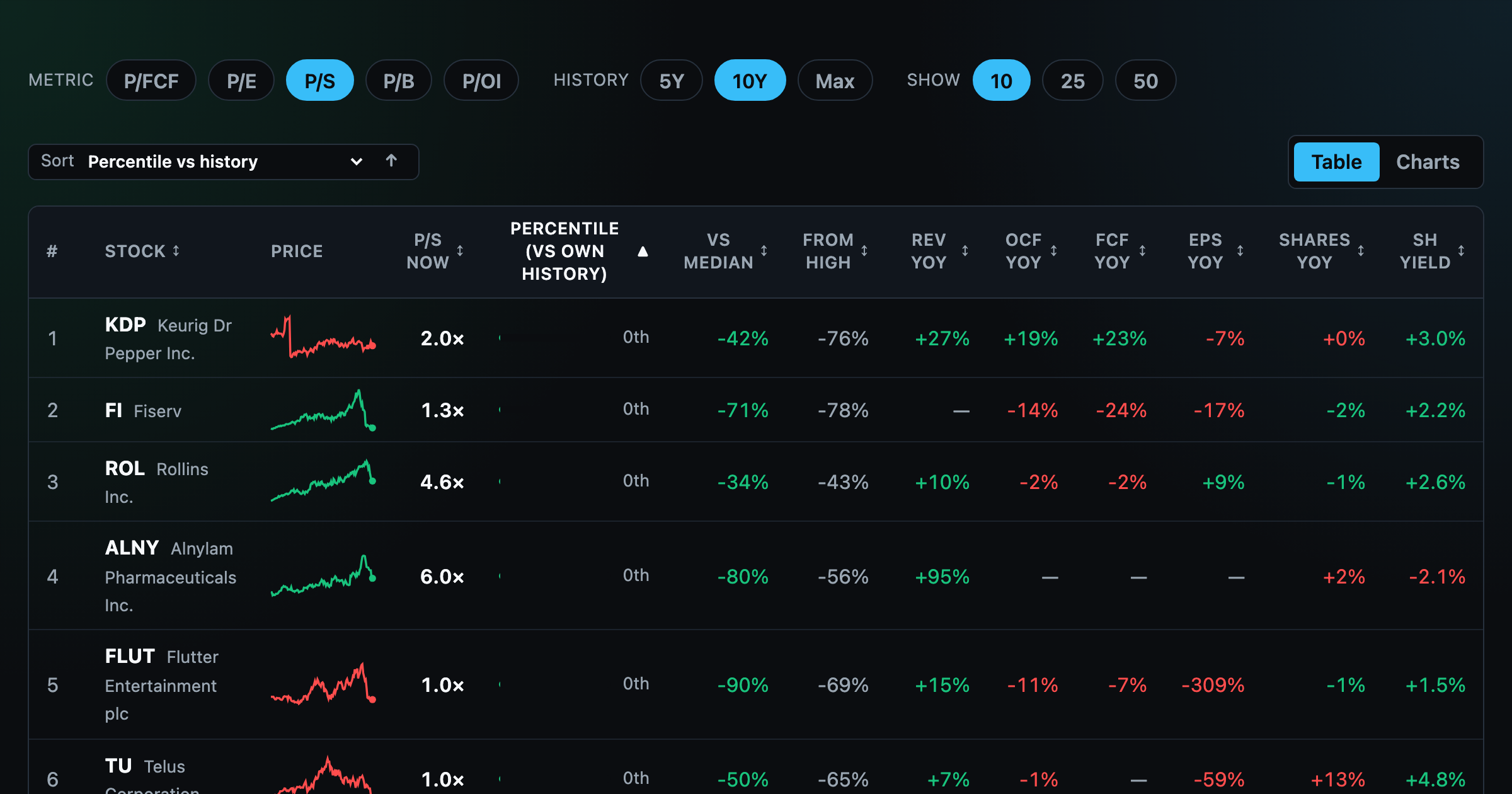
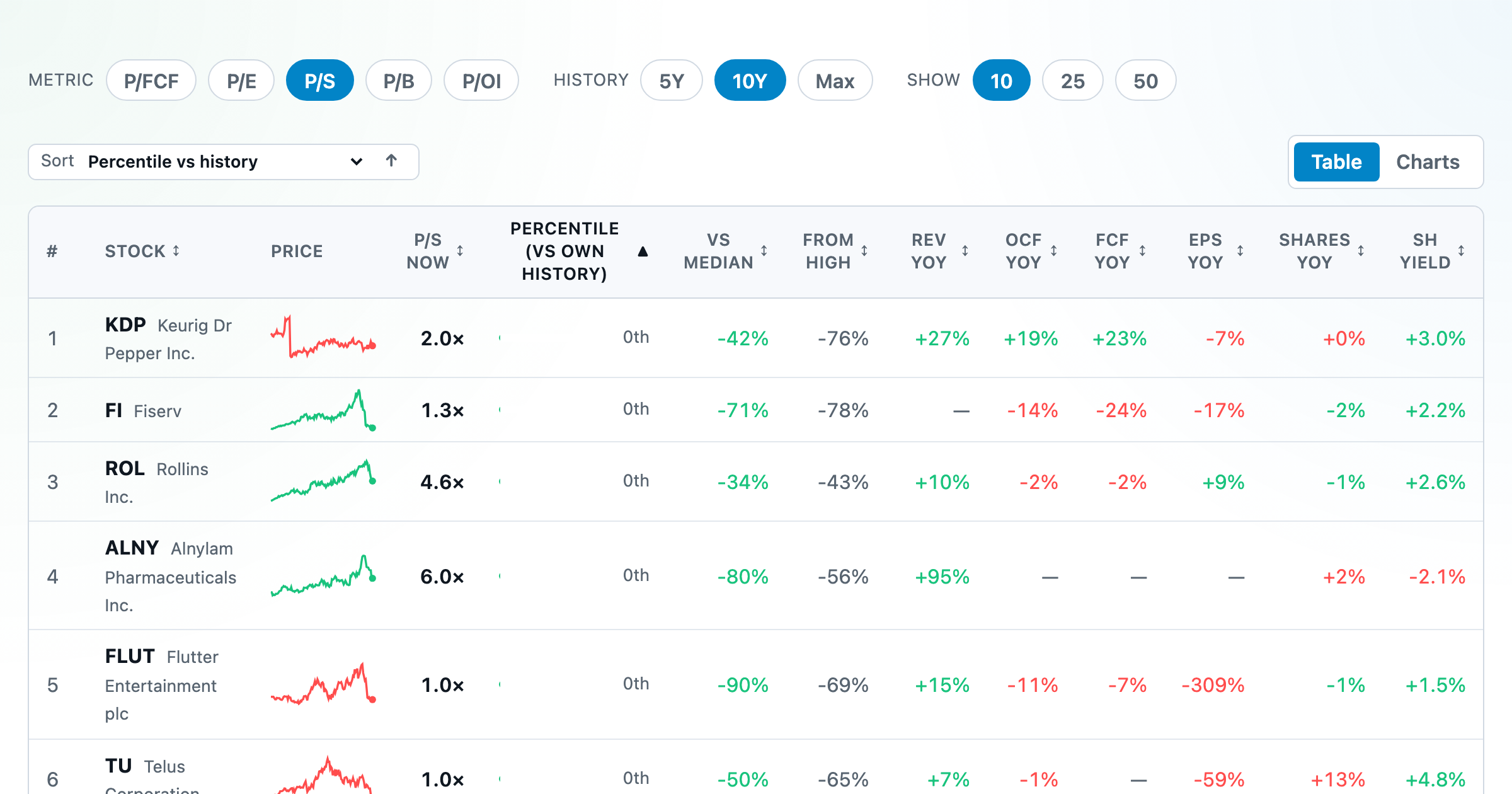
Stocks trading cheapest relative to their own P/E, P/FCF, P/S, or P/B history — with fair-value bands.
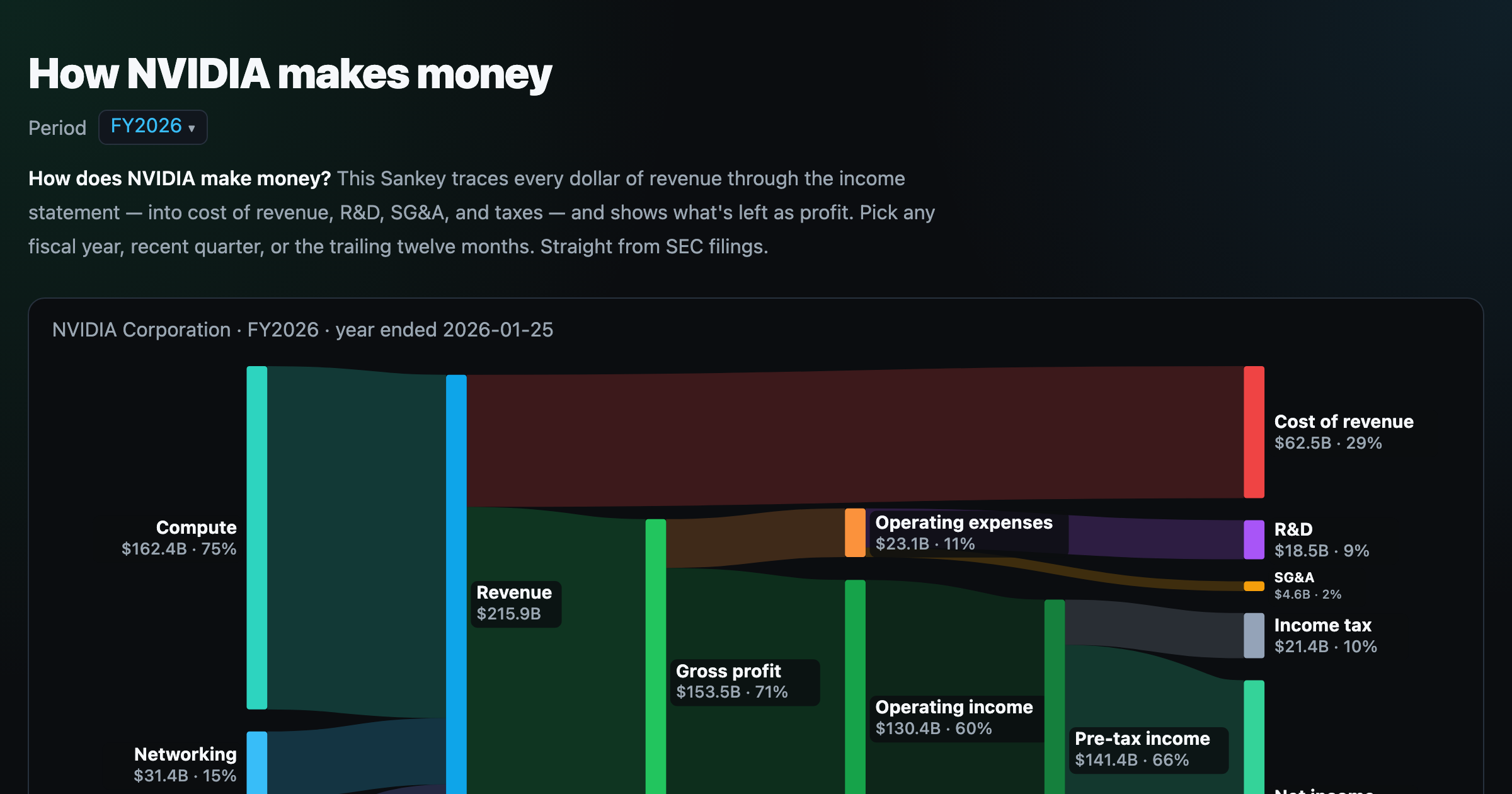
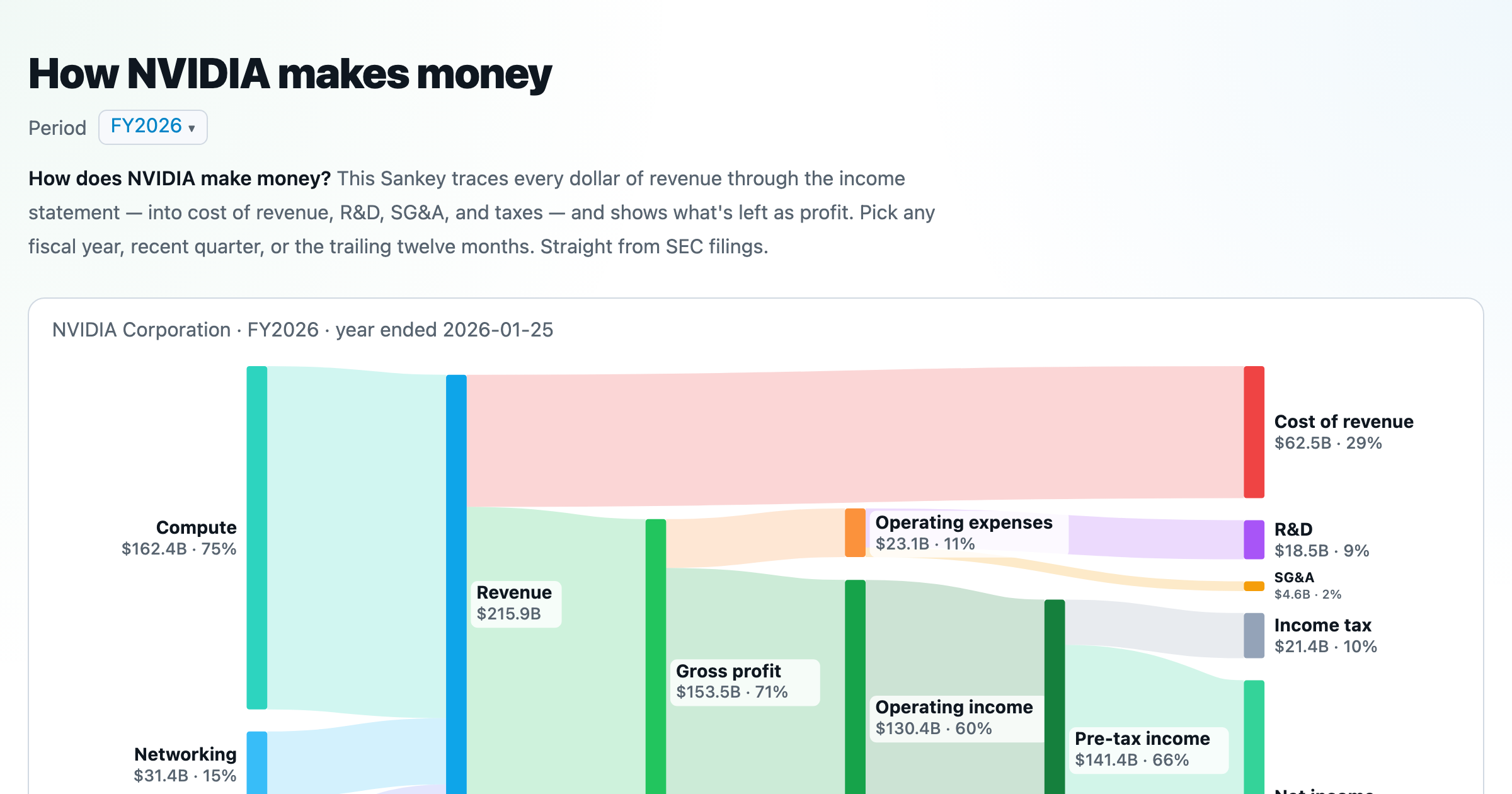
Follow a company's revenue through its income statement as a Sankey — costs, taxes, and profit.
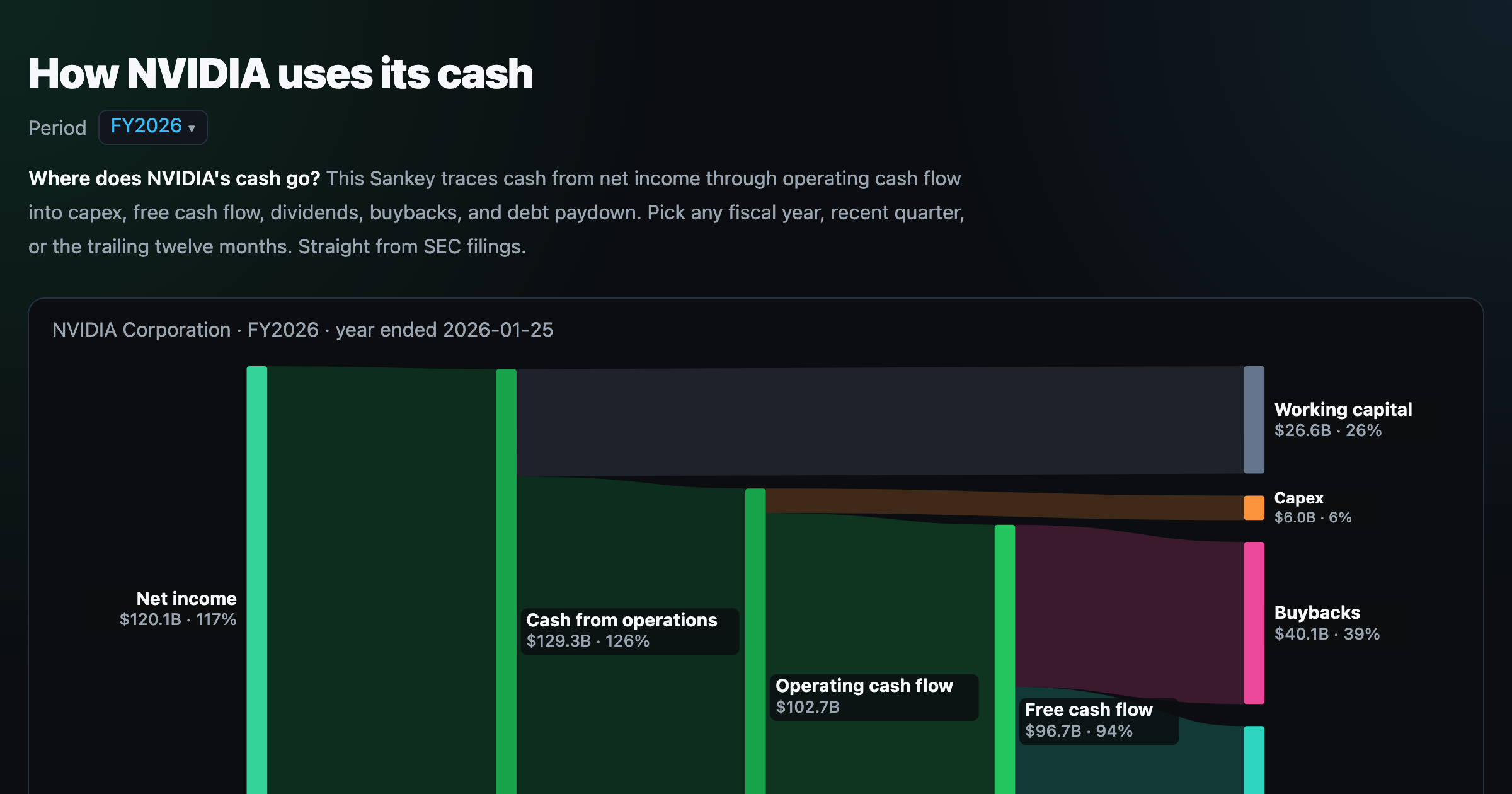
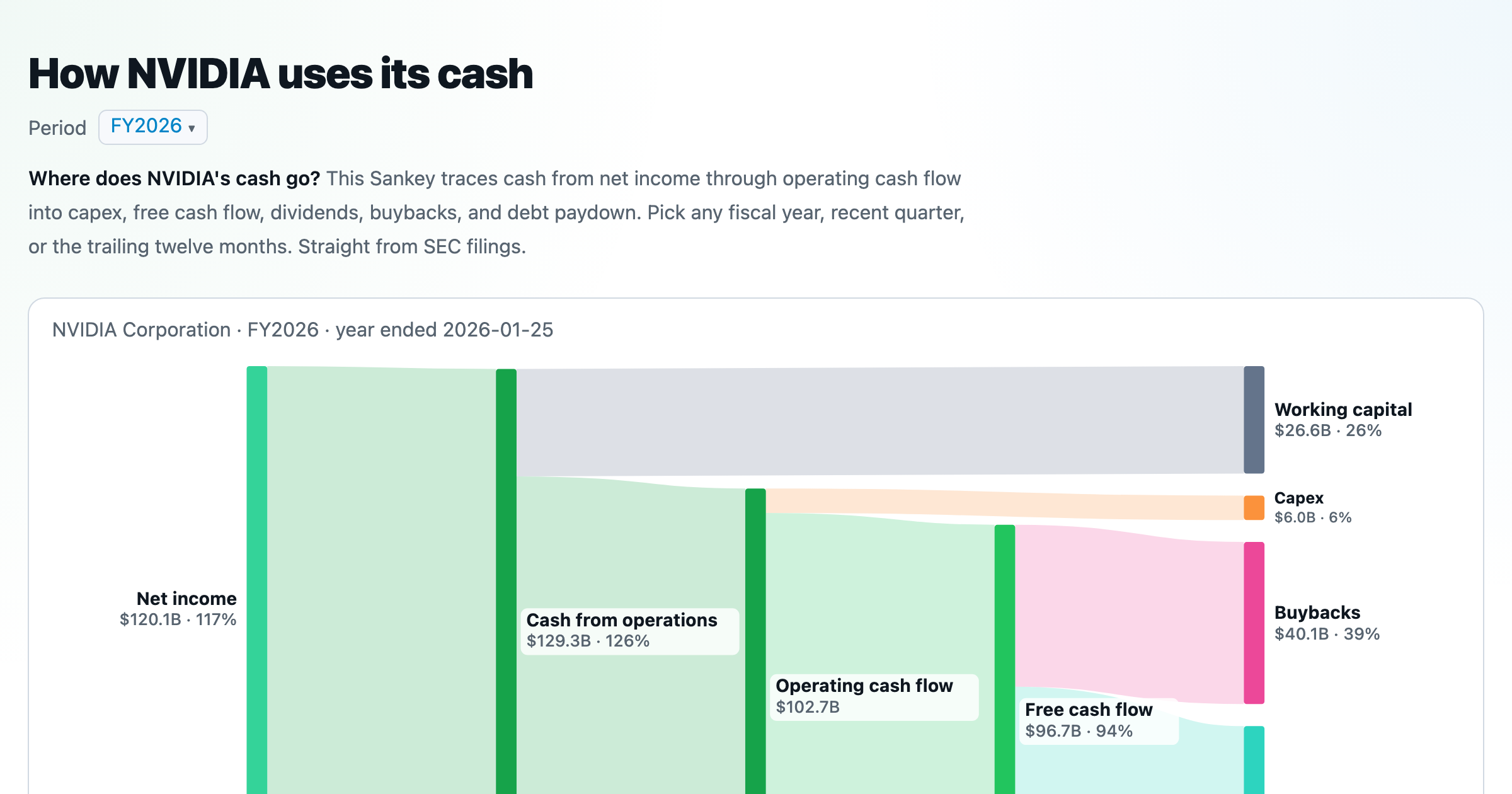
Follow a company's cash from net income through operating cash flow into capex, buybacks, and dividends.
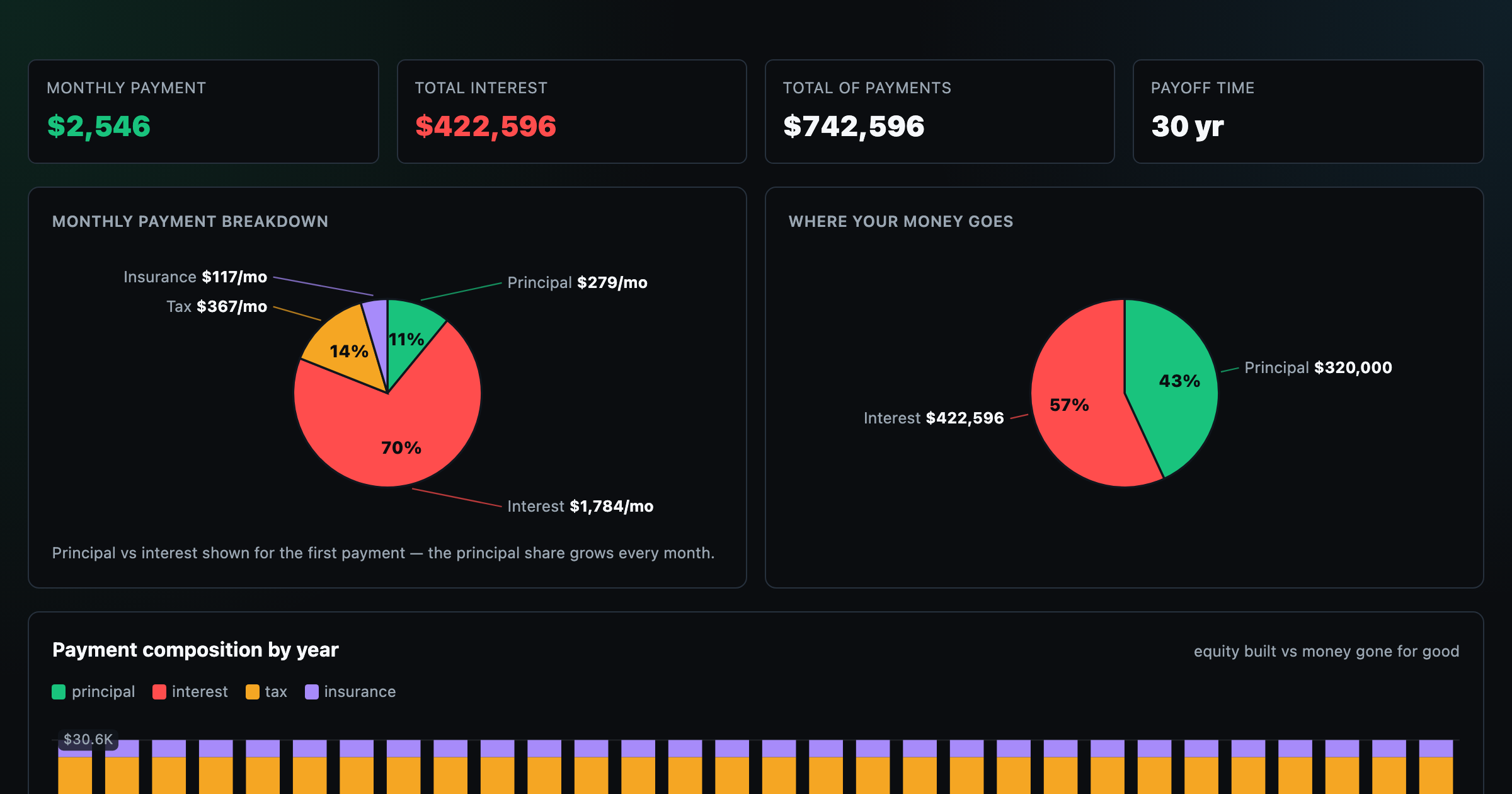
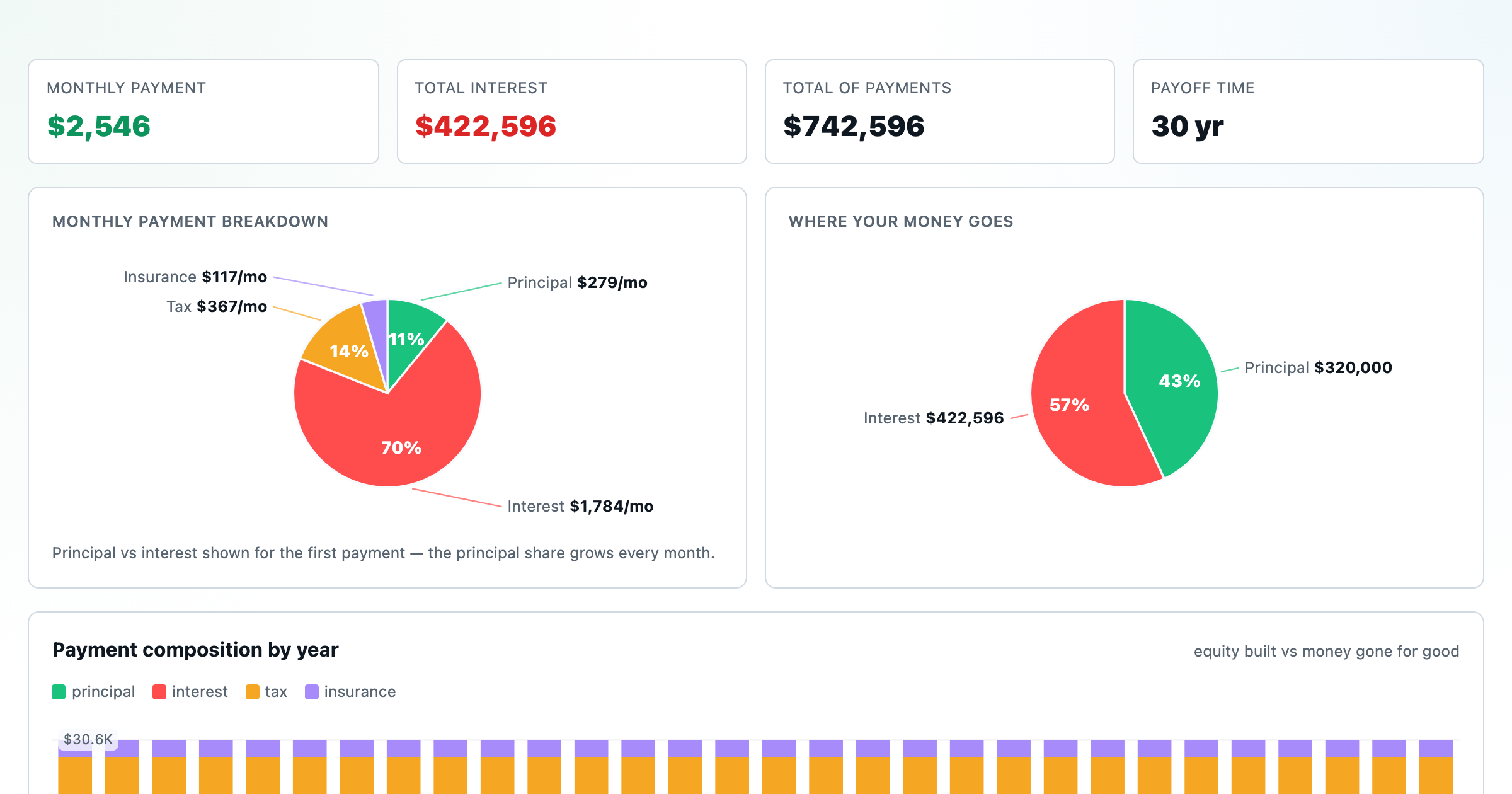
Monthly payment, principal vs interest by year, and the balance paydown — with extra-payment savings.
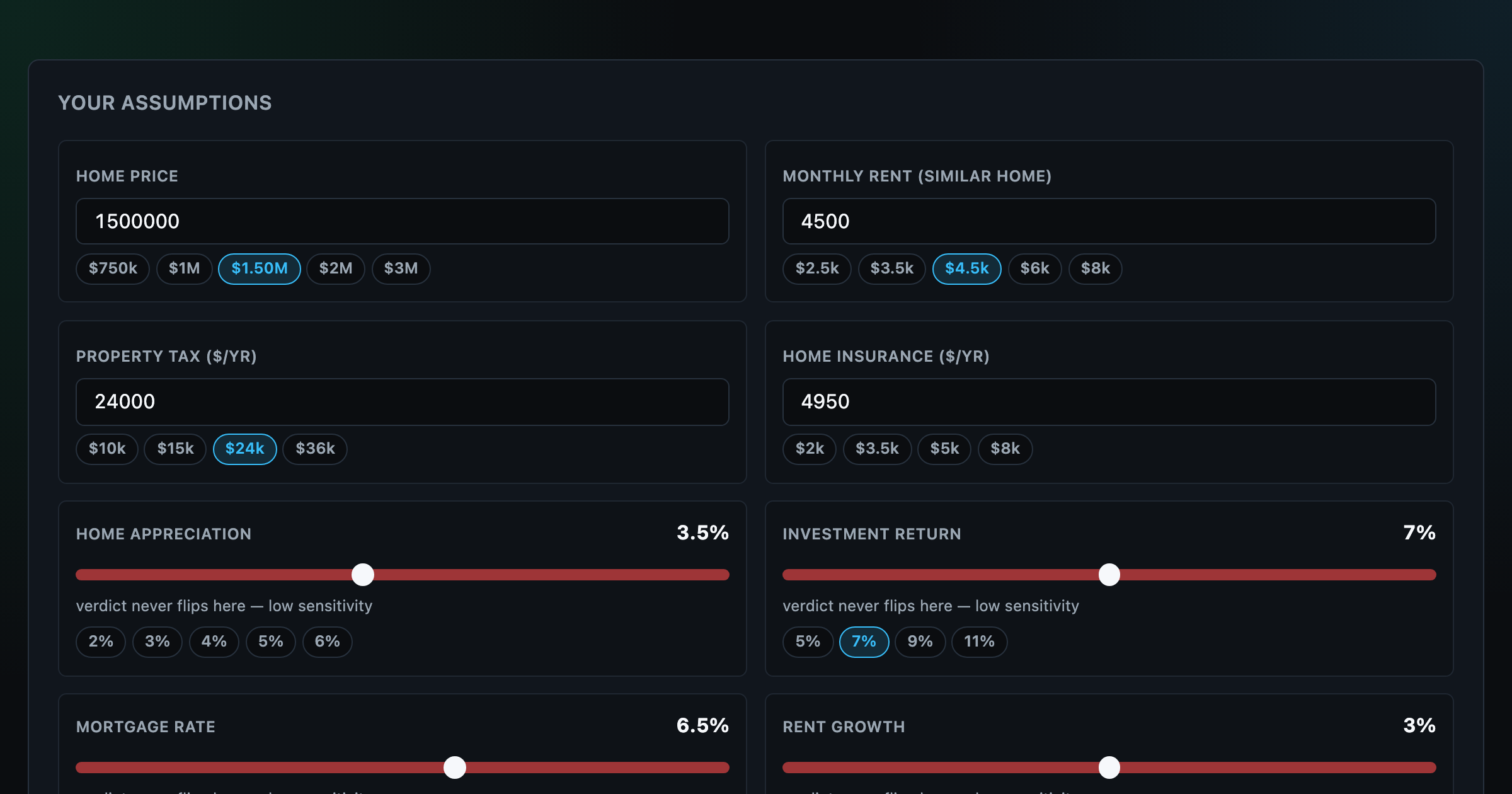
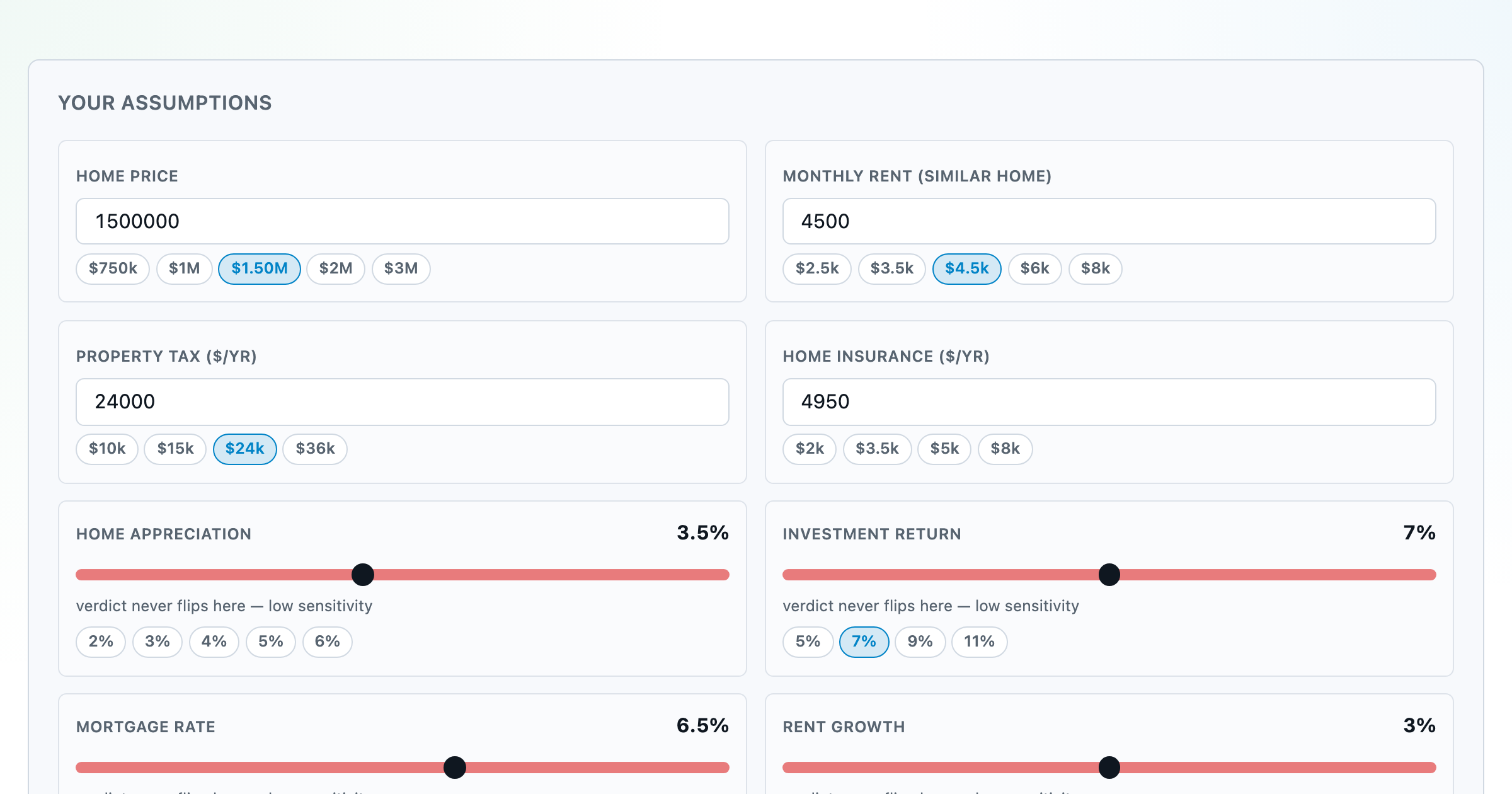
Should you rent or buy? Net-wealth verdict with sensitivity analysis of every assumption.
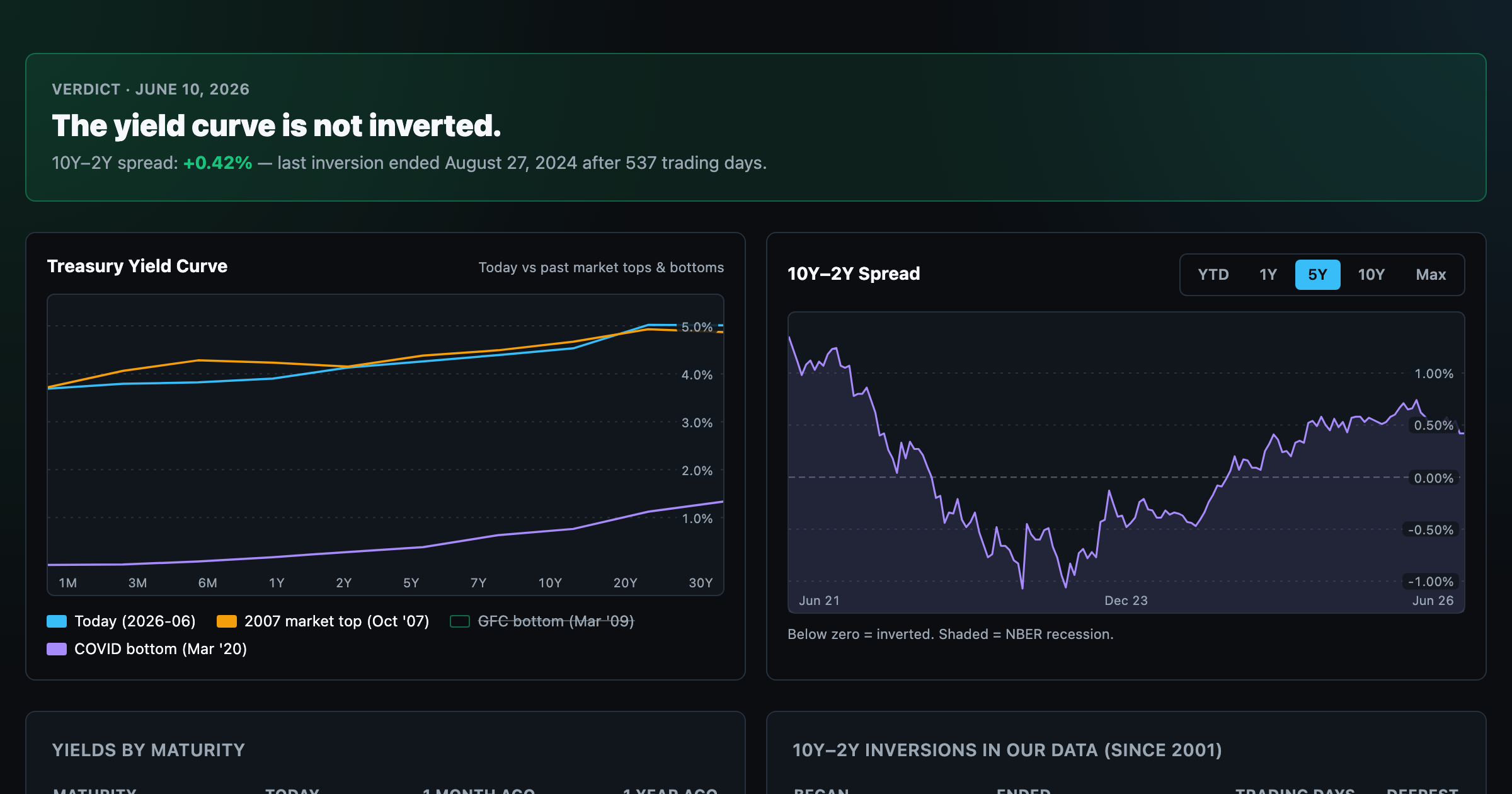
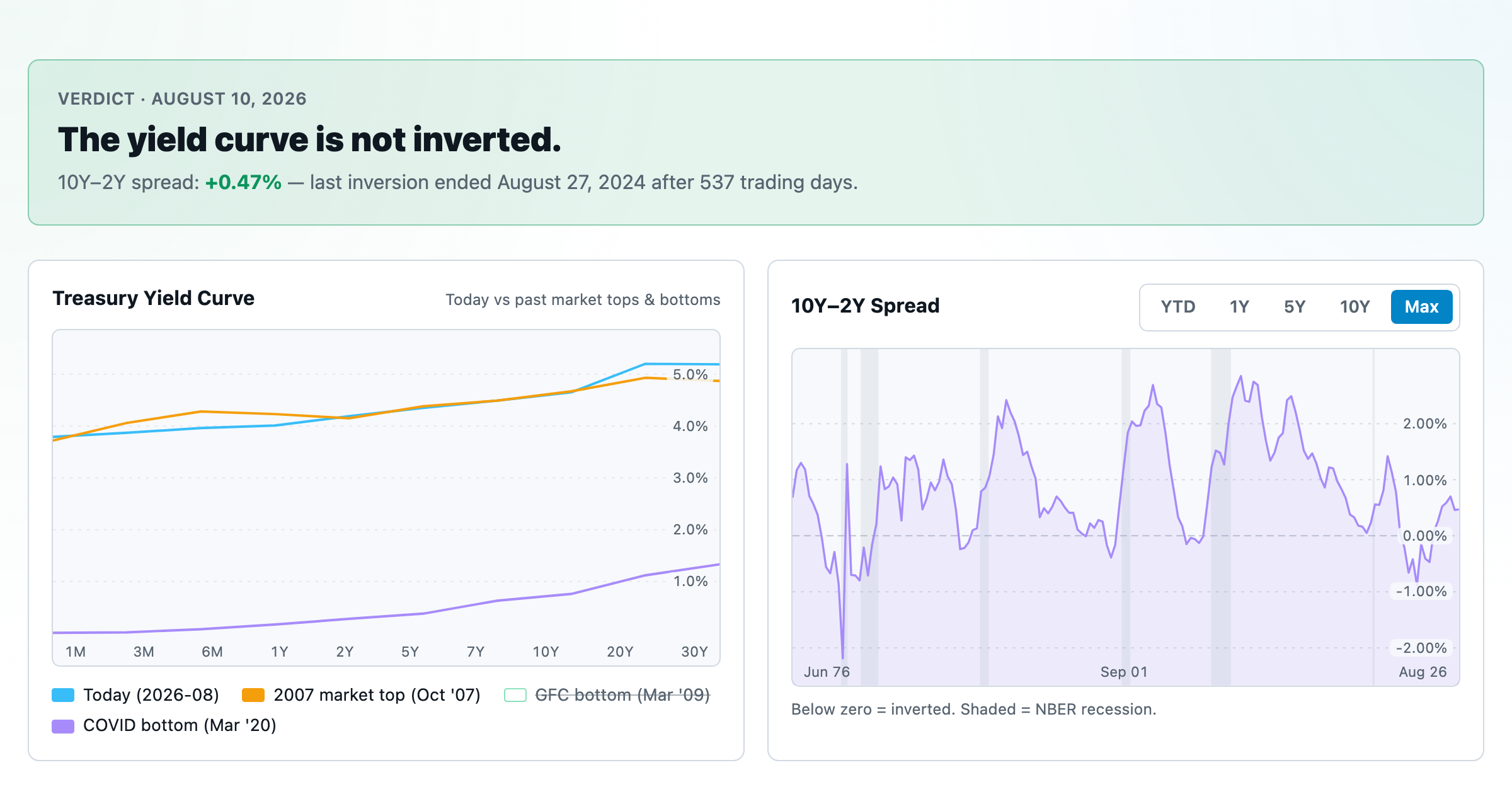
Live term structure, the 10Y–2Y spread, and every inversion episode.