
Cheapest by price to free cash flow (2026)
The 50 companies below have a combined market cap of $2.0T; the best performer of 2026 is DINO (+144.6% YTD). Low P/FCF large caps — the cash-based sibling of the value screen. Not investment advice.
End of day 2026-10-01 · 50 entries · digits update live during market hours
Lowest P/FCF large caps
Save as watchlist
Technical analysis0
Addendum charts0
Overlay lines0
Columns (13 shown)
| # Company | CategoryCategory | 1Y1Y chart | |||||||||||
|---|---|---|---|---|---|---|---|---|---|---|---|---|---|
| CHTRCharter Communications | Communication Services | $111.32 | +0.38% | -23.8% | -20.4% | -46.6% | -59.5% | -84.9% | 3.0 | $4B | 0 | $13B | |
| CNCCentene | Healthcare | $60.97 | -1.85% | -6.5% | -10.8% | +48.2% | +70.6% | -3.3% | 3.4 | $9B | 1 | $30B | |
| CMCSAComcast | Communication Services | $21.69 | -0.32% | -17.5% | -8.6% | -22.5% | -25.2% | -59.5% | 3.8 | $20B | 0 | $77B | |
| COFCapital One Financial | Financials | $194.48 | +0.73% | -8.0% | -5.0% | -19.8% | -8.9% | +16.8% | 4.0 | $30B | 65 | $119B | |
| ALLAllstate | Financials | $224.47 | +1.18% | -13.0% | -7.7% | +7.8% | +6.5% | +75.7% | 4.6 | $12B | 0 | $57B | |
| GMGeneral Motors | Consumer Discretionary | $79.32 | +3.01% | -7.4% | +5.0% | -2.5% | +29.3% | +49.3% | 4.8 | $14B | 25 | $70B | |
| ACGLArch Capital Group | Financials | $94.26 | +2.06% | -4.4% | -4.4% | -1.7% | +4.4% | +146.9% | 5.3 | $6B | 30 | $32B | |
| TFCTruist Financial | Financials | $46.29 | -0.02% | -6.4% | -9.1% | -6.0% | +1.6% | -23.1% | 5.4 | — | 20 | $57B | |
| AMPAmeriprise Financial | Financials | $494.81 | +0.50% | -8.8% | +3.2% | +0.9% | +1.7% | +84.3% | 5.4 | $8B | 14 | $44B | |
| CNACNA Financial | Financials | $45.91 | +2.30% | -5.8% | -7.6% | -3.9% | -0.2% | +7.7% | 5.5 | $2B | 35 | $12B | |
| HIGHartford Insurance Group | Financials | $125.80 | +2.81% | -8.3% | -6.1% | -8.8% | -5.4% | +77.1% | 5.8 | $6B | 25 | $34B | |
| FISFidelity National Information Services | Financials | $33.12 | +0.65% | -18.9% | -18.9% | -50.2% | -50.2% | -73.1% | 6.1 | $3B | 0 | $17B | |
| FISVFiserv | Consumer Discretionary | $45.43 | +0.55% | -12.2% | -10.5% | -32.4% | -64.0% | -58.7% | 6.2 | $4B | 0 | $24B | |
| AIGAmerican International Group Inc. New | Financials | $75.43 | +1.36% | -0.6% | -1.5% | -11.8% | -5.3% | +36.0% | 6.6 | — | 3 | $39B | |
| FFord Motor | Consumer Discretionary | $12.28 | +1.82% | -11.3% | -10.0% | -6.5% | +0.0% | -13.3% | 6.7 | $7B | 69 | $49B | |
| THCTenet Healthcare | Healthcare | $253.95 | -0.63% | -4.5% | +32.8% | +27.8% | +26.1% | +269.0% | 6.8 | $3B | 46 | $20B | |
| MELIMercadoLibre | Consumer Discretionary | $1,684.55 | -2.54% | -14.2% | -3.3% | -16.3% | -22.6% | +1.1% | 6.9 | $12B | 0 | $85B | |
| PYPLPayPal Holdings | Financials | $53.07 | +1.03% | +1.3% | +20.4% | -9.1% | -20.4% | -80.0% | 6.9 | $7B | 2 | $45B | |
| KHCKraft Heinz | Consumer Staples | $22.46 | -1.14% | -13.2% | -10.2% | -7.4% | -14.5% | -38.8% | 7.0 | $4B | 2 | $27B | |
| DVADaVita | Healthcare | $176.35 | +0.82% | +0.1% | -22.7% | +55.2% | +32.7% | +50.8% | 7.0 | $2B | 22 | $11B | |
| IVZInvesco | Financials | $30.43 | +0.90% | -4.9% | +13.4% | +15.8% | +31.7% | +23.7% | 7.0 | $2B | 26 | $13B | |
| PAAPlains All American Pipeline | Energy | $23.72 | +0.00% | -8.4% | +6.6% | +32.0% | +39.1% | +132.1% | 7.0 | $2B | 59 | $17B | |
| EXPEExpedia Group | Consumer Discretionary | $262.75 | -0.23% | -13.7% | -0.7% | -7.3% | +20.5% | +54.7% | 7.1 | $4B | 19 | $32B | |
| LDOSLeidos Holdings | Industrials | $122.00 | +0.14% | -12.4% | +18.3% | -32.4% | -36.4% | +25.2% | 7.1 | $2B | 1 | $15B | |
| APAAPA | Energy | $43.34 | +4.33% | -2.2% | +36.0% | +77.2% | +72.9% | +98.8% | 7.2 | $2B | 35 | $15B | |
| GDDYGoDaddy | Technology | $97.00 | +1.56% | -3.6% | +11.6% | -21.8% | -26.6% | +35.3% | 7.2 | $2B | 8 | $12B | |
| OVVOvintiv | Energy | $59.99 | +3.75% | -9.9% | +15.4% | +53.0% | +48.0% | +81.1% | 7.3 | $2B | 42 | $17B | |
| CINFCincinnati Financial | Financials | $162.12 | +1.73% | -4.8% | -13.4% | -0.7% | +1.5% | +41.3% | 7.3 | $3B | 2 | $25B | |
| EXEExpand Energy | Energy | $85.97 | +2.24% | -14.0% | -4.0% | -22.1% | -21.3% | +38.5% | 7.4 | $3B | 25 | $20B | |
| HPQHP | Technology | $32.17 | +2.83% | +2.7% | +46.0% | +44.3% | +20.4% | +14.5% | 7.5 | $4B | 32 | $29B | |
| LULULululemon Athletica | Consumer Discretionary | $95.88 | -0.32% | -18.8% | -17.6% | -53.9% | -46.0% | -76.1% | 7.5 | $1B | 0 | $10B | |
| EOGEOG Resources | Energy | $141.34 | +2.60% | -4.7% | +9.9% | +34.6% | +27.0% | +68.4% | 7.6 | — | 56 | $74B | |
| PGRProgressive | Financials | $211.03 | +1.79% | -4.3% | -6.4% | -7.4% | -14.4% | +132.0% | 7.7 | $16B | 28 | $123B | |
| SJMJ.M. Smucker | Consumer Staples | $115.91 | -2.52% | -11.8% | +0.9% | +18.5% | +6.8% | -3.1% | 7.8 | $2B | 0 | $12B | |
| MGAMagna International | Consumer Discretionary | $64.48 | +1.27% | +1.3% | +2.2% | +20.9% | +35.8% | -16.0% | 7.9 | $2B | 23 | $18B | |
| AIZAssurant | Financials | $266.37 | +1.09% | -5.2% | -2.9% | +10.5% | +22.4% | +67.4% | 7.9 | $2B | 38 | $13B | |
| FANGDiamondback Energy | Energy | $185.47 | +0.90% | -8.7% | +7.9% | +23.4% | +29.2% | +87.6% | 8.0 | $6B | 29 | $52B | |
| KNXKnight-Swift Transportation Holdings | Industrials | $65.41 | +2.86% | -2.0% | -15.5% | +25.1% | +68.0% | +30.4% | 8.2 | $1B | 37 | $11B | |
| EQTEQT | Energy | $50.09 | +3.15% | -9.9% | -4.6% | -6.5% | -10.8% | +142.9% | 8.3 | $4B | 15 | $31B | |
| CICigna Group | Healthcare | $268.04 | -1.39% | -5.3% | -3.3% | -2.6% | -8.1% | +32.3% | 8.4 | — | 9 | $71B | |
| COPConocoPhillips | Energy | $127.07 | +1.53% | -6.7% | +23.1% | +35.7% | +33.1% | +81.3% | 8.4 | — | 38 | $153B | |
| TAT&T | Communication Services | $24.32 | -0.33% | -6.5% | +18.7% | -2.2% | -11.8% | +18.5% | 8.6 | — | 63 | $167B | |
| OMCOmnicom Group | Communication Services | $74.68 | +1.43% | -13.2% | -1.9% | -7.5% | -3.6% | +0.8% | 8.6 | $2B | 19 | $20B | |
| MTBM&T Bank | Financials | $217.35 | -0.11% | -6.3% | -10.2% | +7.9% | +11.3% | +42.2% | 8.6 | — | 40 | $31B | |
| PINSPinterest | Technology | $19.46 | +3.02% | -8.4% | -11.1% | -24.8% | -38.9% | -63.0% | 8.6 | $1B | 2 | $11B | |
| GENGen Digital | Technology | $22.27 | +1.11% | -25.9% | -14.8% | -18.2% | -20.9% | -12.9% | 8.6 | $2B | 14 | $13B | |
| DINOHF Sinclair | Energy | $112.70 | +5.01% | +8.4% | +55.3% | +144.6% | +116.8% | +232.4% | 8.7 | $2B | 46 | $20B | |
| CARTMaplebear | Consumer Discretionary | $44.11 | +2.30% | -11.9% | -1.6% | -1.9% | +17.8% | — | 8.7 | $1B | 2 | $10B | |
| INTUIntuit | Technology | $282.66 | +2.52% | -18.0% | +5.9% | -57.3% | -58.4% | -48.0% | 8.7 | $9B | 0 | $76B | |
| LVSLas Vegas Sands | Consumer Discretionary | $36.69 | -2.98% | -16.3% | -20.7% | -43.6% | -33.0% | -3.9% | 8.8 | $3B | 0 | $24B |
Methodology
Price divided by trailing-twelve-month free cash flow — the cash-based sibling of the earnings screen. Harder to flatter than P/E, because free cash flow nets out capex and ignores non-cash accounting. Companies with negative free cash flow have no meaningful ratio and are excluded rather than shown as a large number.
Performance columns are price returns: the change in the split-adjusted share price, the way quote screens report it, through the latest print during the session. Dividends are not reinvested. Fundamentals come from company filings via our EDGAR pipeline. Past performance does not predict future returns; this is not investment advice.
FAQ#
- What is the cheapest stock by price to free cash flow?
- Charter Communications Inc. (CHTR) is currently the cheapest US large cap by price-to-free-cash-flow, at about 3.0× trailing FCF.
- Why screen by price-to-FCF instead of P/E?
- Price-to-FCF divides market cap by trailing-twelve-month free cash flow. Many value investors prefer it to P/E because cash flow is harder to massage than accounting earnings — but a low multiple can still mean the market expects cash flows to shrink (cyclicals at peak, secular decliners), so it's a screen, not a verdict.
More lists
Highest realized shareholder yield
50 stocksShares actually retired plus dividends — the cash-over-market-cap version flatters fallen stocks.
Highest fundamental return
50 stocksEarnings growth plus cash returned — the annual return the business made, before any re-rating.
Highest realized buyback yield
50 stocksShares actually retired over the past year — the buyback measure a collapsed stock price can't flatter.
Highest dividend stocks
50 stocksThe 50 highest dividend yields among US-listed large caps, each one checked against dividends actually paid in the past year.
Dividend growth stocks
50 stocksLarge caps that have raised the dividend every year for 10 or more years, ranked by how fast the payment has grown over five years.
25+ years of dividend increases
Every US-listed large cap that has raised its dividend for 25 or more consecutive years in our record, longest streak first.
Explore visualizations
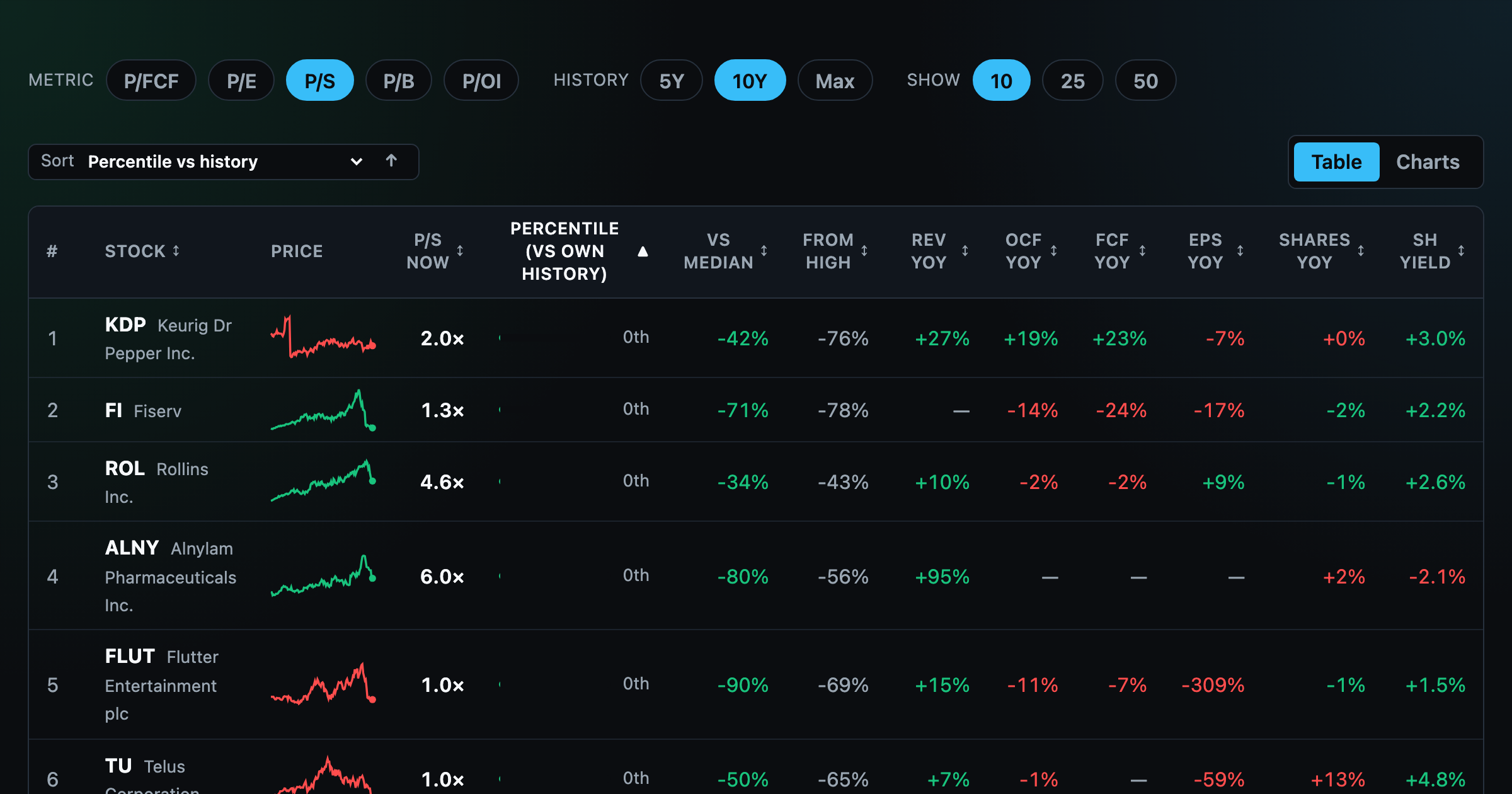
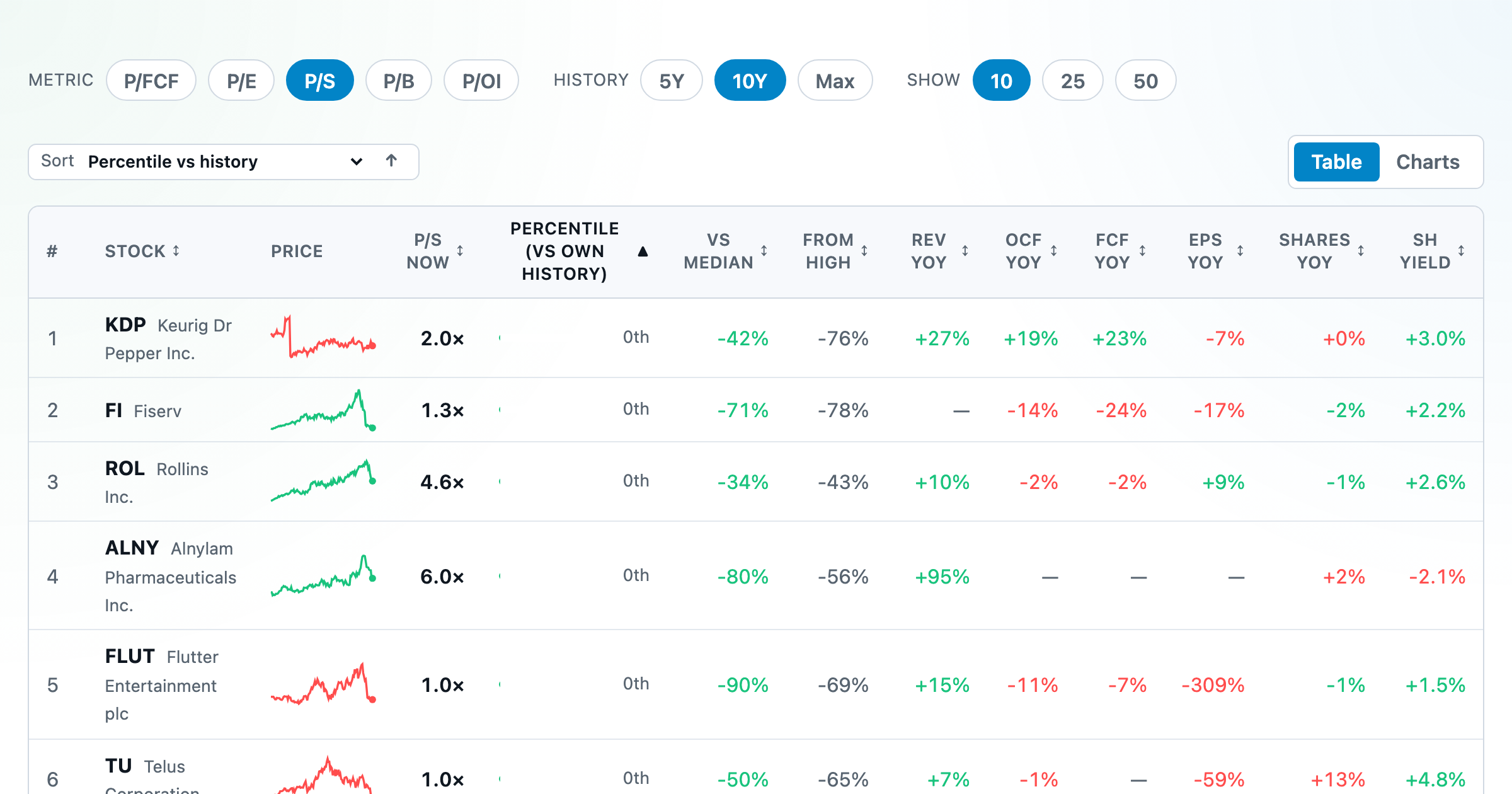
Stocks trading cheapest relative to their own P/E, P/FCF, P/S, or P/B history — with fair-value bands.
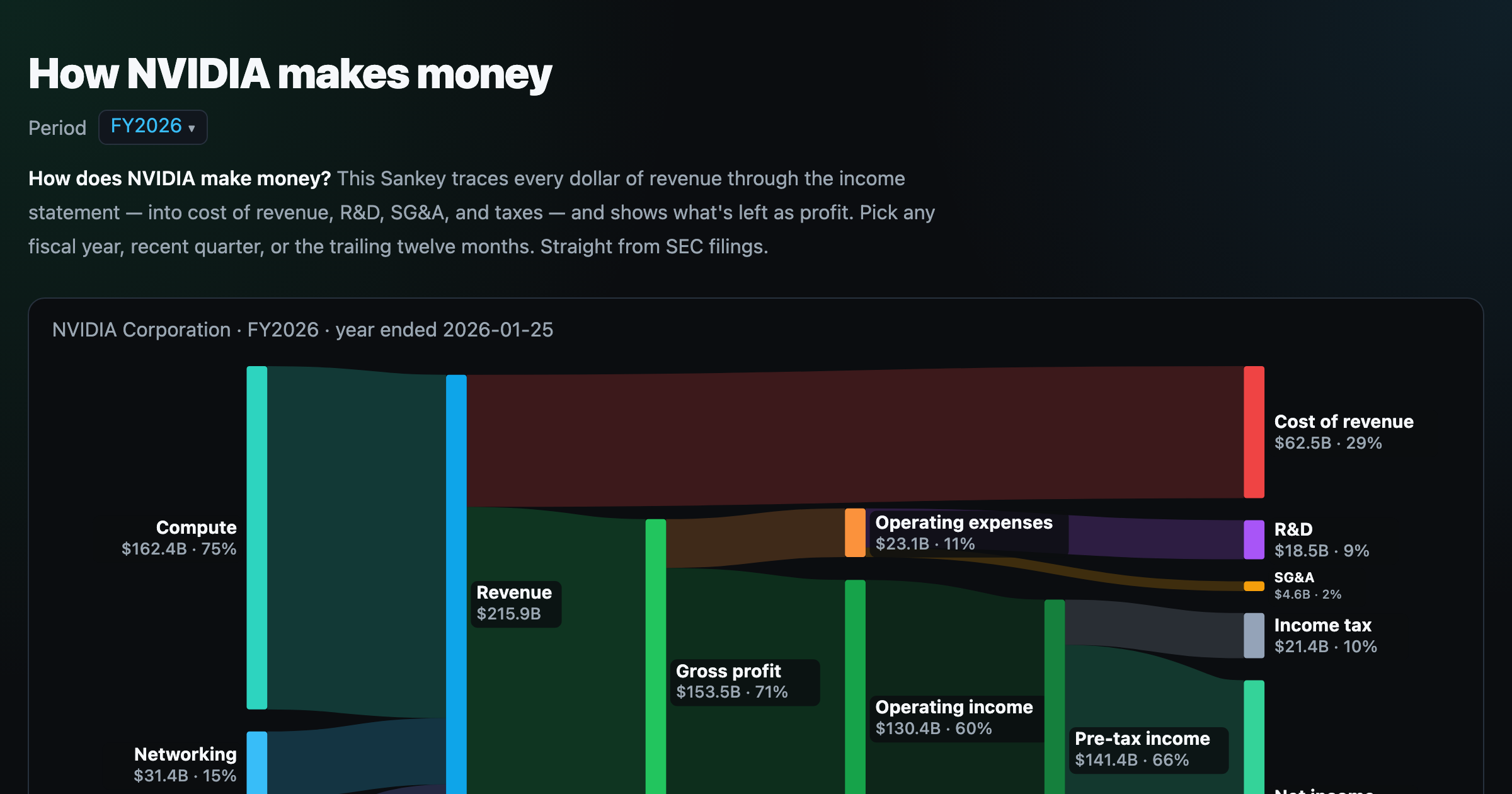
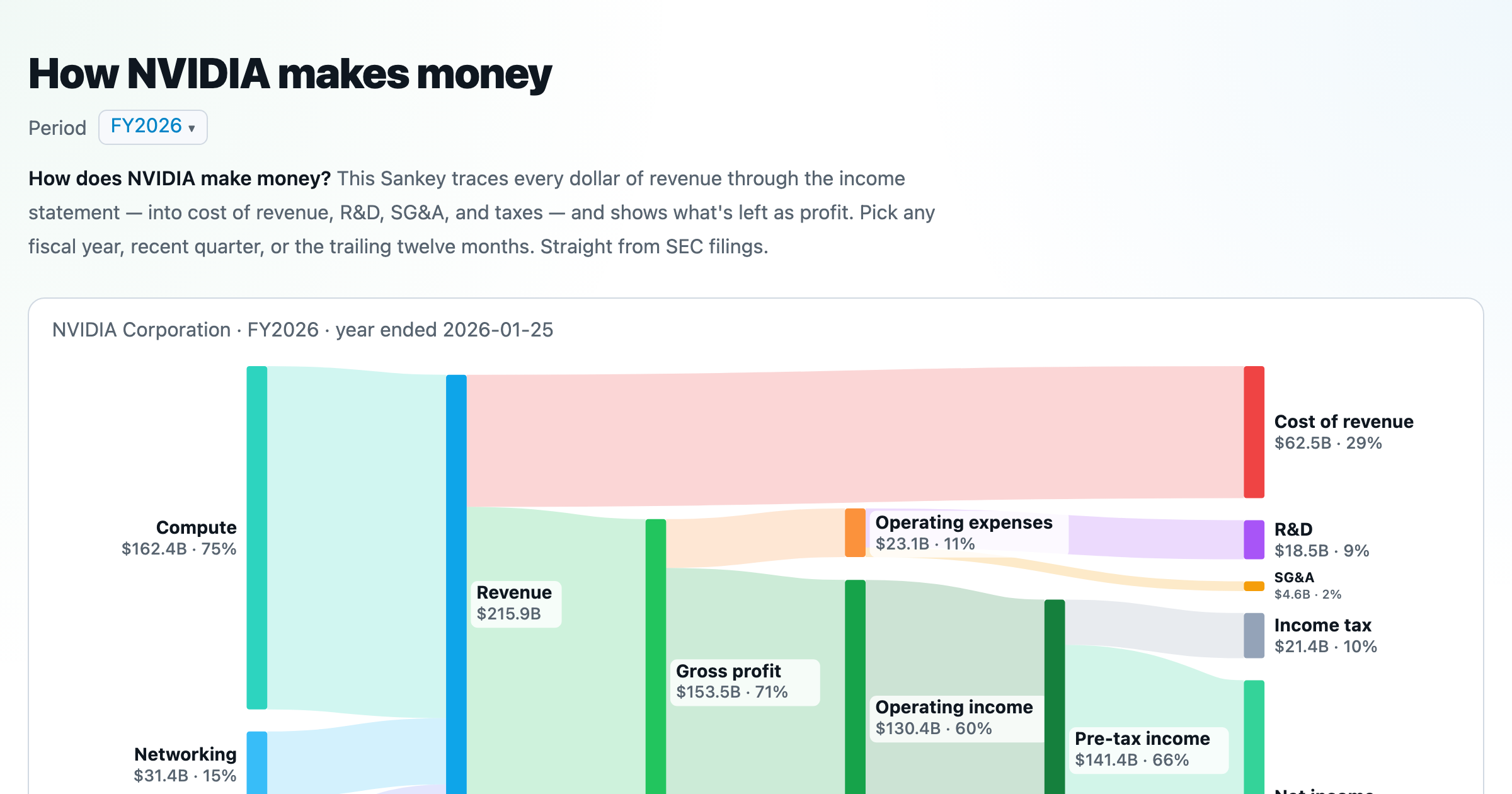
Follow a company's revenue through its income statement as a Sankey — costs, taxes, and profit.
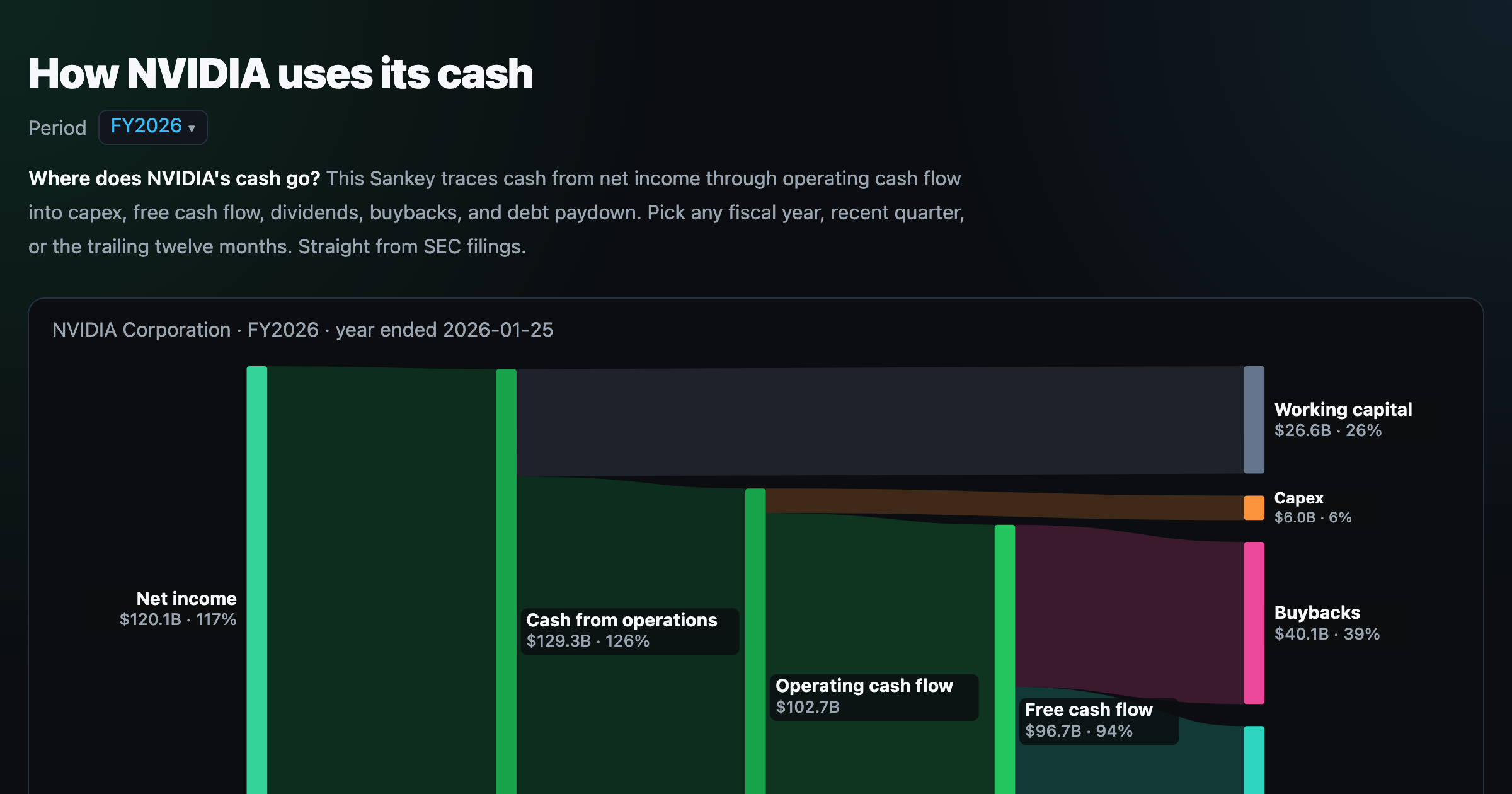
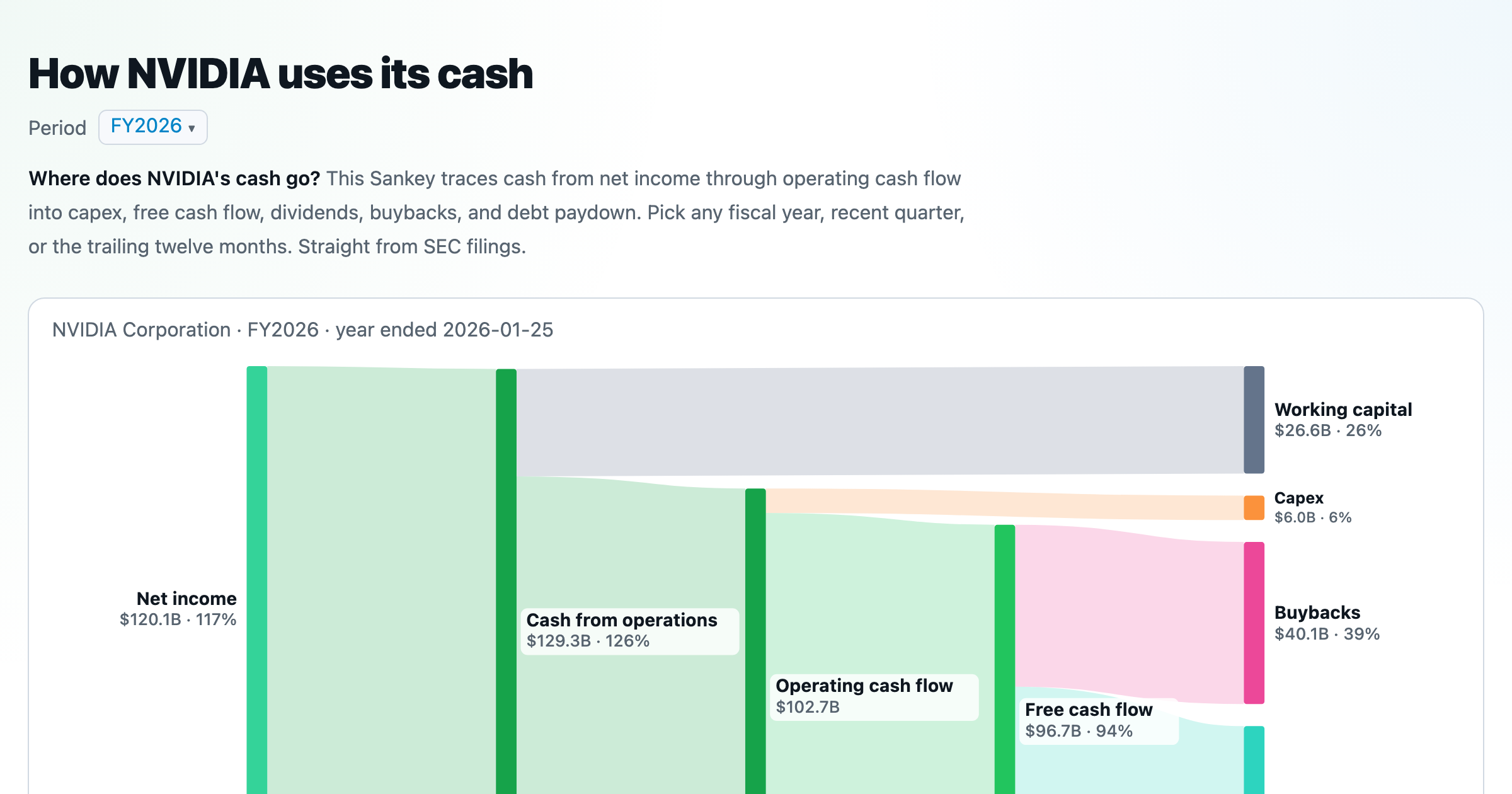
Follow a company's cash from net income through operating cash flow into capex, buybacks, and dividends.