
Biggest ETFs (2026)
The 50 ETFs below have a combined assets under management of $7.9T; the best performer of 2026 is SOXX (+91.4% YTD). The 50 largest ETFs by assets, with what they cost to own. Not investment advice.
End of day 2026-10-01 · 50 entries · digits update live during market hours
Top 50 ETFs by AUM
Save as watchlist
Technical analysis0
Addendum charts0
Overlay lines0
Columns (11 shown)
| # Company | 1Y1Y chart | ||||||||||
|---|---|---|---|---|---|---|---|---|---|---|---|
| VOOVanguard S&P 500 ETF | $702.24 | +0.20% | +0.3% | +2.5% | +12.0% | +14.3% | +76.0% | 0.03% | +1.12% | $1.00T | |
| IVViShares Core S&P 500 ETF | $767.43 | +0.21% | +0.3% | +2.4% | +12.0% | +14.2% | +76.0% | 0.03% | +1.15% | $888B | |
| SPYSPDR S&P 500 ETF Trust | $764.02 | +0.18% | +0.3% | +2.4% | +12.0% | +14.3% | +75.9% | 0.09% | +0.99% | $781B | |
| VTIVanguard Total Stock Market ETF | $375.23 | +0.26% | +0.0% | +1.6% | +11.9% | +13.9% | +66.7% | 0.03% | +1.11% | $673B | |
| QQQInvesco QQQ Trust | $742.04 | +0.31% | +4.9% | +2.3% | +20.8% | +23.0% | +106.0% | 0.18% | +0.41% | $490B | |
| VEAVanguard FTSE Developed Markets ETF | $70.20 | -0.58% | -2.6% | -0.2% | +12.4% | +16.3% | +38.6% | 0.03% | — | $227B | |
| VUGVanguard Growth ETF | $90.20 | +0.09% | +3.3% | +4.7% | +11.0% | +12.4% | +84.6% | 0.04% | +0.41% | $226B | |
| VTVVanguard Value ETF | $216.72 | +0.29% | -3.2% | -0.3% | +13.5% | +16.0% | +58.2% | 0.04% | +2.00% | $185B | |
| VGTVanguard Information Technology ETF | $126.99 | +1.05% | +6.8% | +8.4% | +34.8% | +35.0% | +149.7% | 0.09% | +0.46% | $172B | |
| VWOVanguard FTSE Emerging Markets ETF | $59.03 | -0.47% | -2.7% | -0.3% | +9.8% | +8.3% | +18.0% | 0.06% | — | $160B | |
| BNDVanguard Total Bond Market ETF | $70.09 | -0.09% | -2.4% | -4.1% | -5.4% | -5.7% | -18.1% | 0.03% | +4.33% | $153B | |
| AGGiShares Core U.S. Aggregate Bond ETF | $94.43 | -0.12% | -2.4% | -4.1% | -5.5% | -5.7% | -17.9% | 0.03% | +4.28% | $136B | |
| IWFiShares Russell 1000 Growth ETF | $125.71 | +0.36% | +3.7% | +2.2% | +6.3% | +6.7% | +81.6% | 0.18% | +0.35% | $129B | |
| VXUSVanguard Total International Stock ETF | $84.45 | -0.60% | -2.6% | -0.1% | +12.0% | +14.2% | +33.1% | 0.07% | — | $126B | |
| IJHiShares Core S&P Mid-Cap ETF | $72.69 | +1.03% | -2.5% | -4.9% | +10.2% | +11.0% | +36.0% | 0.05% | +1.24% | $124B | |
| XLKTechnology Select Sector SPDR Fund | $197.88 | +1.09% | +7.7% | +6.6% | +37.4% | +39.0% | +161.0% | 0.08% | +0.45% | $124B | |
| IJRiShares Core S&P Small-Cap ETF | $136.97 | +0.68% | -4.2% | -7.2% | +14.0% | +14.9% | +23.0% | 0.06% | +1.49% | $111B | |
| VIGVanguard Dividend Appreciation ETF | $233.53 | +0.09% | -3.1% | -1.2% | +6.3% | +7.7% | +50.5% | 0.05% | +1.71% | $107B | |
| VOVanguard Mid-Cap ETF | $79.13 | +0.91% | -2.7% | -1.6% | +9.1% | +7.9% | +32.0% | 0.03% | +1.29% | $99B | |
| QQQMInvesco NASDAQ 100 ETF | $305.54 | +0.30% | +4.9% | +2.3% | +20.8% | +23.0% | +106.4% | 0.15% | +0.41% | $97B | |
| SCHDSchwab U.S. Dividend Equity ETF | $32.66 | +0.40% | -6.2% | +2.5% | +19.1% | +18.6% | +30.2% | 0.06% | +3.27% | $95B | |
| ITOTiShares Core S&P Total U.S. Stock Market ETF | $166.62 | +0.20% | +0.0% | +1.6% | +12.1% | +14.0% | +67.3% | 0.03% | +1.09% | $94B | |
| SGOViShares 0-3 Month Treasury Bond ETF | $100.41 | -0.27% | +0.0% | +0.0% | +0.0% | +0.0% | +0.4% | 0.09% | +3.67% | $92B | |
| RSPInvesco S&P 500 Equal Weight ETF | $209.02 | +0.48% | -3.9% | -2.1% | +9.1% | +9.9% | +37.6% | 0.20% | +1.52% | $88B | |
| IWMiShares Russell 2000 ETF | $279.04 | +0.41% | -4.0% | -6.8% | +13.3% | +15.1% | +25.5% | 0.19% | +1.08% | $83B | |
| IWDiShares Russell 1000 Value ETF | $248.15 | +0.09% | -3.0% | +1.8% | +18.0% | +21.8% | +56.6% | 0.18% | +1.50% | $80B | |
| EFAiShares MSCI EAFE ETF | $102.83 | -1.02% | -3.4% | -0.2% | +7.1% | +9.2% | +31.5% | 0.32% | +3.18% | $78B | |
| SMHVanEck Semiconductor ETF | $617.97 | +1.47% | +13.3% | -0.4% | +71.6% | +85.1% | +381.7% | 0.35% | +0.18% | $77B | |
| VBVanguard Small-Cap ETF | $286.64 | +0.76% | -3.2% | -5.0% | +11.1% | +12.4% | +29.0% | 0.03% | +1.24% | $77B | |
| VYMVanguard High Dividend Yield ETF | $155.36 | +0.10% | -4.9% | -1.8% | +8.2% | +10.1% | +48.5% | 0.04% | +2.28% | $77B | |
| VTVanguard Total World Stock ETF | $157.82 | -0.02% | -0.9% | +1.1% | +11.9% | +13.9% | +53.7% | 0.06% | +1.03% | $75B | |
| SCHXSchwab U.S. Large-Cap ETF | $30.09 | +0.28% | +0.2% | +2.4% | +11.8% | +13.8% | +71.6% | 0.03% | +1.09% | $73B | |
| BNDXVanguard Total International Bond ETF | $46.80 | -0.15% | -1.0% | -3.1% | -3.2% | -5.2% | -17.9% | 0.07% | +2.83% | $69B | |
| VEUVanguard FTSE All-World ex-US ETF | $82.47 | -0.60% | -2.6% | -0.3% | +12.1% | +14.6% | +34.9% | 0.07% | — | $65B | |
| VCITVanguard Intermediate-Term Corporate Bond ETF | $78.14 | -0.22% | -2.8% | -4.9% | -6.7% | -7.1% | -17.5% | 0.03% | +5.22% | $61B | |
| SCHGSchwab U.S. Large-Cap Growth ETF | $35.99 | +0.17% | +2.1% | +5.5% | +10.4% | +12.2% | +92.3% | 0.04% | +0.41% | $61B | |
| IWRiShares Russell Midcap ETF | $107.60 | +0.83% | -2.6% | -2.4% | +11.8% | +11.5% | +35.9% | 0.18% | +1.22% | $57B | |
| VVVanguard Large-Cap ETF | $352.47 | +0.18% | +0.4% | +2.6% | +11.9% | +14.0% | +73.4% | 0.04% | +1.11% | $54B | |
| SPYGSPDR Portfolio S&P 500 Growth ETF | $123.36 | +0.23% | +3.1% | +4.2% | +15.6% | +17.6% | +90.7% | 0.04% | +0.48% | $53B | |
| XLFFinancial Select Sector SPDR Fund | $53.48 | +0.14% | -6.5% | -2.4% | -2.4% | +0.1% | +40.1% | 0.08% | +1.47% | $51B | |
| IWBiShares Russell 1000 ETF | $416.97 | +0.20% | +0.1% | +2.0% | +11.7% | +13.7% | +70.5% | 0.15% | +0.97% | $48B | |
| IEFiShares 7-10 Year Treasury Bond ETF | $89.30 | -0.01% | -3.0% | -5.0% | -7.1% | -7.5% | -22.8% | 0.15% | +4.46% | $48B | |
| SOXXiShares Semiconductor ETF | $576.38 | +1.36% | +15.2% | -3.9% | +91.4% | +108.6% | +287.5% | 0.33% | +0.23% | $48B | |
| BILSPDR Bloomberg 1-3 Month T-Bill ETF | $91.41 | -0.26% | +0.0% | +0.0% | +0.0% | -0.1% | -0.1% | 0.14% | +3.68% | $47B | |
| DIASPDR Dow Jones Industrial Average ETF | $508.57 | +0.00% | -3.6% | -2.6% | +5.8% | +9.6% | +48.2% | 0.16% | +0.86% | $45B | |
| MUBiShares National Muni Bond ETF | $101.32 | +0.22% | -2.9% | -5.6% | -5.4% | -4.7% | -12.7% | 0.05% | +3.43% | $45B | |
| JEPIJPMorgan Equity Premium Income ETF | $55.93 | -0.52% | -1.9% | -0.3% | -2.3% | -1.6% | -6.4% | 0.35% | +7.96% | $45B | |
| BSVVanguard Short-Term Bond ETF | $76.29 | -0.14% | -1.1% | -1.7% | -3.2% | -3.2% | -6.9% | 0.03% | +4.22% | $44B | |
| SCHBSchwab U.S. Broad Market ETF | $29.38 | +0.22% | +0.0% | +1.7% | +12.0% | +13.9% | +67.8% | 0.03% | +1.10% | $43B | |
| VONGVanguard Russell 1000 Growth ETF | $129.39 | +0.36% | +3.7% | +2.3% | +6.3% | +6.7% | +81.6% | 0.07% | +0.45% | $43B |
Methodology
The 50 largest ETFs by net assets. A caveat the ranking cannot hide: where an issuer runs its ETF as one share class of a mutual fund, SEC filings report net assets for ALL classes combined, and no per-class figure is filed anywhere — so those funds are ranked on a whole-fund number that overstates the ETF itself. Expense ratios are curated.
Performance columns are price returns: the change in the split-adjusted share price, the way quote screens report it, through the latest print during the session. Dividends are not reinvested. Fundamentals come from company filings via our EDGAR pipeline. Past performance does not predict future returns; this is not investment advice.
FAQ#
- What is the biggest ETF?
- Vanguard S&P 500 ETF (VOO) leads on assets under management, with about $1.00T.
- What are the top 10 ETFs by AUM?
- The 10 largest US ETFs by assets: 1. VOO $1.00T, 2. IVV $888B, 3. SPY $781B, 4. VTI $673B, 5. QQQ $490B, 6. VEA $227B, 7. VUG $226B, 8. VTV $185B, 9. VGT $172B, 10. VWO $160B.
More lists
Biggest capex spenders
100 stocksThe largest capital-expenditure budgets in absolute dollars — where the AI build-out actually shows up.
Biggest buyback programs
100 stocksThe most cash spent repurchasing stock over the trailing year, net of shares issued.
Biggest companies by market cap
100 stocksThe top 100 by market cap — and the trillion-dollar club.
Biggest companies by revenue
100 stocksRanked by actual sales from SEC filings. A very different top 10.
Most profitable companies
100 stocksThe top 100 by bottom-line profit. Revenue is vanity; this is the scoreboard.
Biggest companies by free cash flow
100 stocksCash actually generated after capex — the strictest of the size rankings.
Explore visualizations
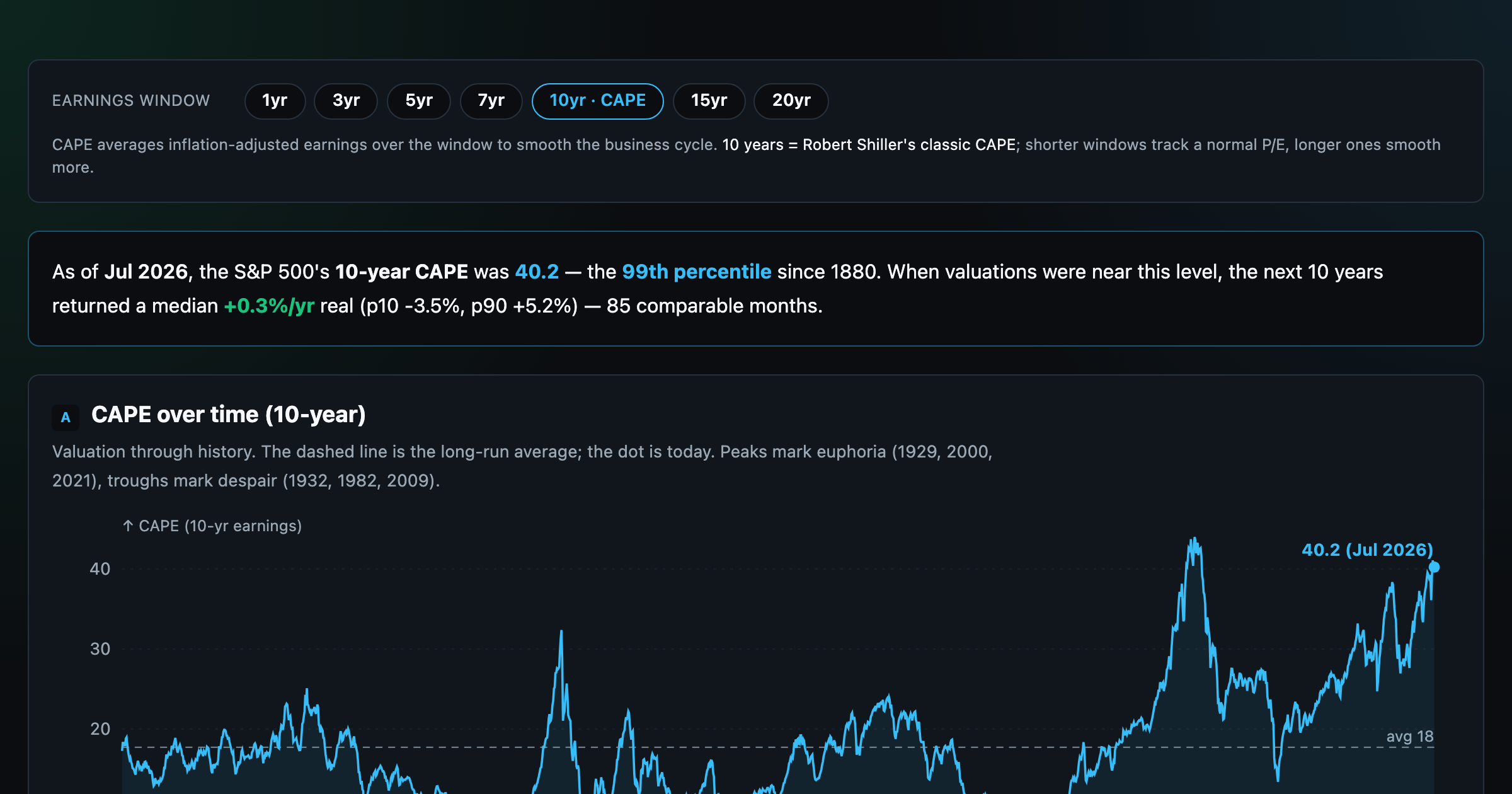
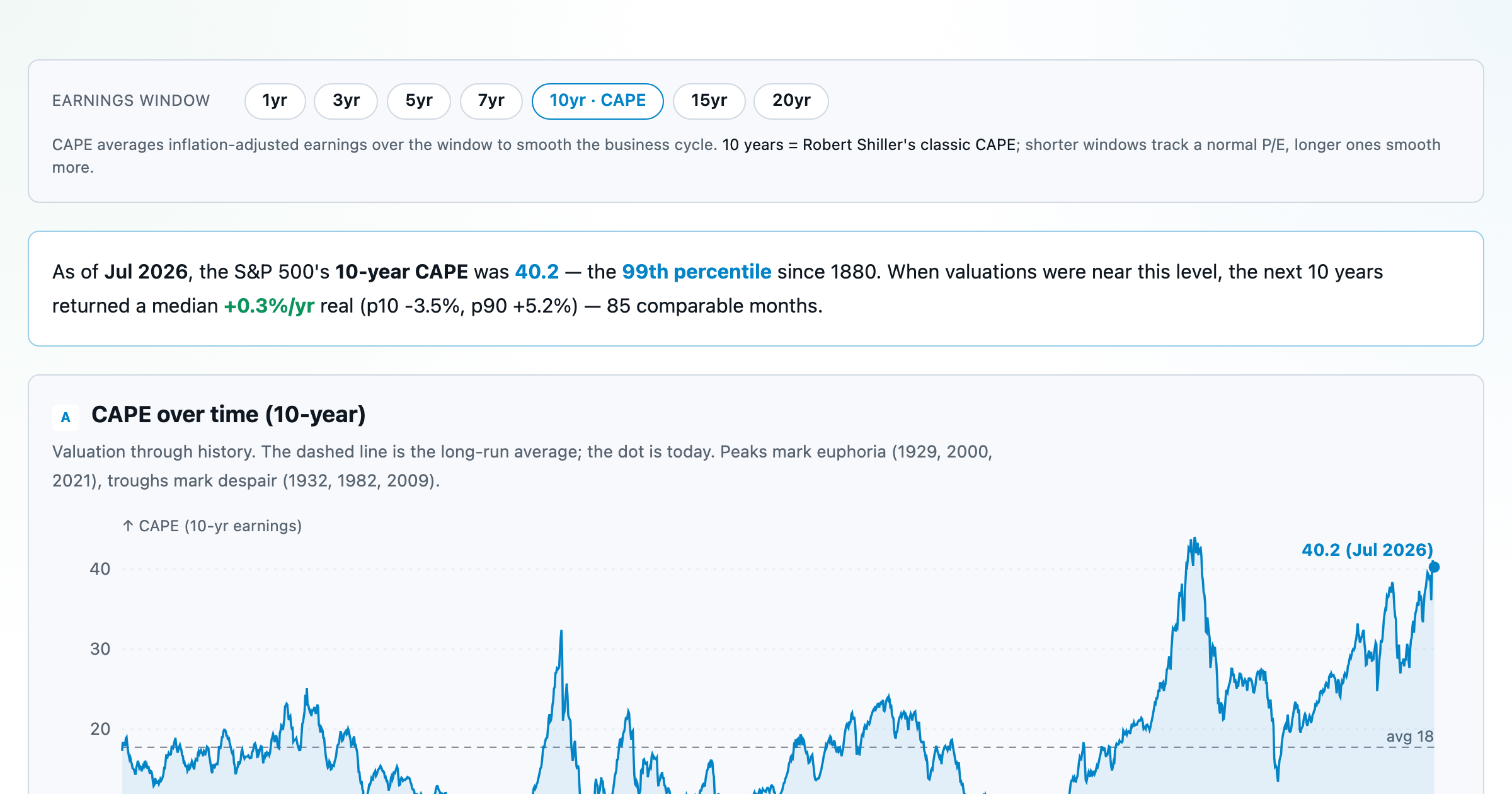
Is the market expensive? The Shiller CAPE back to 1871 and what valuations have meant for the next decade.
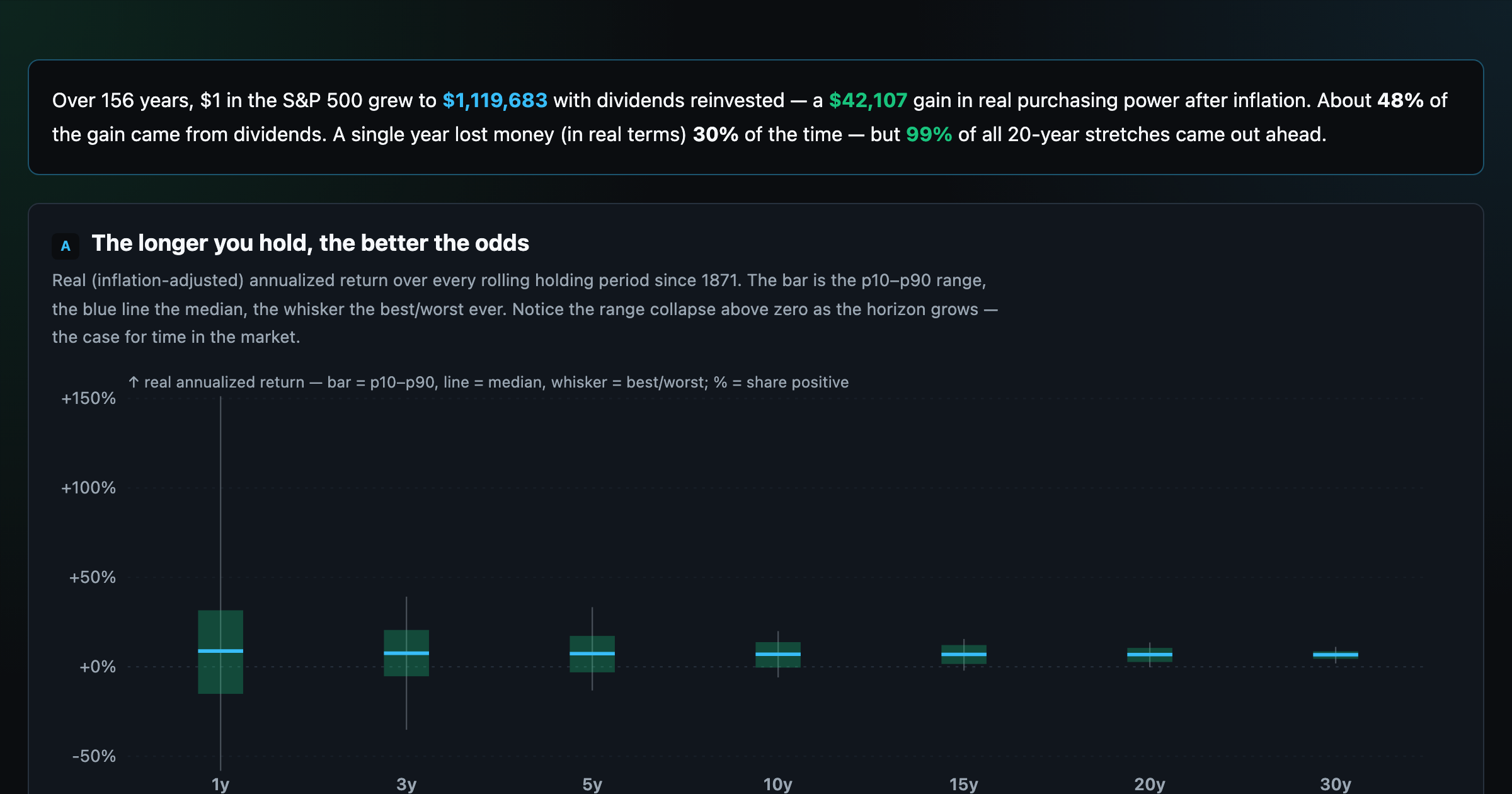
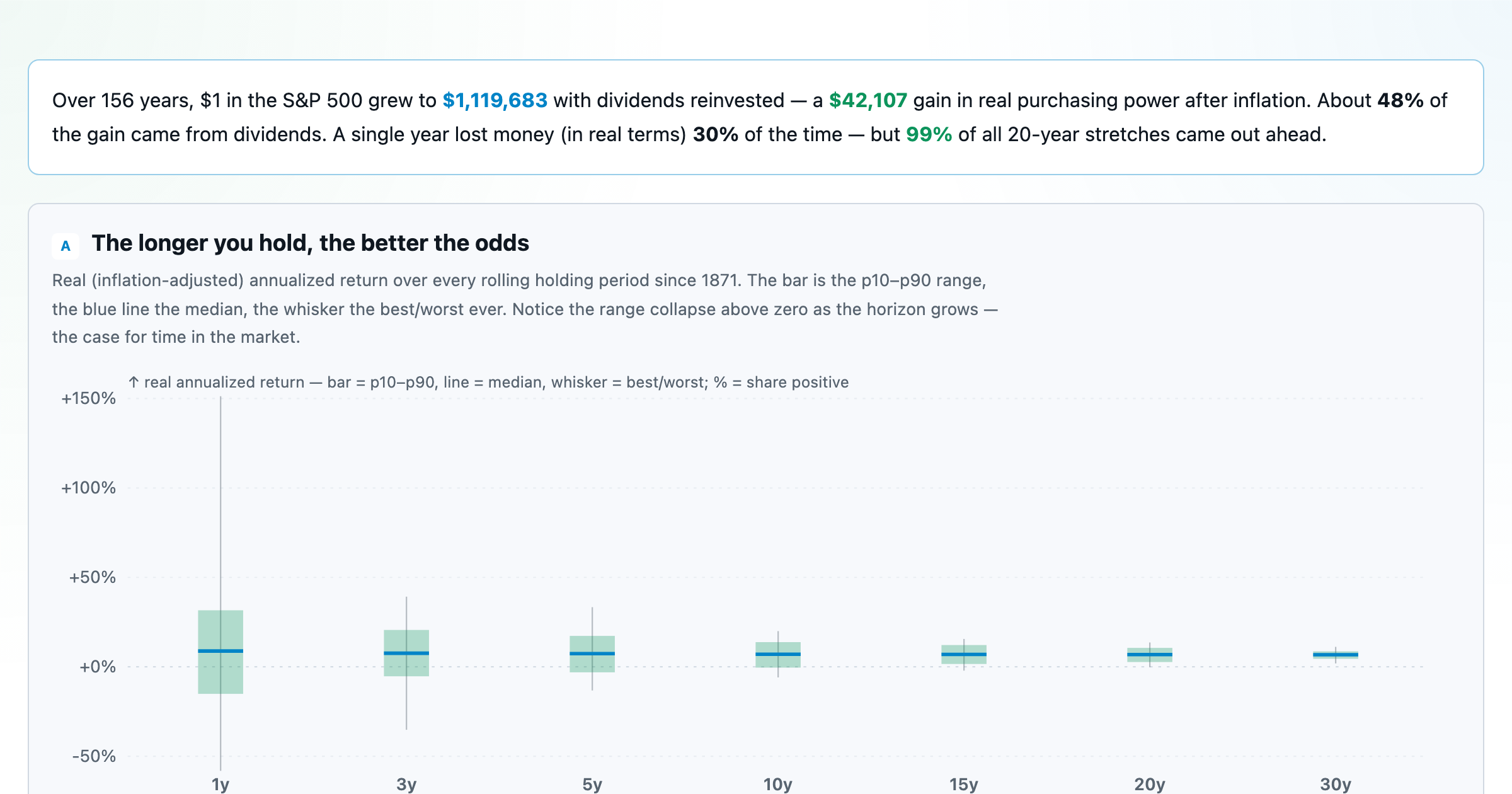
The S&P 500 since 1871 — odds of gain by holding period, real drawdowns, and the growth of $1.
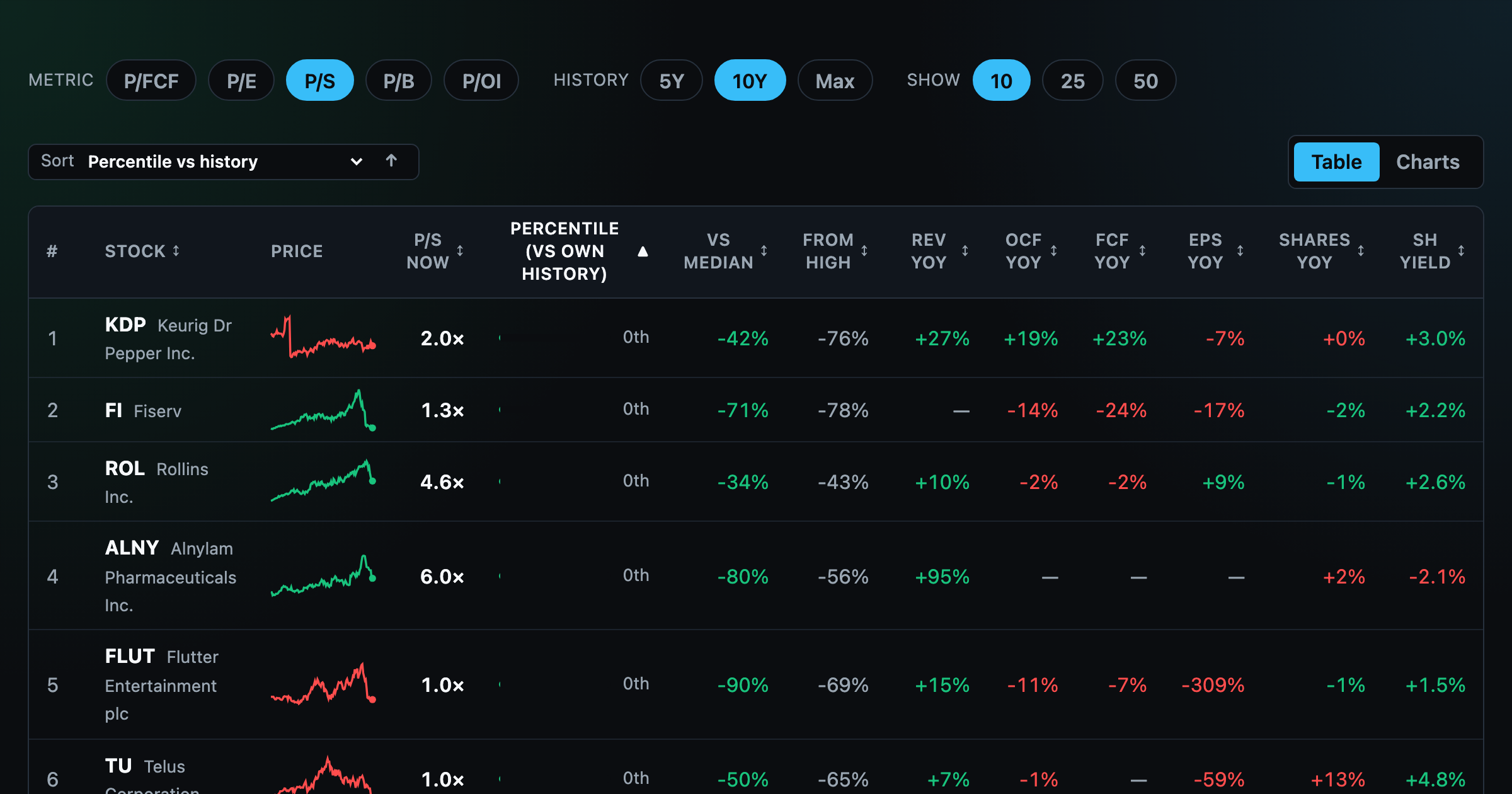
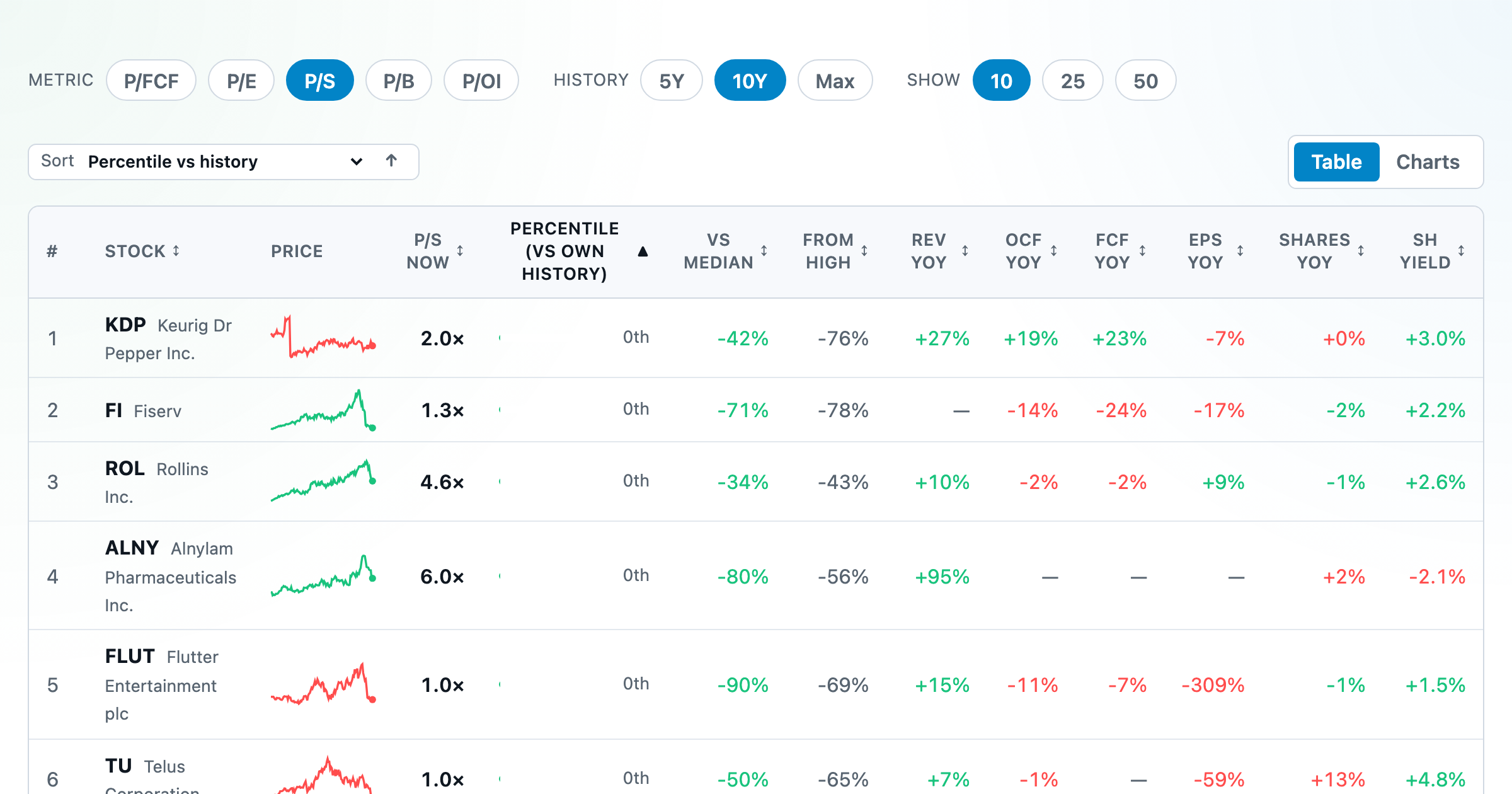
Stocks trading cheapest relative to their own P/E, P/FCF, P/S, or P/B history — with fair-value bands.