
seasonality
Historically, November has been the S&P 500's best month, averaging +2.6%, and September the worst (-0.5%), across 1994–2026. Every calendar month's average total return below — switch the ticker to see the seasonal pattern of any stock or ETF.
Average return by month (1994–2026)#
Month-by-month statistics#
| Month | Average | Median | % positive | Best | Worst |
|---|---|---|---|---|---|
| Jan | +0.8% | +1.6% | 61% | +8.0% ('19) | -8.2% ('09) |
| Feb | -0.0% | +0.3% | 52% | +6.9% ('98) | -10.7% ('09) |
| Mar | +0.9% | +1.7% | 67% | +9.7% ('00) | -12.5% ('20) |
| Apr | +2.1% | +1.3% | 76% | +12.7% ('20) | -8.8% ('22) |
| May | +1.2% | +1.6% | 70% | +6.3% ('97) | -7.9% ('10) |
| Jun | +0.4% | +0.6% | 64% | +7.0% ('19) | -8.4% ('08) |
| Jul | +1.5% | +1.8% | 67% | +9.2% ('22) | -7.9% ('02) |
| Aug | -0.1% | +0.7% | 64% | +7.0% ('20) | -14.1% ('98) |
| Sep | -0.5% | +0.6% | 55% | +9.0% ('10) | -10.5% ('02) |
| Oct | +1.7% | +2.2% | 64% | +10.9% ('11) | -16.5% ('08) |
| Nov | +2.6% | +3.0% | 78% | +10.9% ('20) | -7.5% ('00) |
| Dec | +0.9% | +1.1% | 69% | +6.7% ('10) | -8.8% ('18) |
Every month, every year#
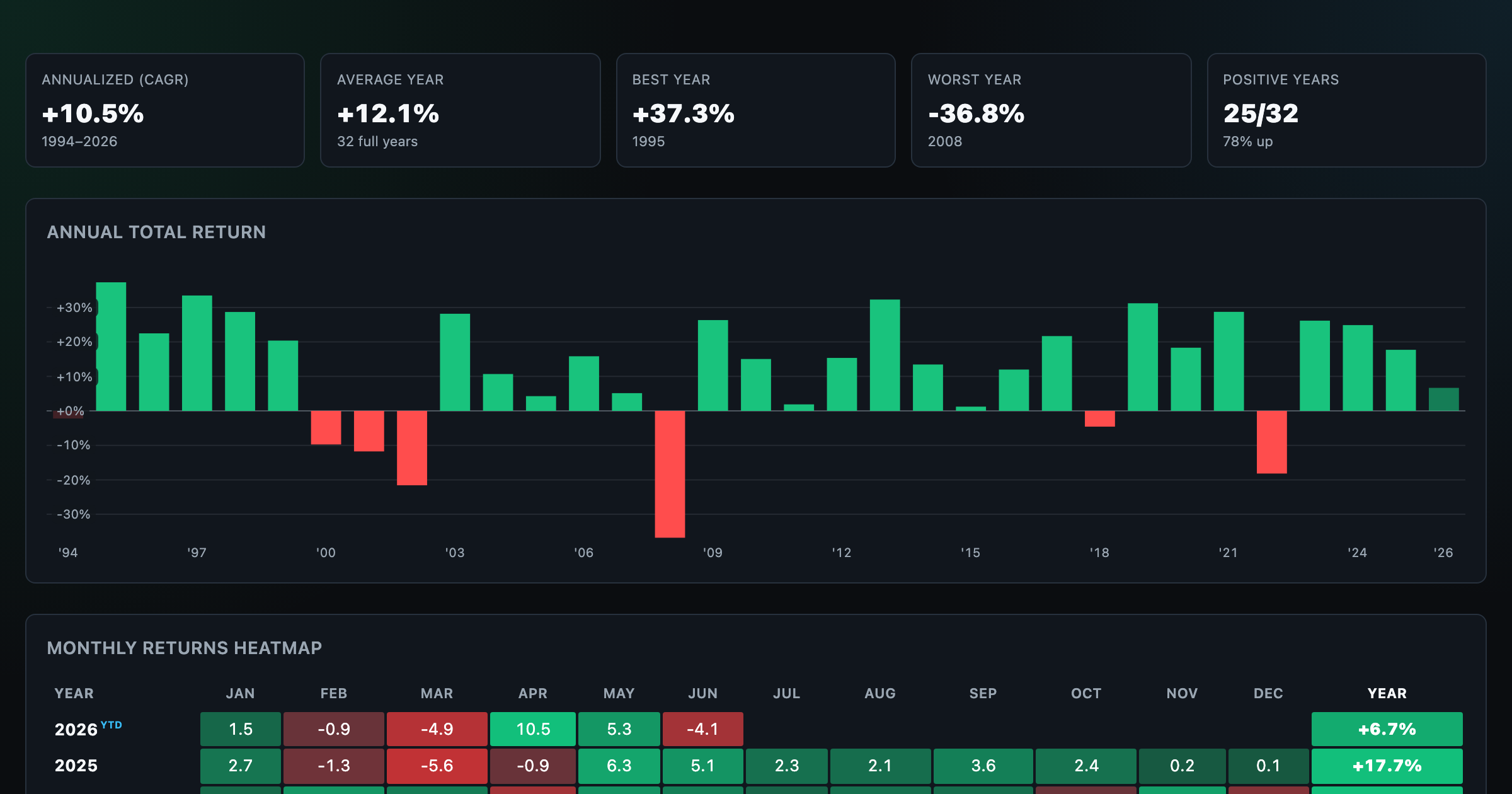
Returns heatmap
| Year | Jan | Feb | Mar | Apr | May | Jun | Jul | Aug | Sep | Oct | Nov | Dec | Year |
|---|---|---|---|---|---|---|---|---|---|---|---|---|---|
| 2026YTD | 1.5 | -0.9 | -4.9 | 10.5 | 5.3 | -1.0 | 0.1 | 2.7 | -0.3 | 0.9 | +13.7% | ||
| 2025 | 2.7 | -1.3 | -5.6 | -0.9 | 6.3 | 5.1 | 2.3 | 2.1 | 3.6 | 2.4 | 0.2 | 0.1 | +17.7% |
| 2024 | 1.6 | 5.2 | 3.3 | -4.0 | 5.1 | 3.5 | 1.2 | 2.3 | 2.1 | -0.9 | 6.0 | -2.4 | +24.9% |
| 2023 | 6.3 | -2.5 | 3.7 | 1.6 | 0.5 | 6.5 | 3.3 | -1.6 | -4.7 | -2.2 | 9.1 | 4.6 | +26.2% |
| 2022 | -5.3 | -3.0 | 3.8 | -8.8 | 0.2 | -8.2 | 9.2 | -4.1 | -9.2 | 8.1 | 5.6 | -5.8 | -18.2% |
| 2021 | -1.0 | 2.8 | 4.5 | 5.3 | 0.7 | 2.2 | 2.4 | 3.0 | -4.7 | 7.0 | -0.8 | 4.6 | +28.7% |
| 2020 | -0.0 | -7.9 | -12.5 | 12.7 | 4.8 | 1.8 | 5.9 | 7.0 | -3.7 | -2.5 | 10.9 | 3.7 | +18.3% |
| 2019 | 8.0 | 3.2 | 1.8 | 4.1 | -6.4 | 7.0 | 1.5 | -1.7 | 1.9 | 2.2 | 3.6 | 2.9 | +31.2% |
| 2018 | 5.6 | -3.6 | -2.7 | 0.5 | 2.4 | 0.6 | 3.7 | 3.2 | 0.6 | -6.9 | 1.9 | -8.8 | -4.6% |
| 2017 | 1.8 | 3.9 | 0.1 | 1.0 | 1.4 | 0.6 | 2.1 | 0.3 | 2.0 | 2.4 | 3.1 | 1.2 | +21.7% |
| 2016 | -5.0 | -0.1 | 6.7 | 0.4 | 1.7 | 0.3 | 3.6 | 0.1 | 0.0 | -1.7 | 3.7 | 2.0 | +12.0% |
| 2015 | -3.0 | 5.6 | -1.6 | 1.0 | 1.3 | -2.0 | 2.3 | -6.1 | -2.6 | 8.5 | 0.4 | -1.7 | +1.2% |
| 2014 | -3.5 | 4.6 | 0.8 | 0.7 | 2.3 | 2.1 | -1.3 | 3.9 | -1.4 | 2.4 | 2.7 | -0.3 | +13.5% |
| 2013 | 5.1 | 1.3 | 3.8 | 1.9 | 2.4 | -1.3 | 5.2 | -3.0 | 3.2 | 4.6 | 3.0 | 2.6 | +32.3% |
| 2012 | 4.6 | 4.3 | 3.2 | -0.7 | -6.0 | 4.1 | 1.2 | 2.5 | 2.0 | -1.8 | 0.6 | 0.9 | +15.4% |
| 2011 | 2.3 | 3.5 | 0.0 | 2.9 | -1.1 | -1.7 | -2.0 | -5.5 | -6.9 | 10.9 | -0.4 | 1.0 | +1.9% |
| 2010 | -3.6 | 3.1 | 6.1 | 1.5 | -7.9 | -5.2 | 6.8 | -4.5 | 9.0 | 3.8 | 0.0 | 6.7 | +15.1% |
| 2009 | -8.2 | -10.7 | 8.3 | 9.9 | 5.8 | -0.1 | 7.5 | 3.7 | 3.5 | -1.9 | 6.2 | 1.9 | +26.4% |
| 2008 | -6.0 | -2.6 | -0.9 | 4.8 | 1.5 | -8.4 | -0.9 | 1.5 | -9.4 | -16.5 | -7.0 | 1.0 | -36.8% |
| 2007 | 1.5 | -2.0 | 1.2 | 4.4 | 3.4 | -1.5 | -3.1 | 1.3 | 3.9 | 1.4 | -3.9 | -1.1 | +5.1% |
| 2006 | 2.4 | 0.6 | 1.7 | 1.3 | -3.0 | 0.3 | 0.4 | 2.2 | 2.7 | 3.2 | 2.0 | 1.3 | +15.8% |
| 2005 | -2.2 | 2.1 | -1.8 | -1.9 | 3.2 | 0.2 | 3.8 | -0.9 | 0.8 | -2.4 | 4.4 | -0.7 | +4.3% |
| 2004 | 2.0 | 1.4 | -1.3 | -1.9 | 1.7 | 1.8 | -3.2 | 0.2 | 1.0 | 1.3 | 4.5 | 3.0 | +10.7% |
| 2003 | -2.5 | -1.3 | 0.2 | 8.5 | 5.5 | 1.1 | 1.8 | 2.1 | -1.1 | 5.4 | 1.1 | 5.0 | +28.2% |
| 2002 | -1.0 | -1.8 | 3.3 | -5.8 | -0.6 | -7.4 | -7.9 | 0.7 | -10.5 | 8.2 | 6.2 | -5.7 | -21.6% |
| 2001 | 4.4 | -9.5 | -5.6 | 8.5 | -0.6 | -2.4 | -1.0 | -5.9 | -8.2 | 1.3 | 7.8 | 0.6 | -11.8% |
| 2000 | -5.0 | -1.5 | 9.7 | -3.5 | -1.6 | 2.0 | -1.6 | 6.5 | -5.5 | -0.5 | -7.5 | -0.5 | -9.7% |
| 1999 | 3.5 | -3.2 | 4.1 | 3.8 | -2.3 | 5.5 | -3.1 | -0.5 | -2.2 | 6.4 | 1.7 | 5.7 | +20.4% |
| 1998 | 1.3 | 6.9 | 4.9 | 1.3 | -2.1 | 4.3 | -1.4 | -14.1 | 6.4 | 8.1 | 5.6 | 6.5 | +28.7% |
| 1997 | 6.2 | 1.0 | -4.4 | 6.3 | 6.3 | 4.1 | 7.9 | -5.2 | 4.8 | -2.5 | 3.9 | 1.9 | +33.5% |
| 1996 | 3.6 | 0.3 | 1.7 | 1.1 | 2.3 | 0.9 | -4.5 | 1.9 | 5.6 | 3.2 | 7.3 | -2.4 | +22.5% |
| 1995 | 3.4 | 4.1 | 2.8 | 3.0 | 4.0 | 2.0 | 3.2 | 0.4 | 4.2 | -0.3 | 4.4 | 1.6 | +38.1% |
| 1994 | 3.5 | -2.9 | -4.2 | 1.1 | 1.6 | -2.3 | 3.2 | 3.8 | -2.5 | 2.8 | -4.0 | 0.7 | +0.4% |
| Avg | 0.8 | -0.0 | 0.9 | 2.1 | 1.2 | 0.4 | 1.5 | -0.1 | -0.5 | 1.7 | 2.6 | 0.9 | +12.3% |
Cells show monthly total return; green = up, red = down (%).
Methodology#
Monthly returns are total returns (dividends reinvested) from SPY's split- and dividend-adjusted month-end closes — a standard proxy for the S&P 500, covering every complete month from 1994 to today. "Average" is the simple mean of that calendar month across all years; "% positive" is how often it finished up. Seasonal averages describe the past — they are not a forecast, and this year's November can easily buck the pattern. See the for the raw series. Not investment advice.
FAQ#
- What is the best month for the stock market?
- Historically November has been the S&P 500 (proxied by SPY, dividends reinvested)'s strongest month, averaging +2.6% since 1994. The weakest has been September, averaging -0.5%.
- Should I trade based on seasonality?
- Probably not on its own. Monthly averages hide huge year-to-year variation — a "weak" September has still been positive in many years — and well-known patterns tend to shrink once publicized. Treat seasonality as context, not a signal.
- Which month is most consistently positive for S&P 500?
- November — it finished positive in about 78% of years since 1994.
More visualizations
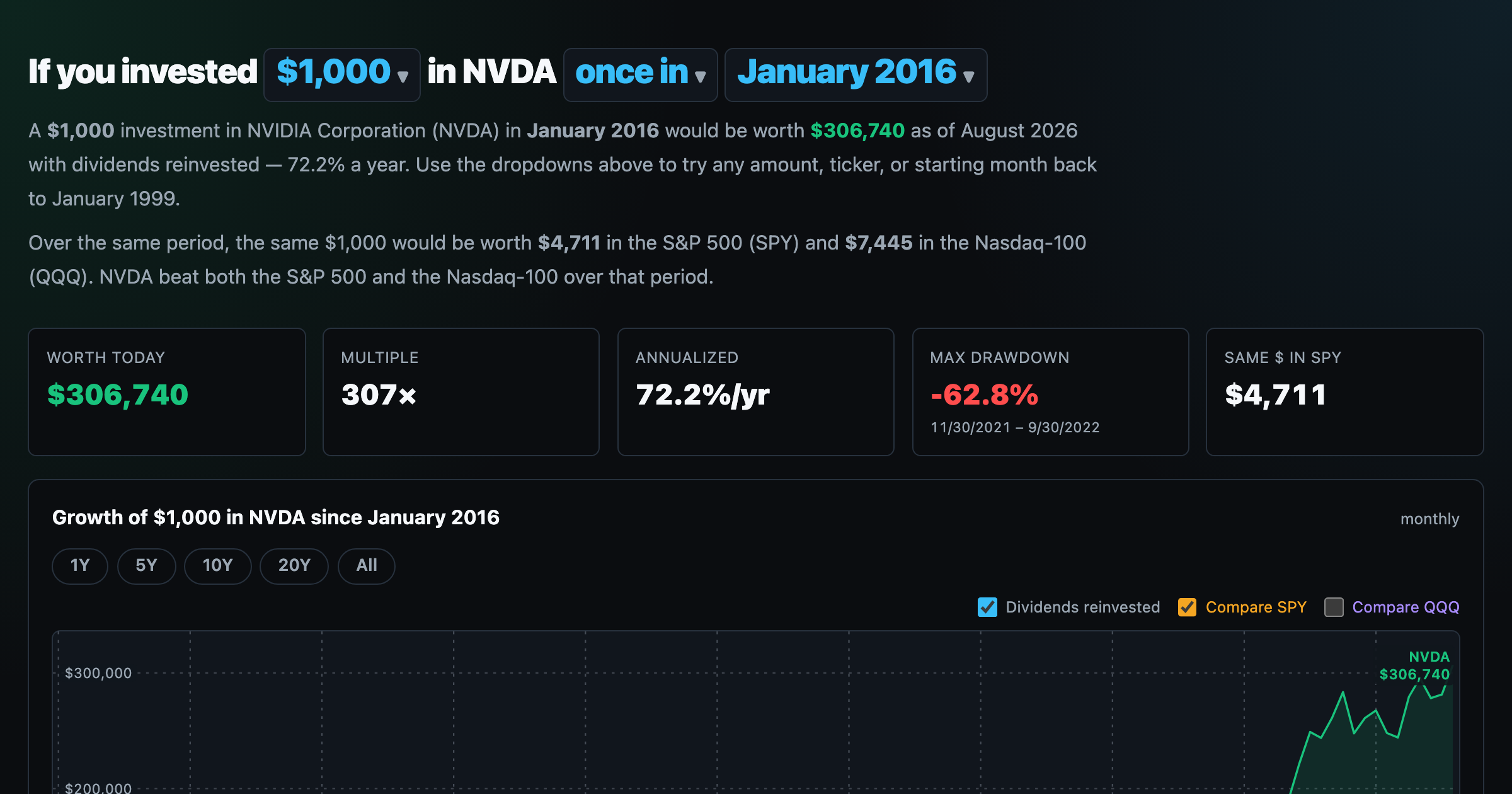
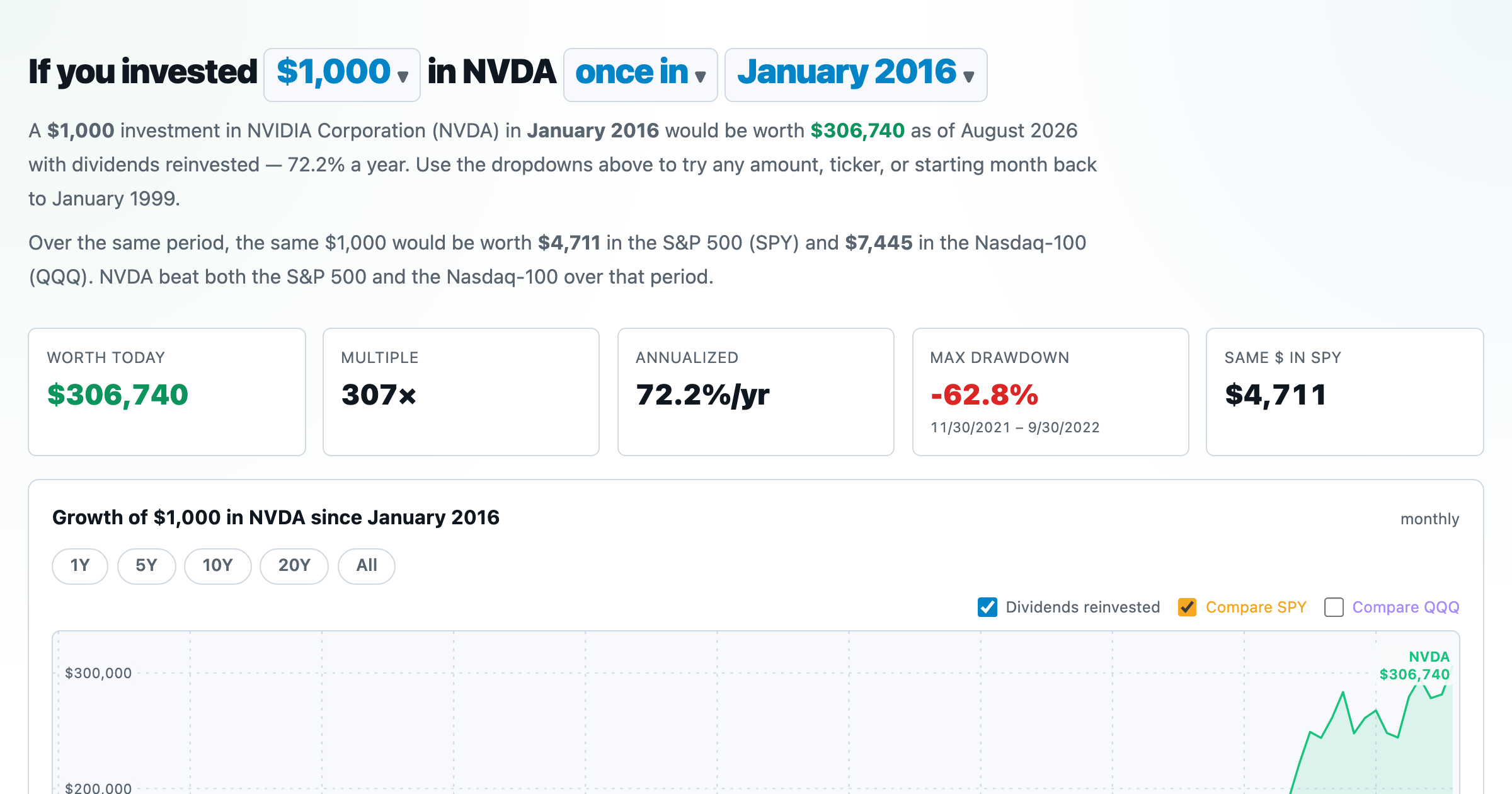
What $1,000 in any stock or ETF would be worth today.
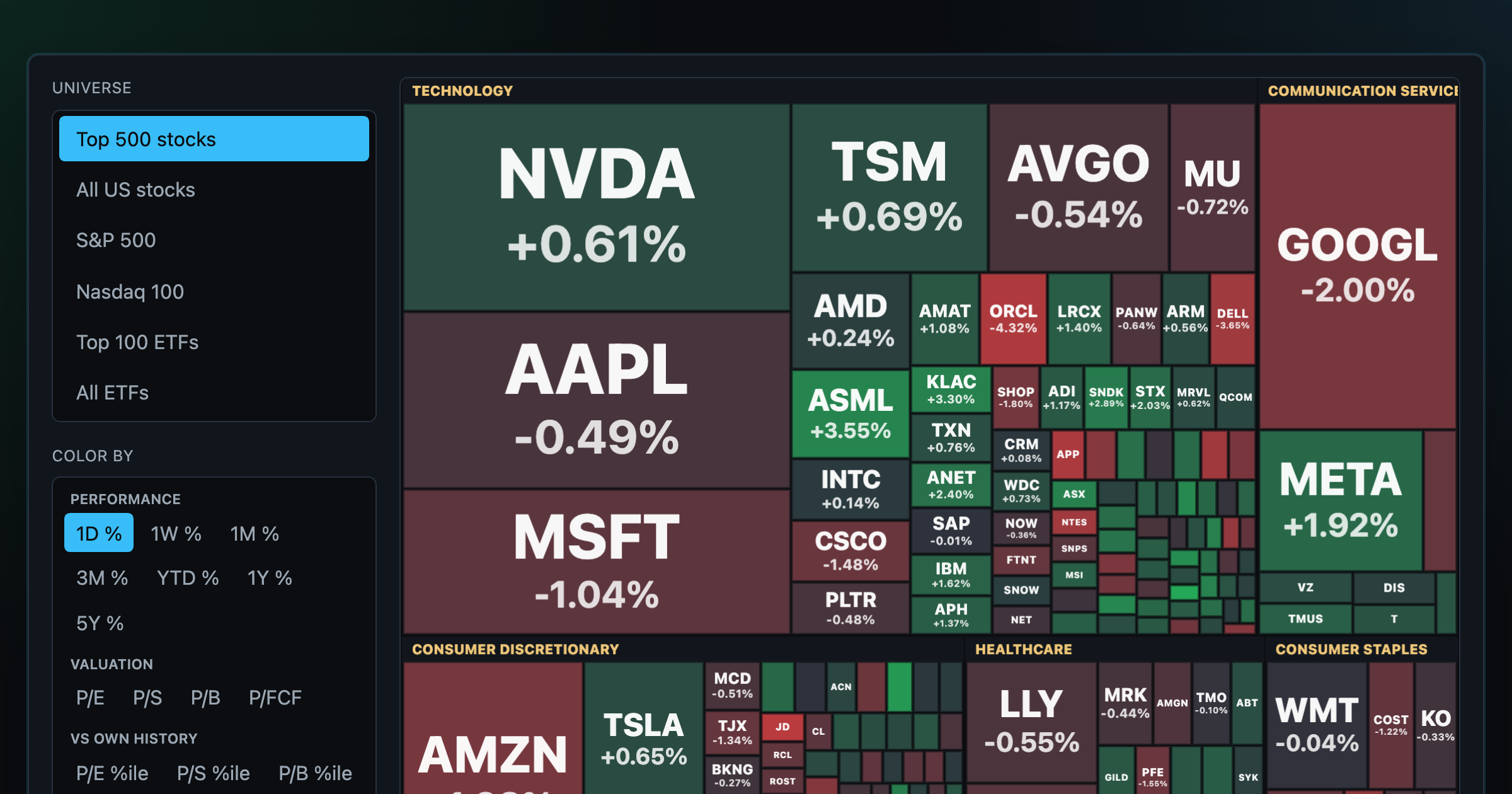
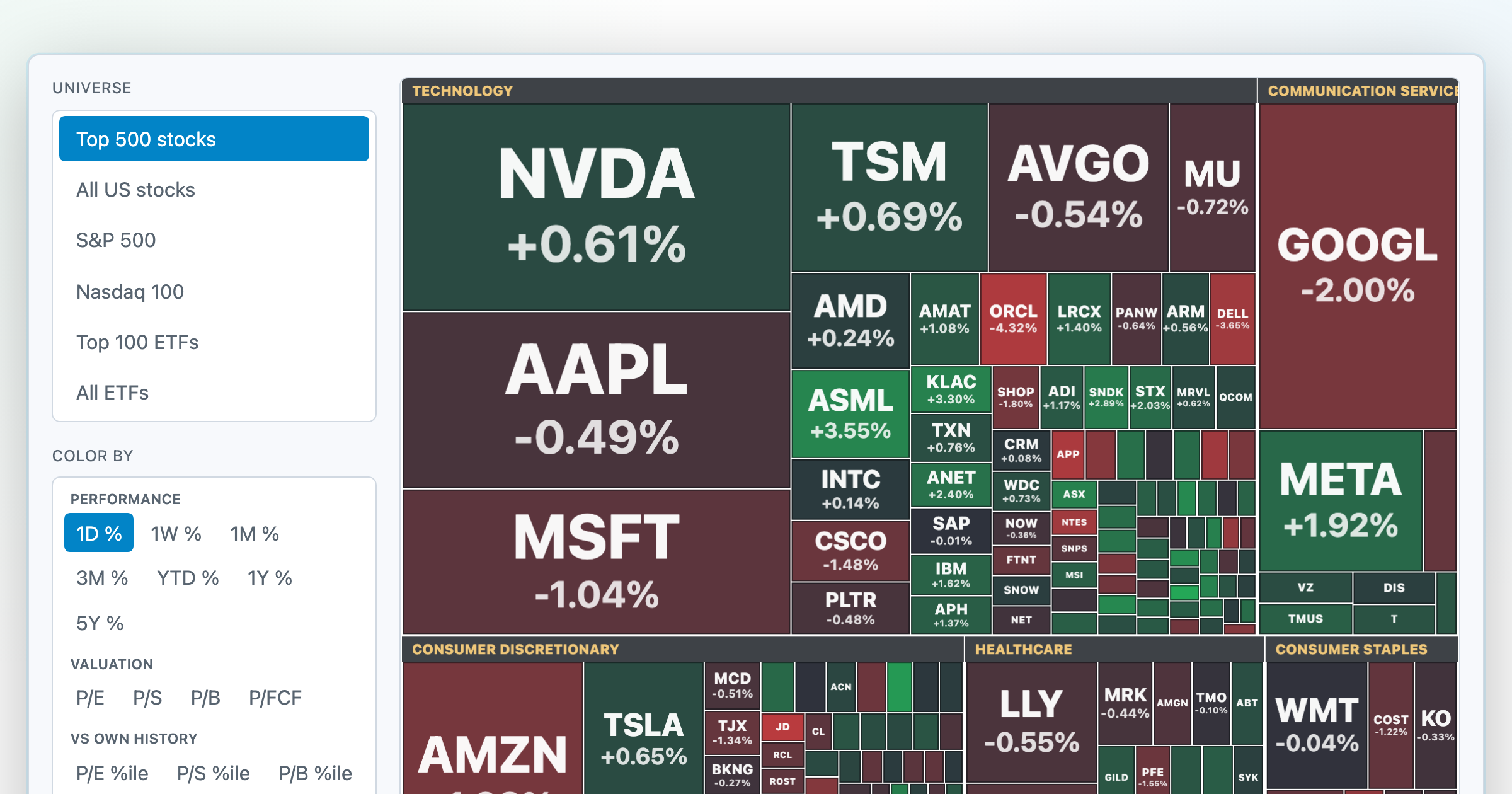
Every S&P 500 company sized by market cap — color by return or valuation.
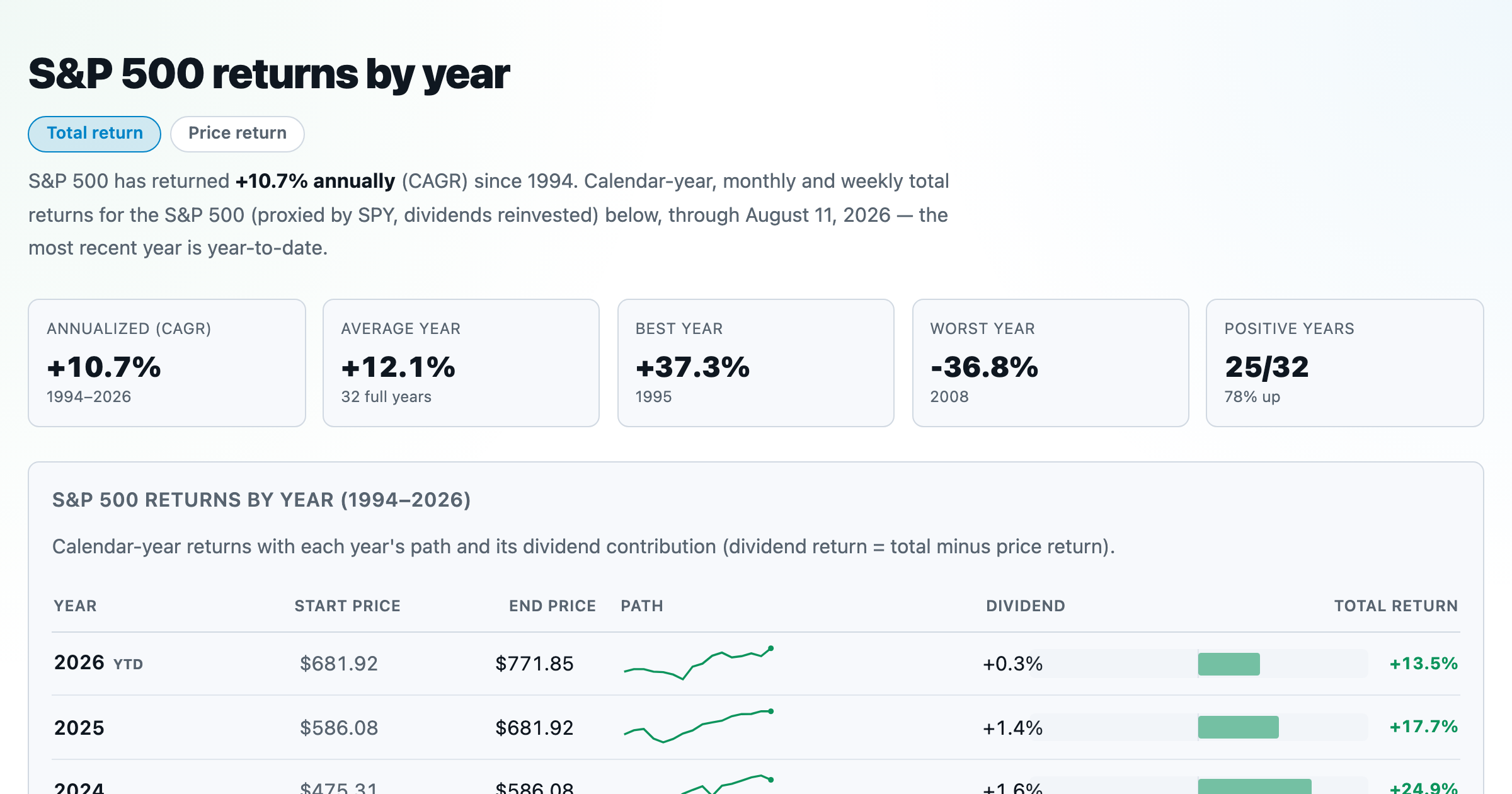
S&P 500 returns by year, month, week and trailing period — total or price return.
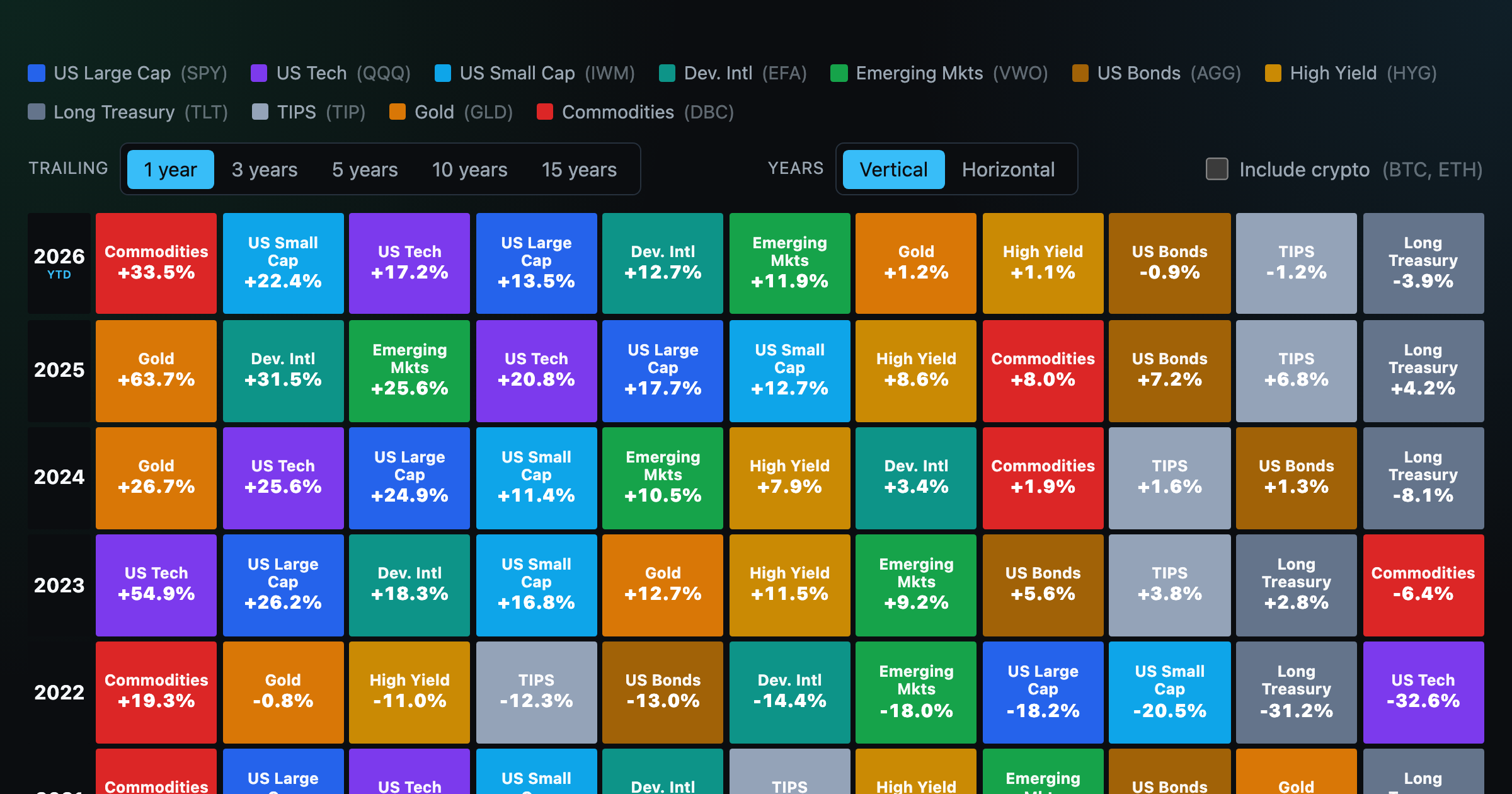
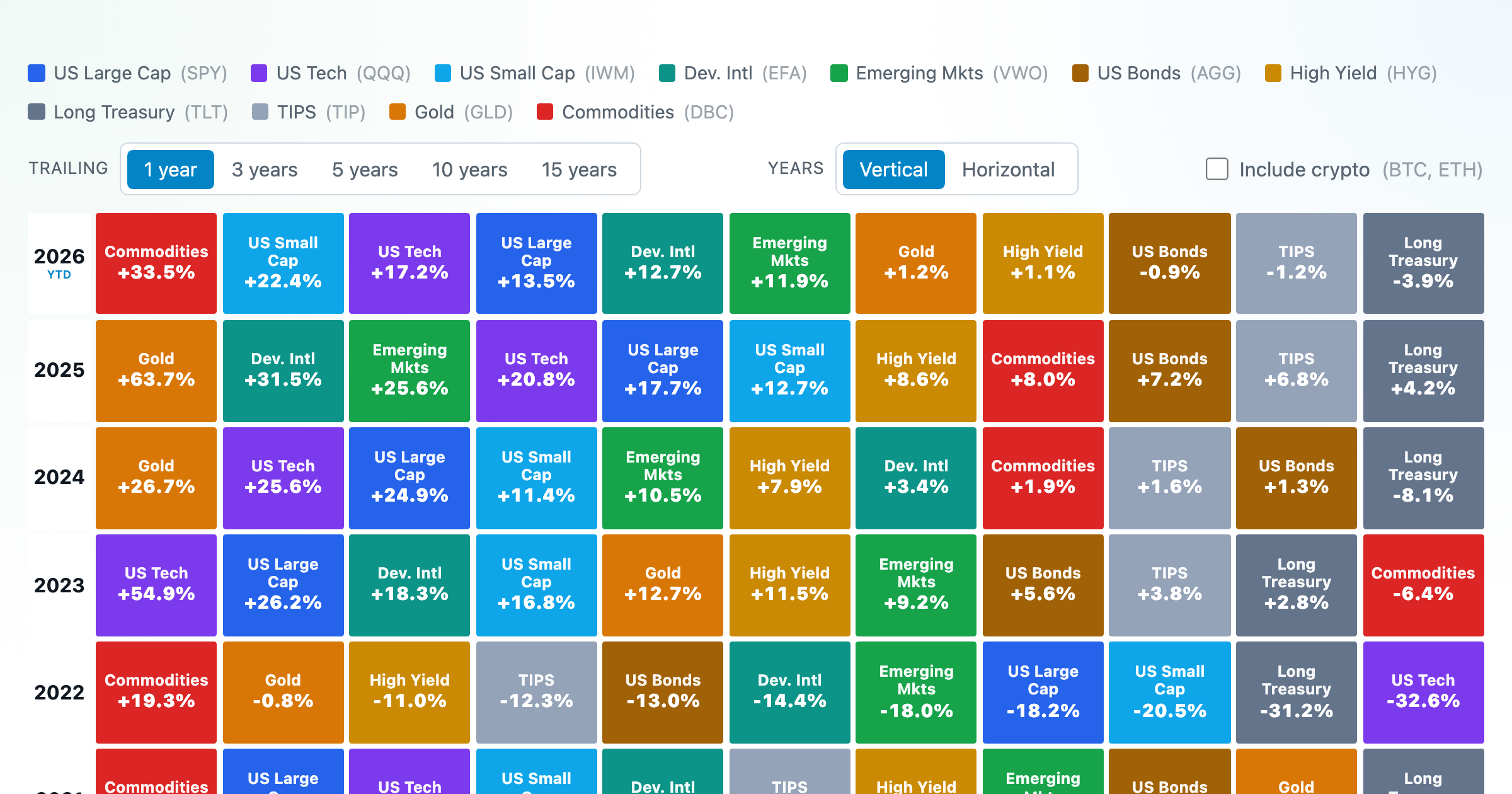
Asset-class returns ranked year by year — the Callan chart / asset allocation quilt.
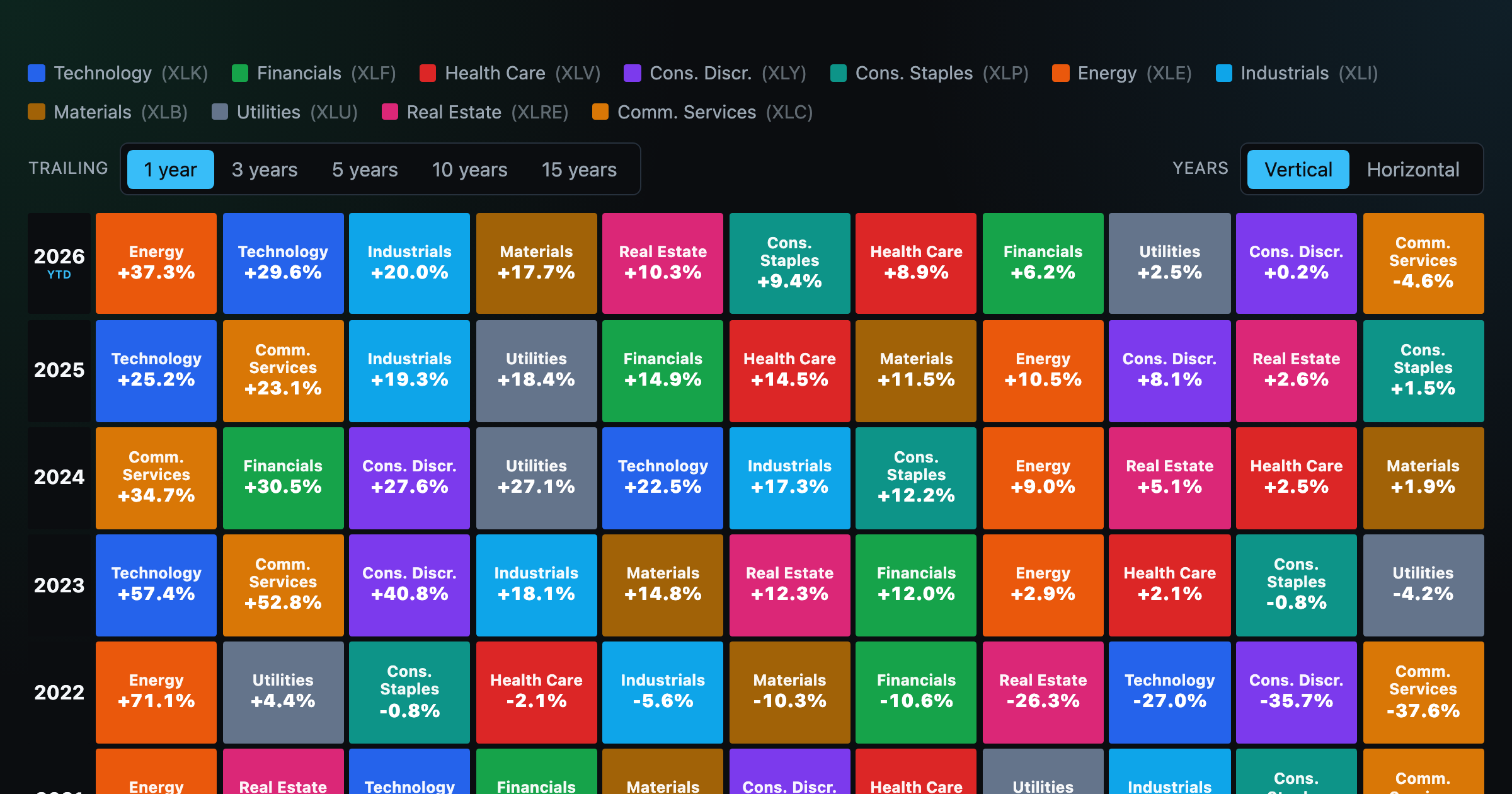
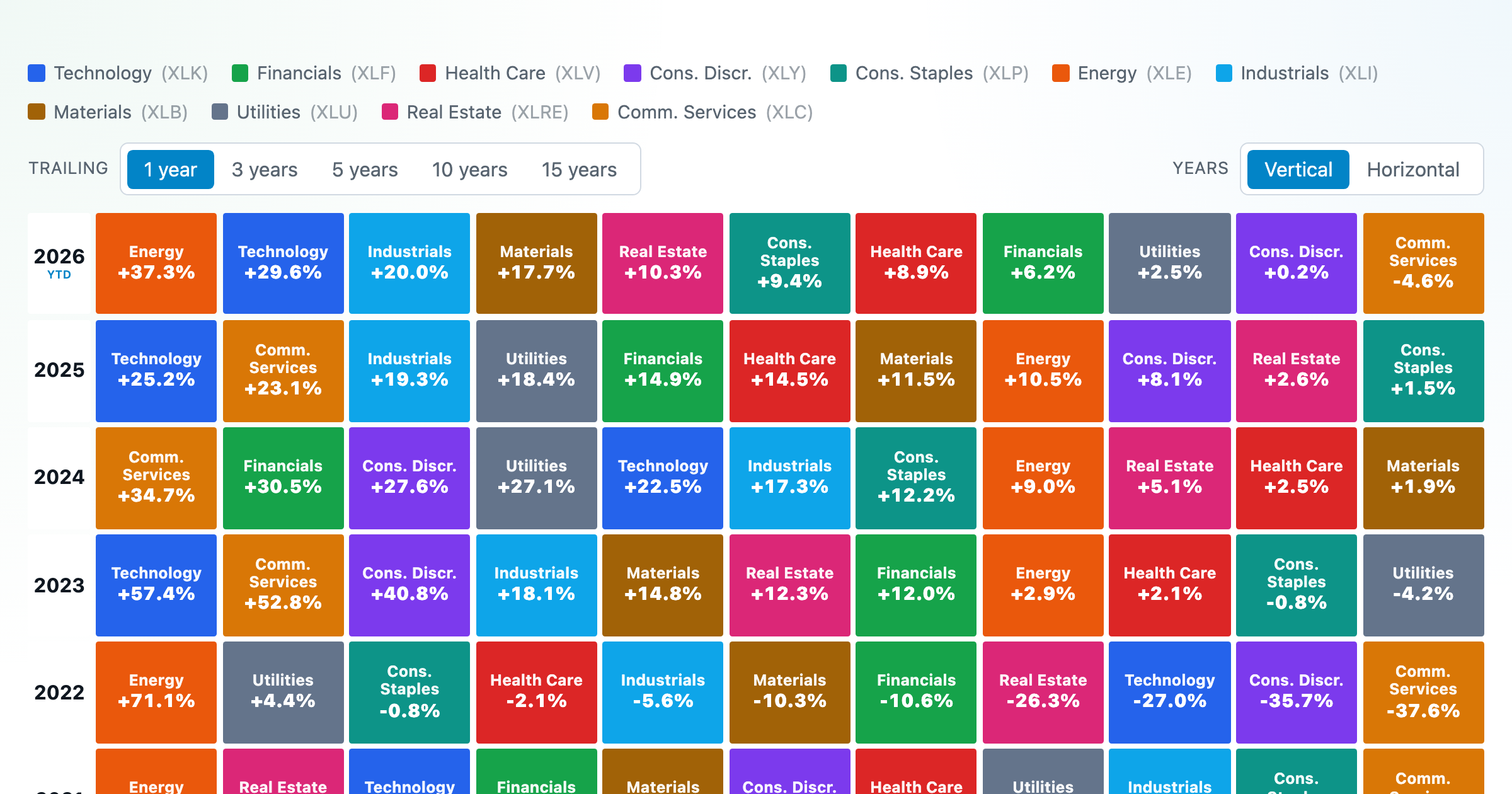
The 11 S&P 500 sectors ranked year by year — a sector quilt chart, back to 1999.
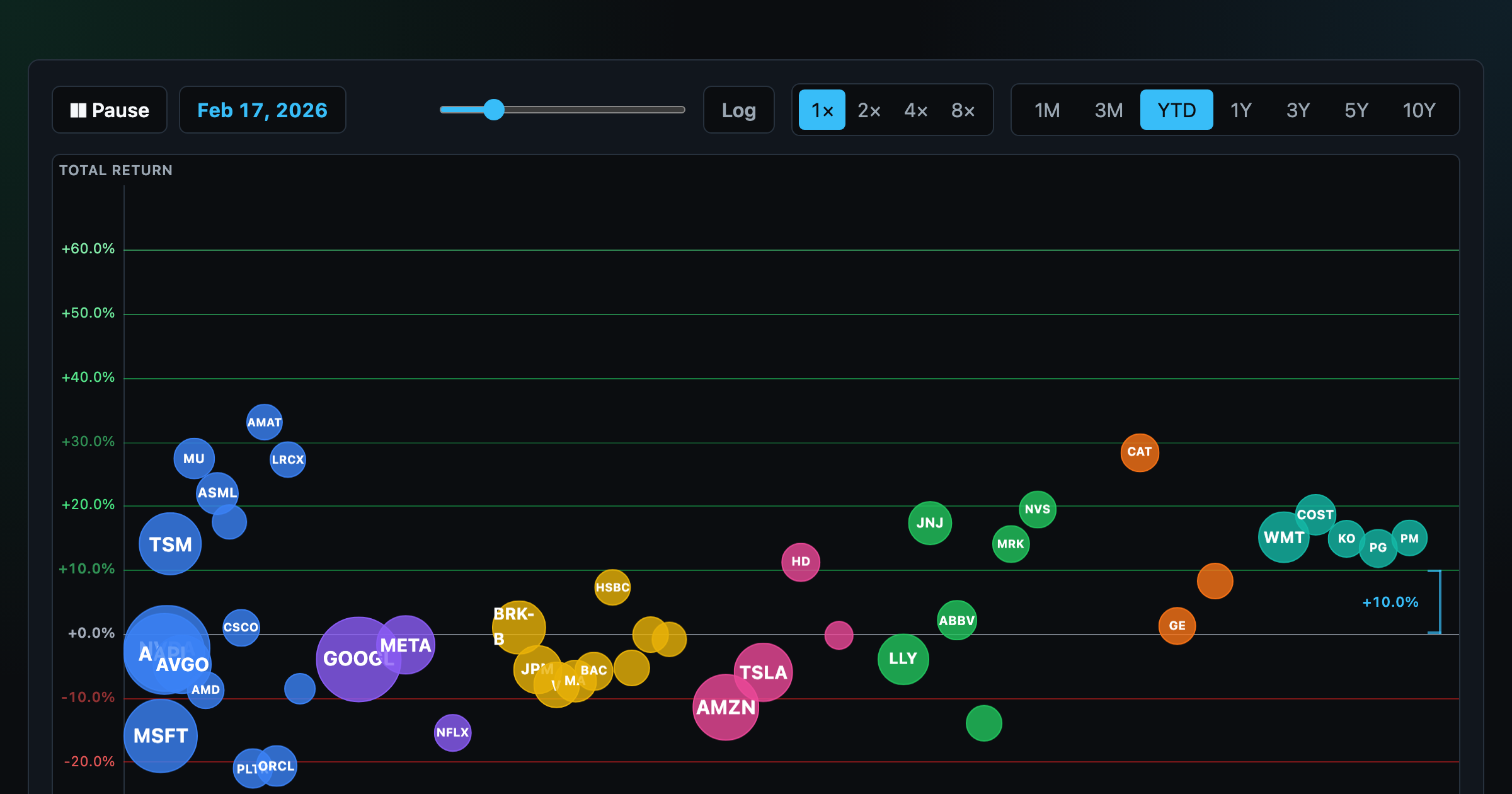
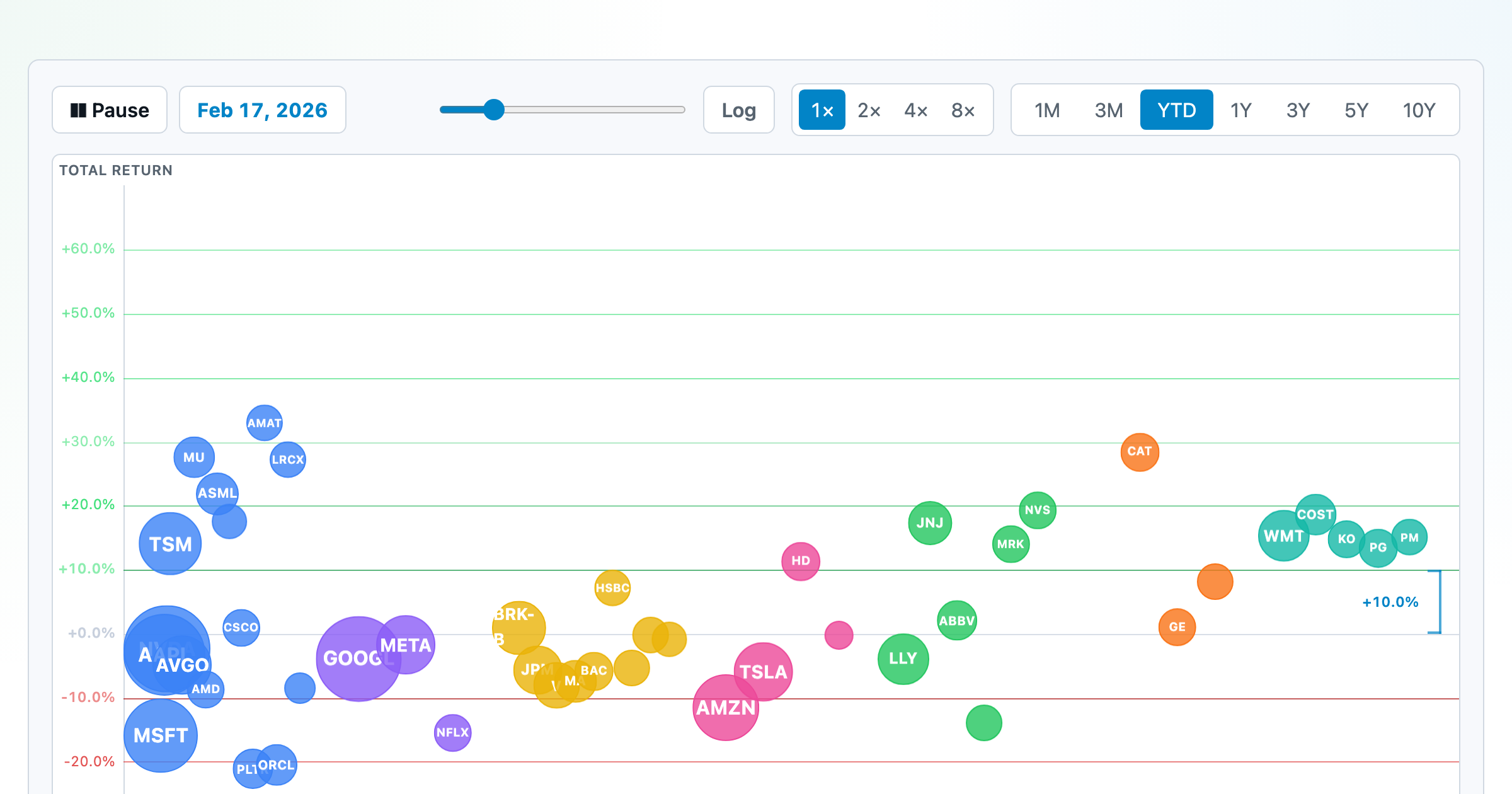
The biggest US companies as animated bubbles, rising and falling with their total return over time.
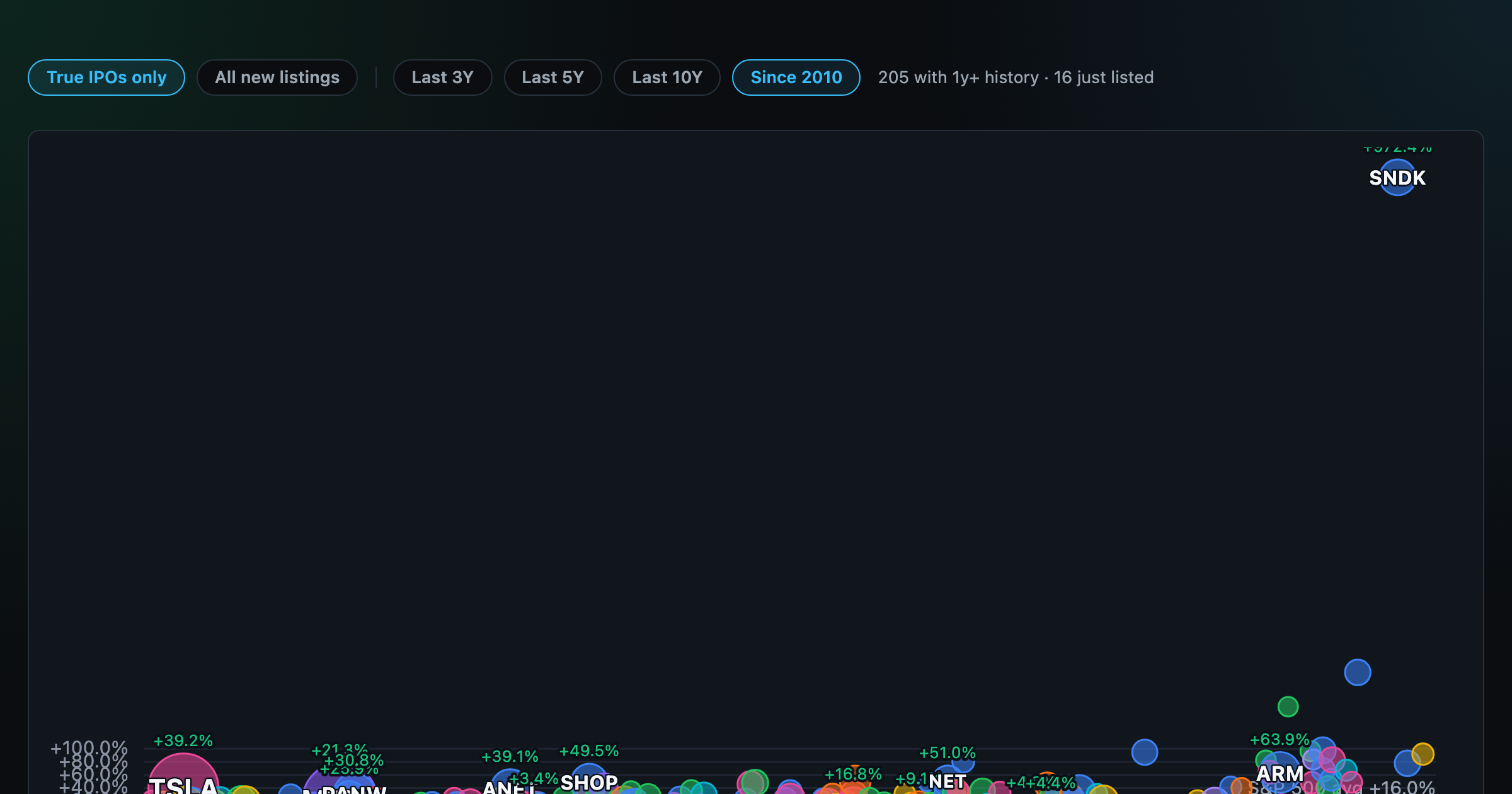
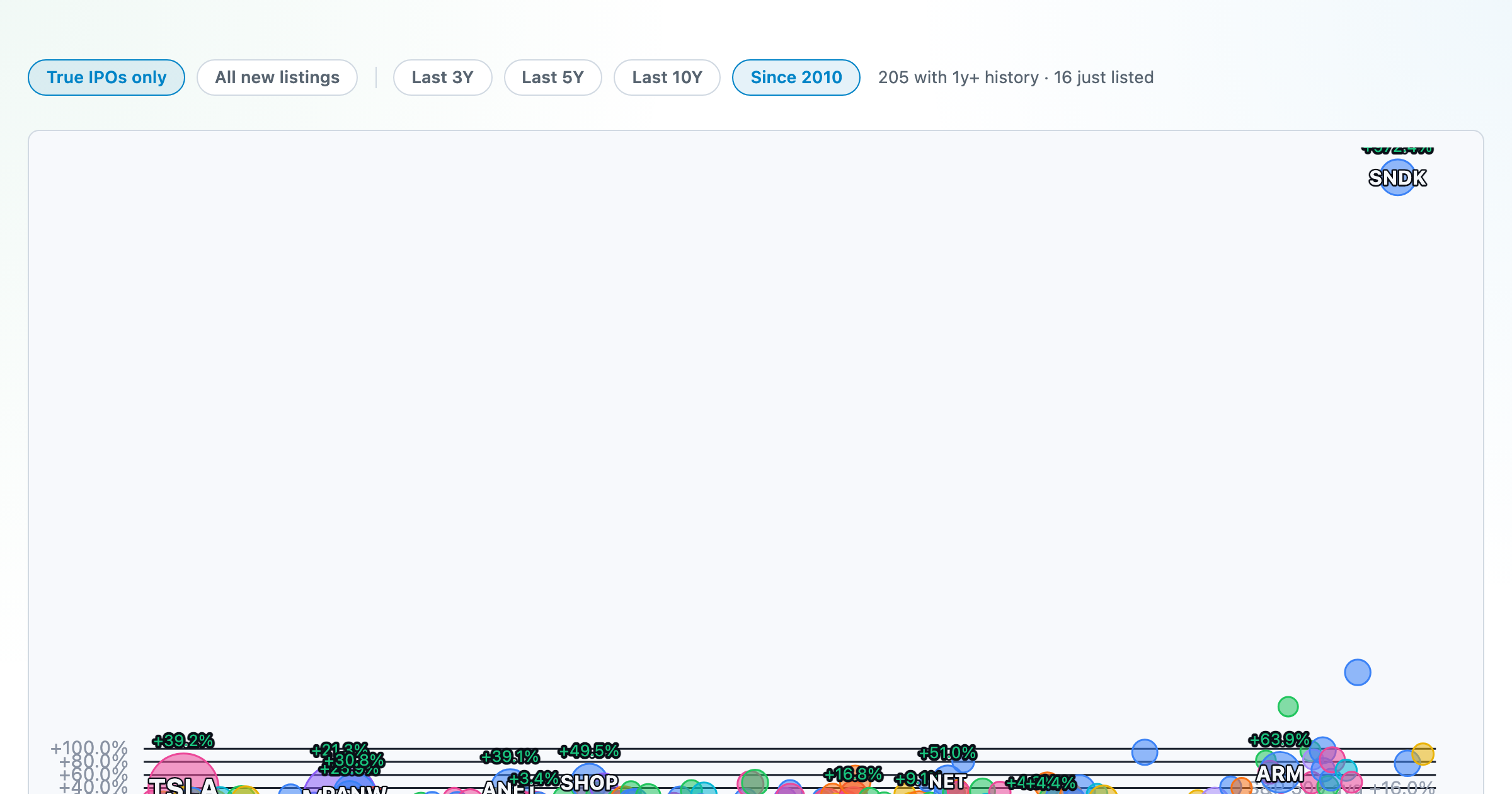
How recent stock-market debuts have performed since listing — annualized, vs the S&P 500, by IPO vs spin-off.
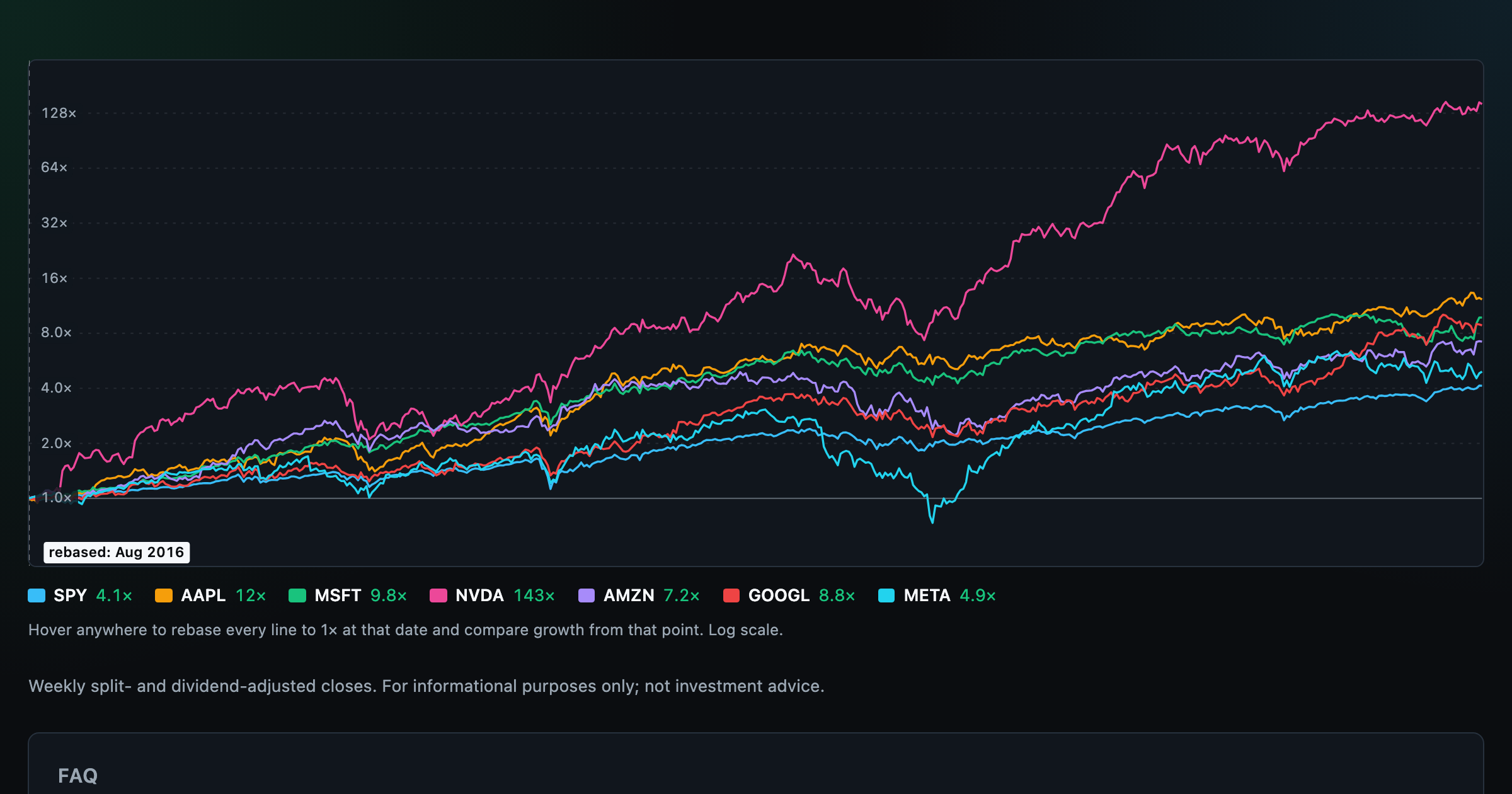
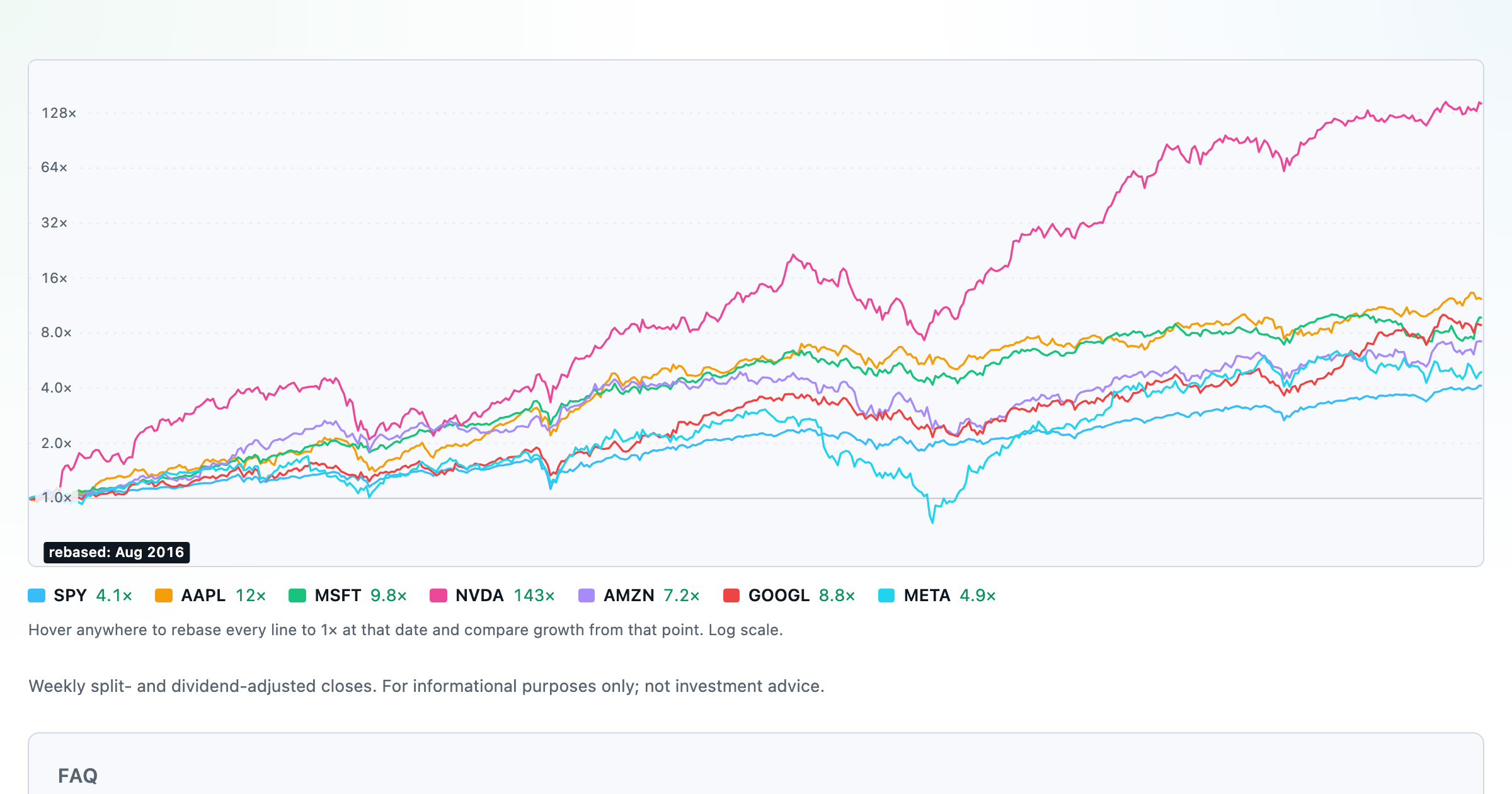
Compare megacaps vs the S&P 500, rebased to 1× at any date you hover.
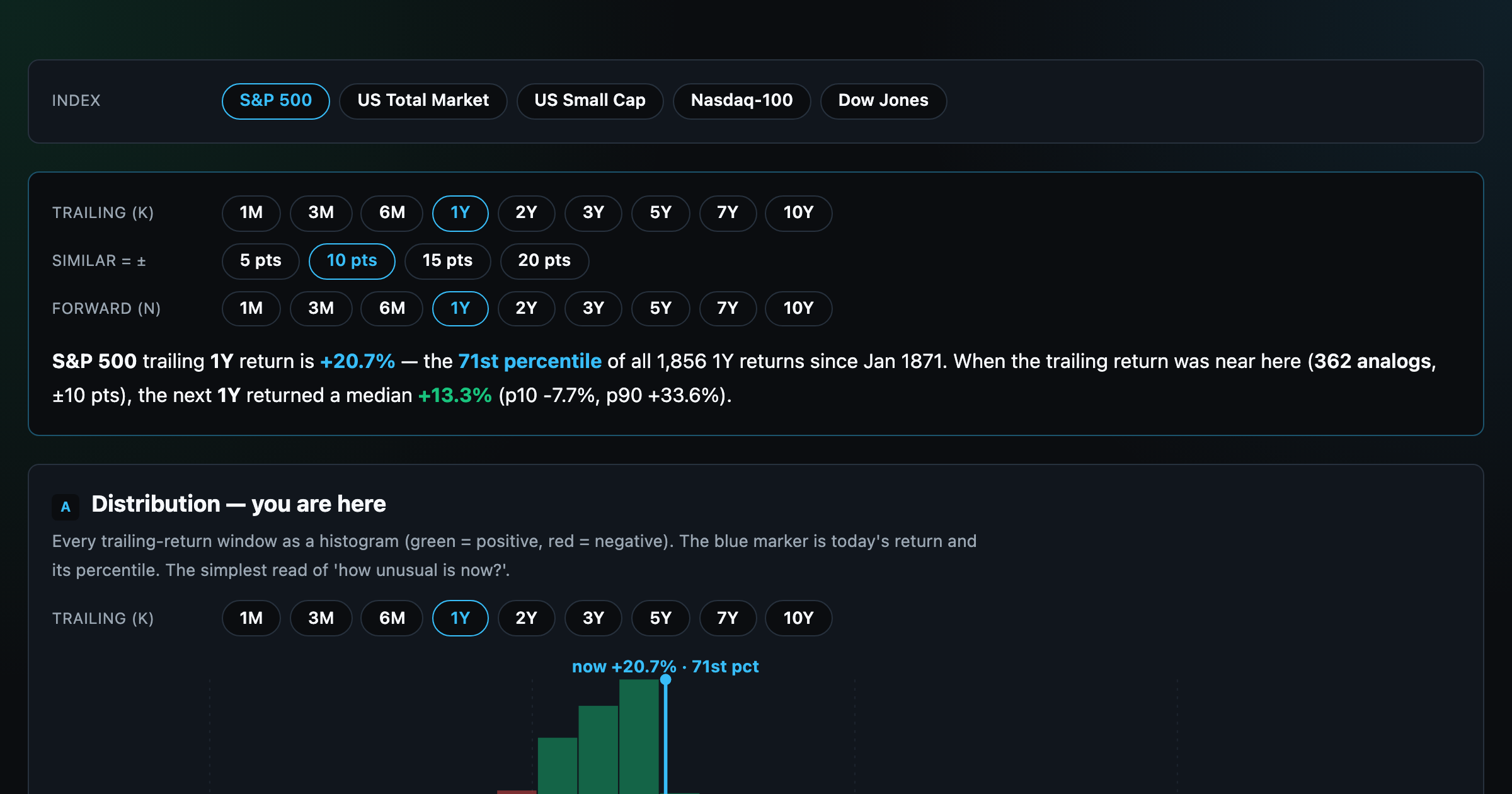
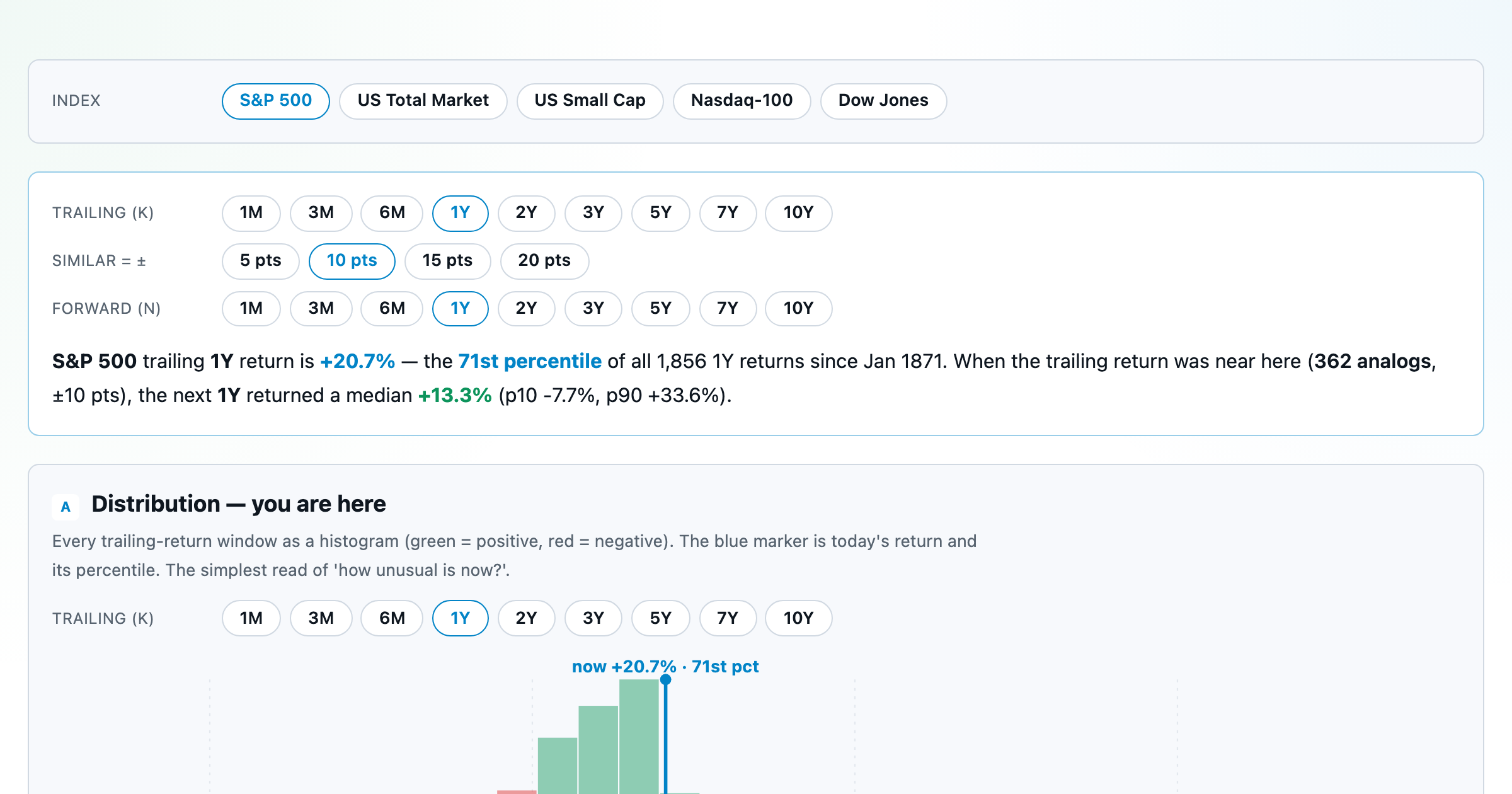
Where today's S&P 500 return ranks against all history — and the forward returns that followed similar moments.
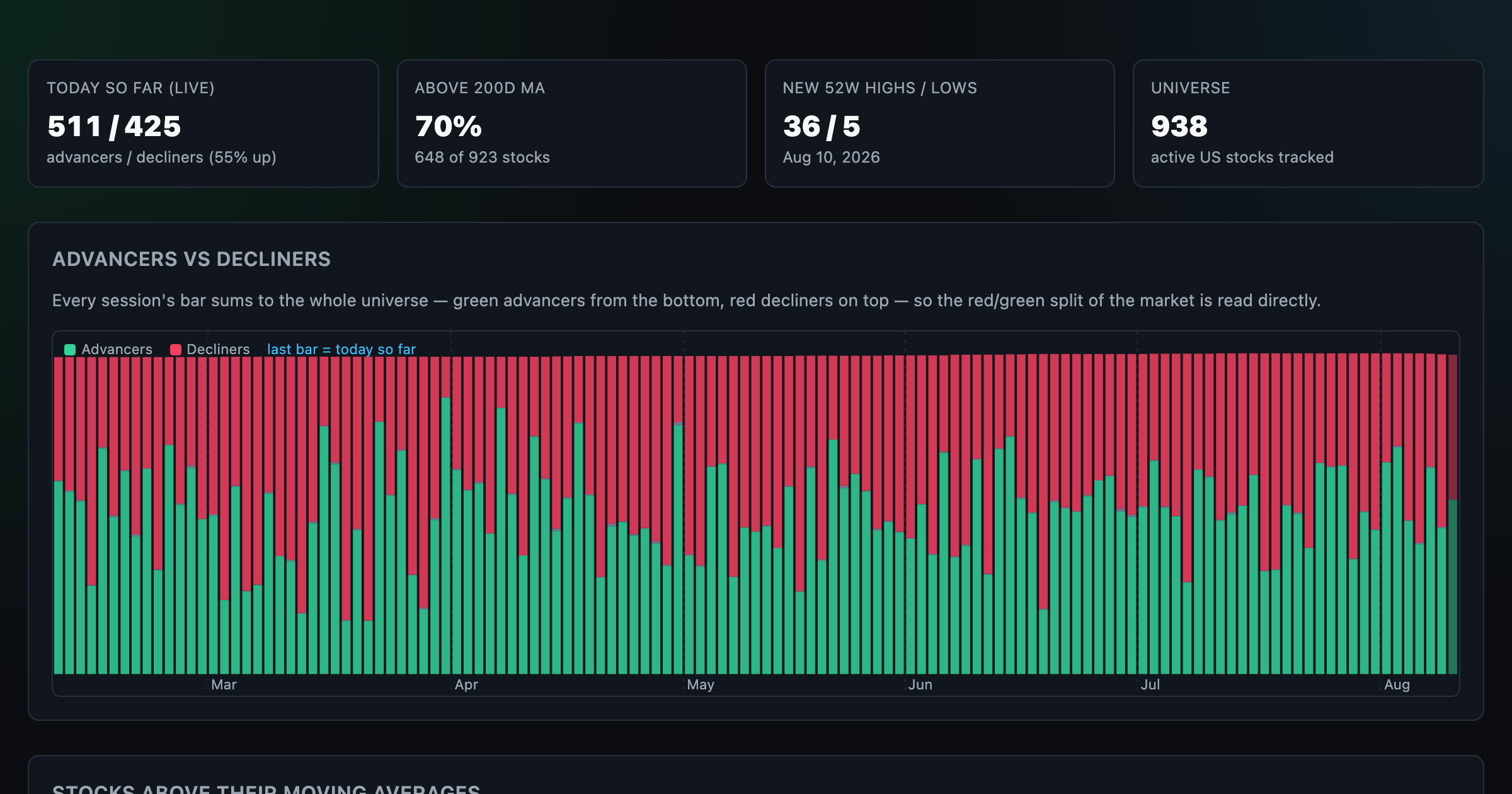
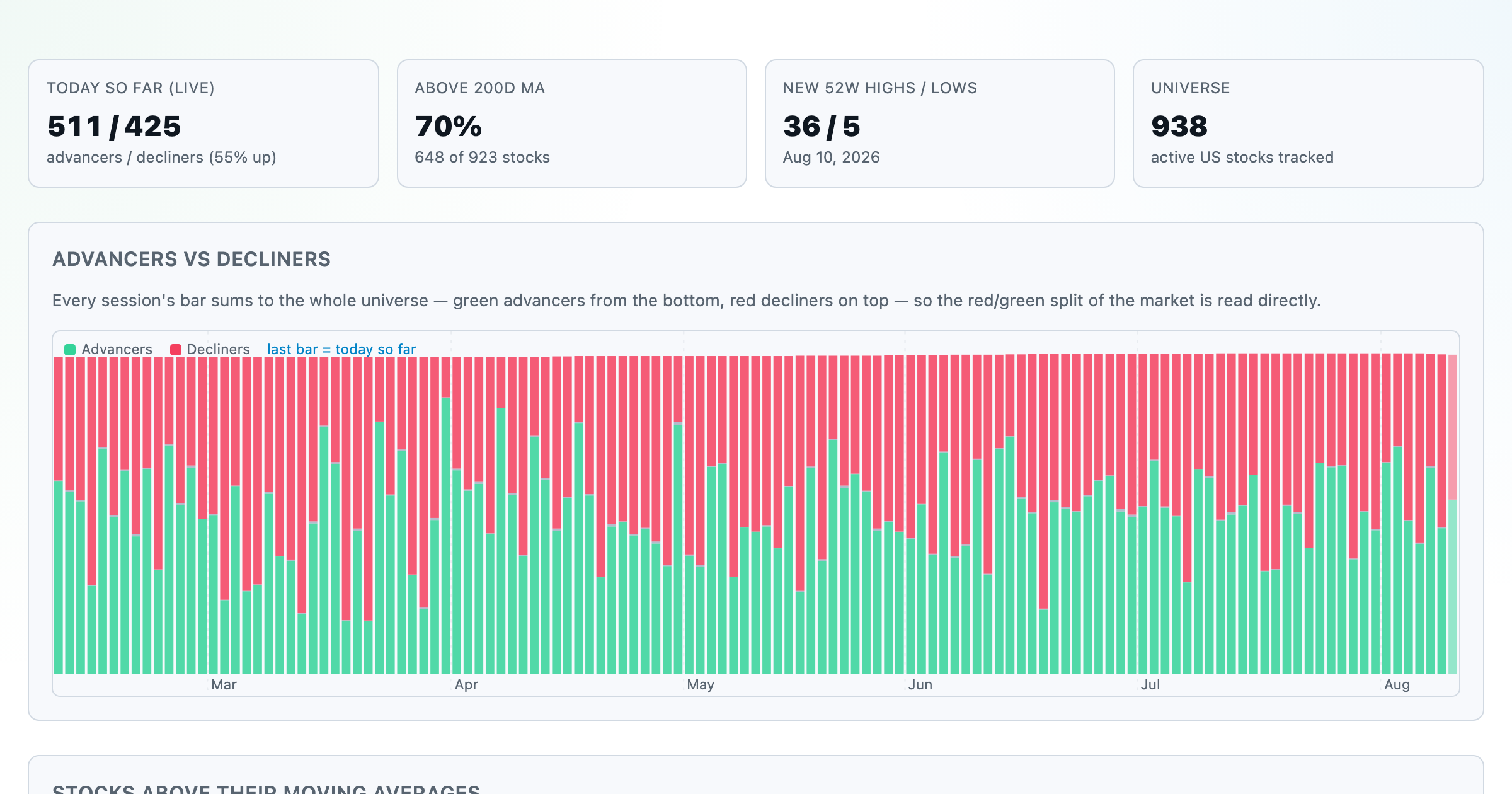
Advancers vs decliners over time, % of stocks above their moving averages, new highs vs lows, and breadth across every trailing window.
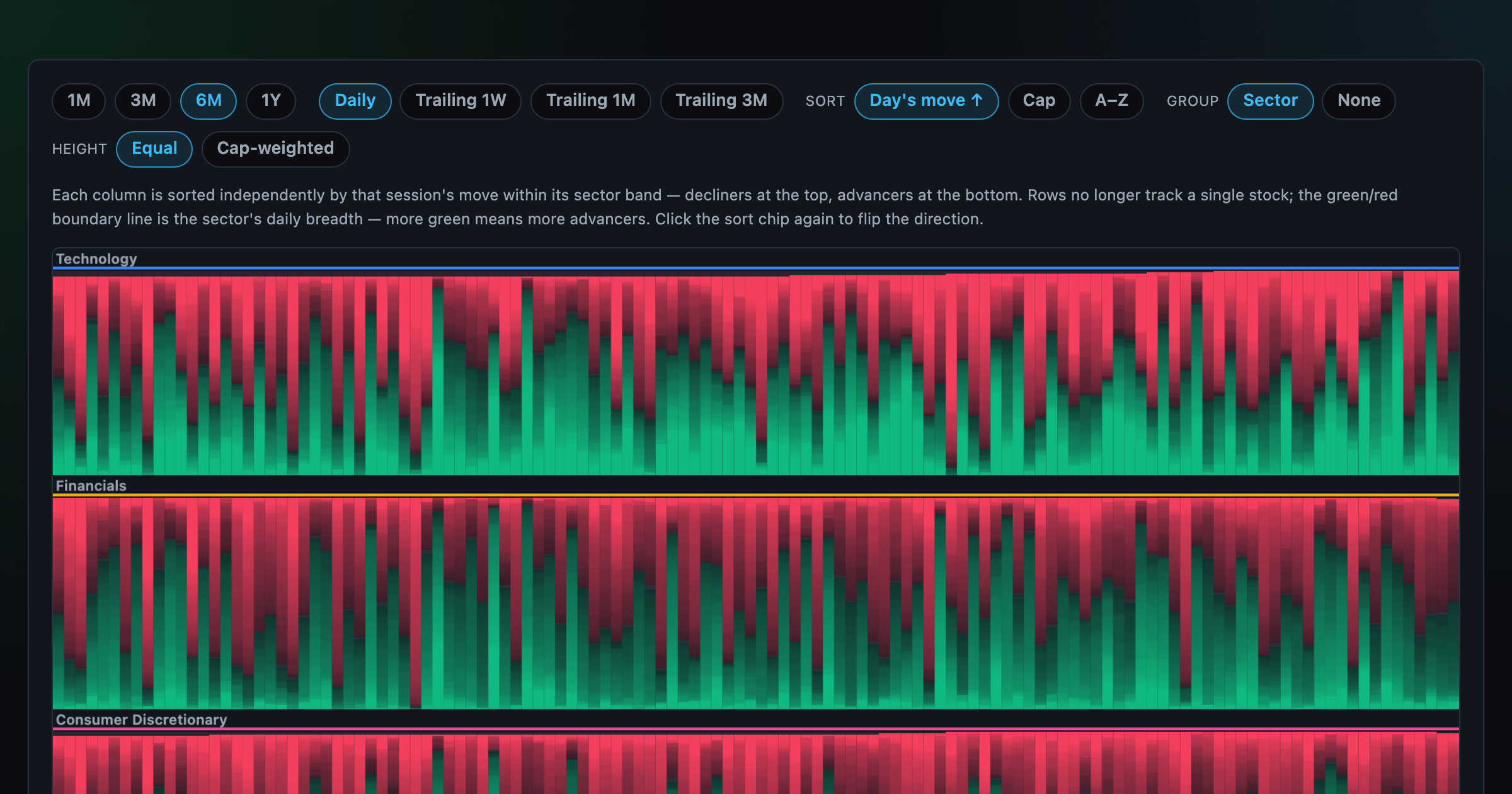
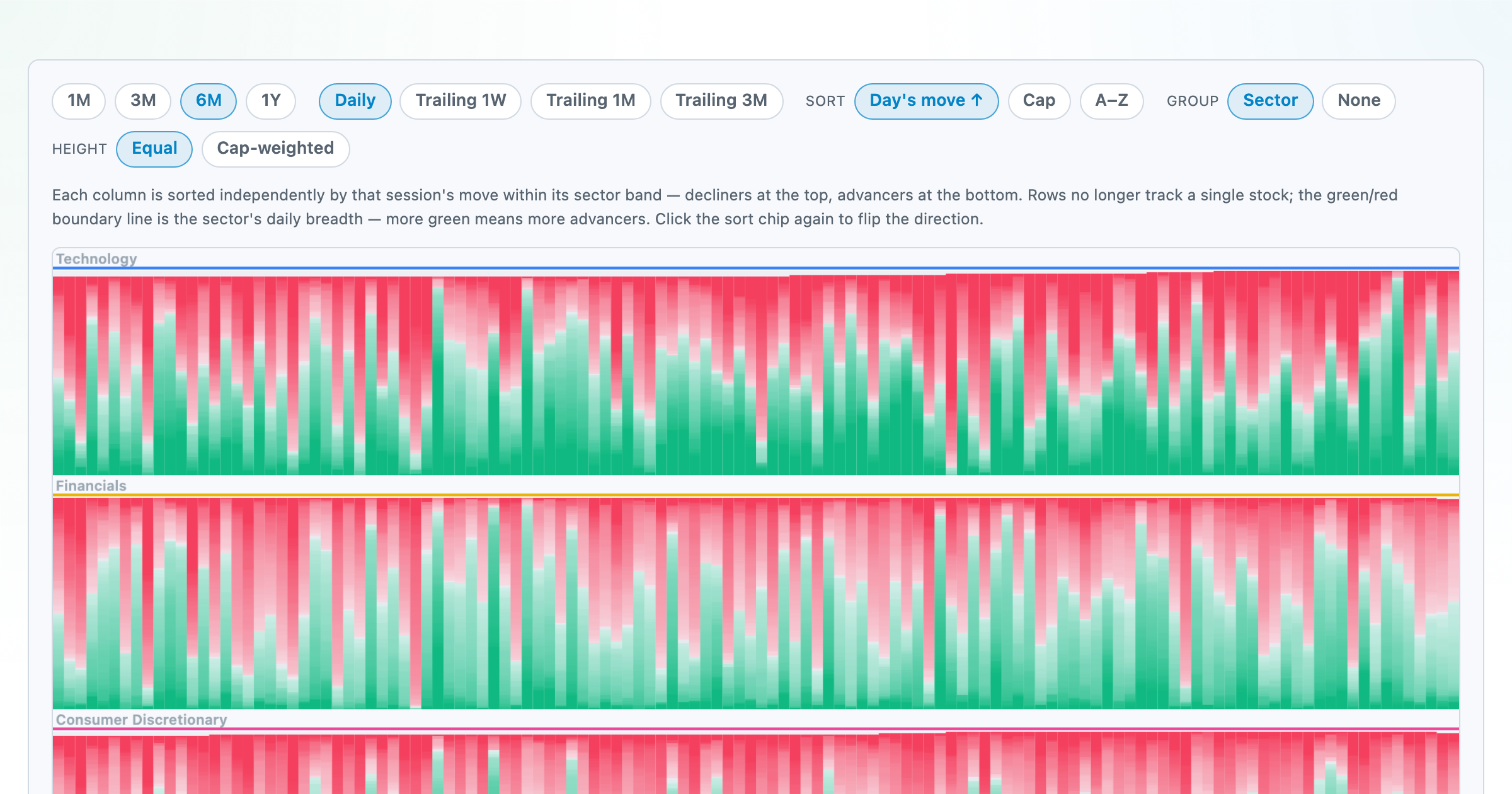
Every stock as a row, every day as a column — market selloffs are vertical stripes, sector routs are blocks.
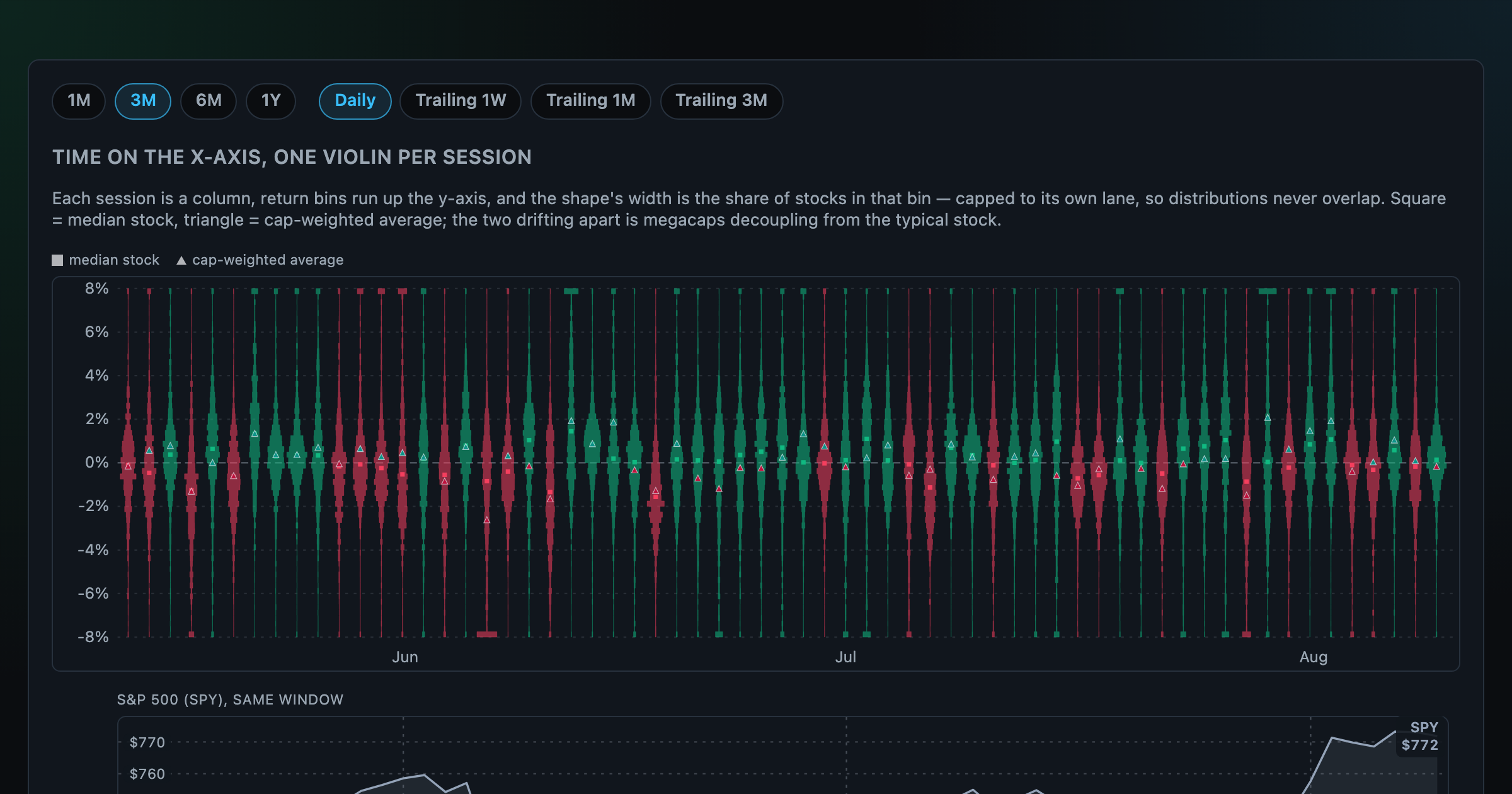
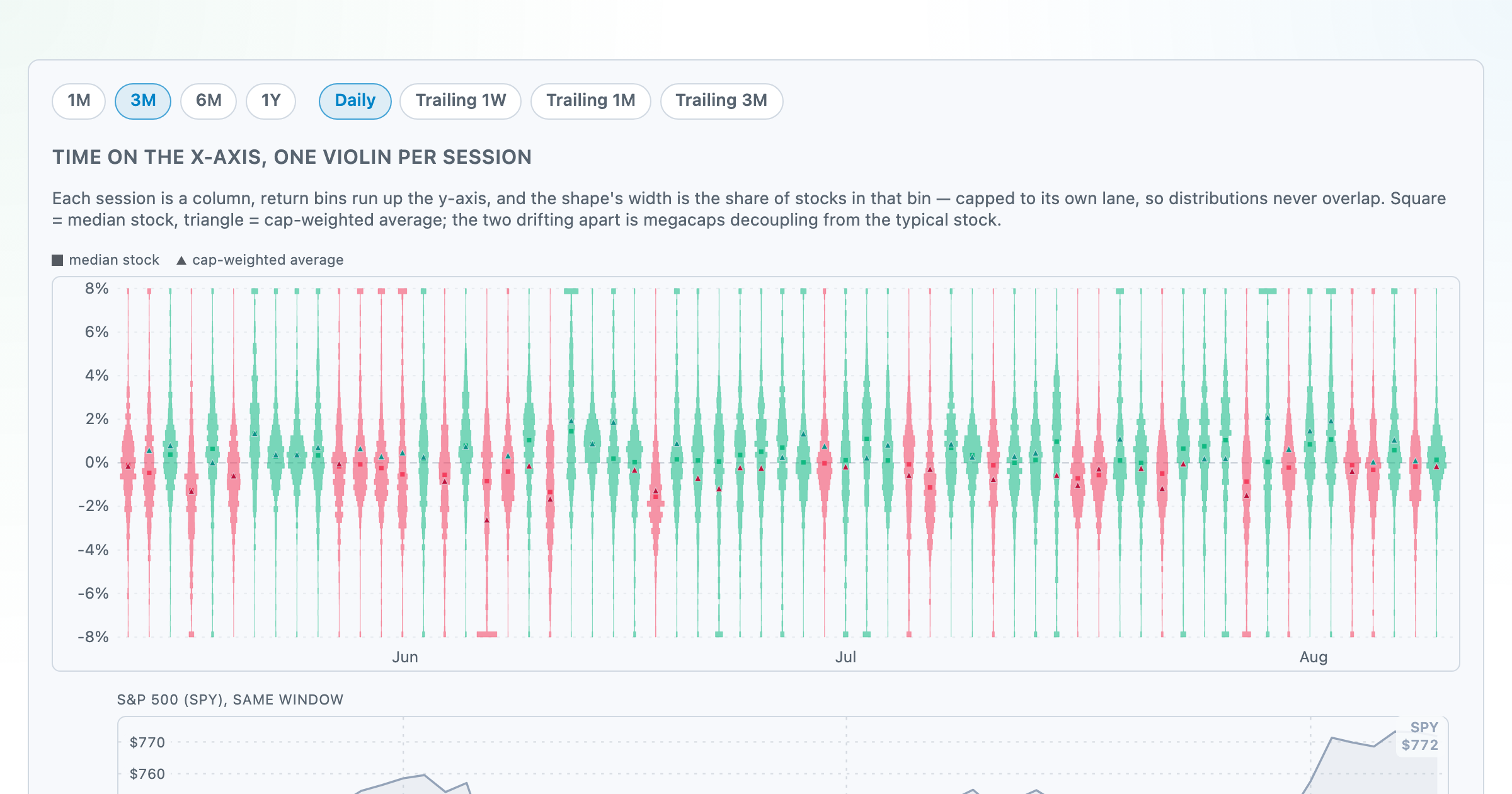
Each session's full distribution of stock returns as an upright violin, with the S&P 500 on the same axis — shifts, dispersion, and fat tails at a glance.
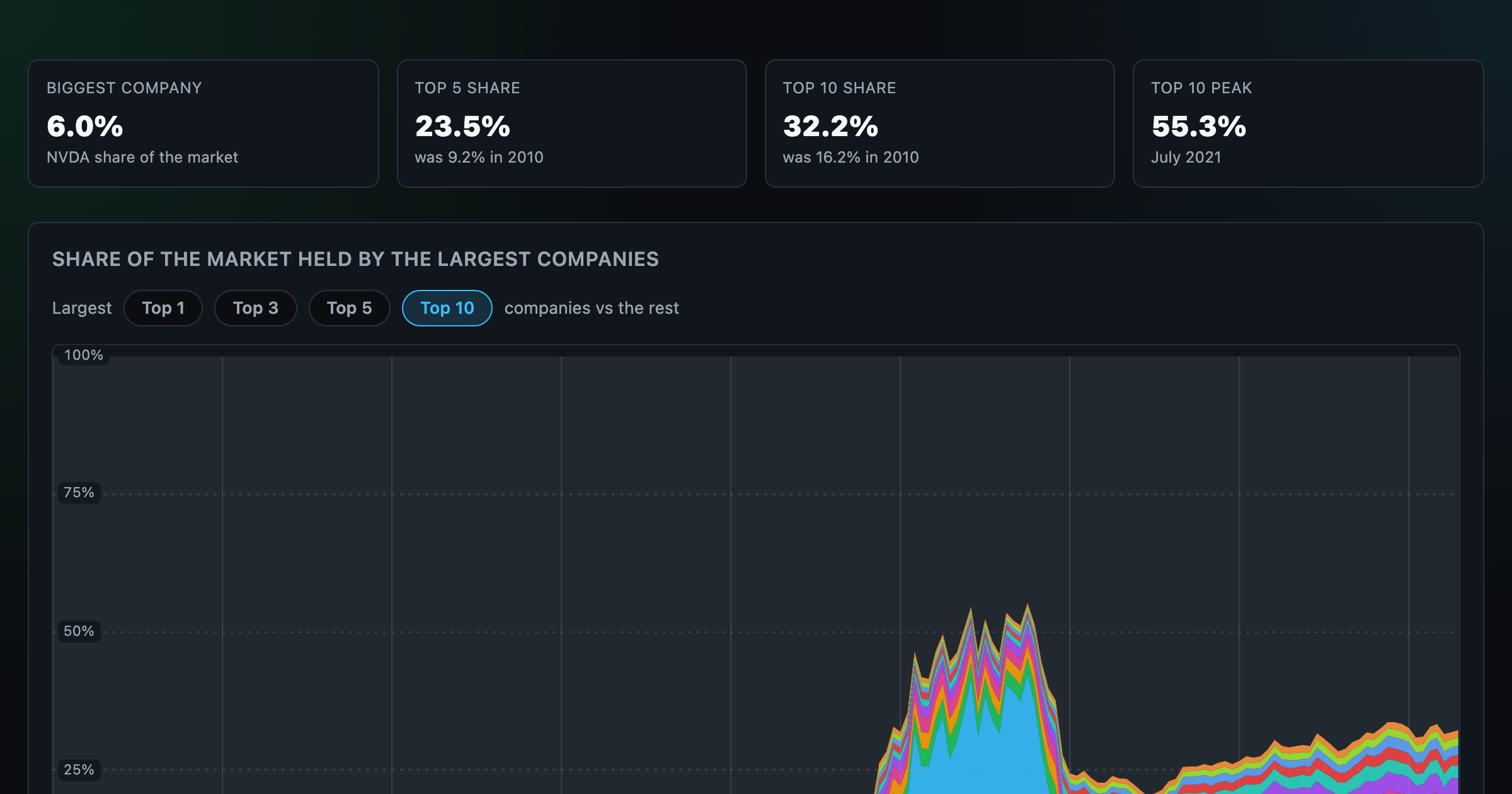
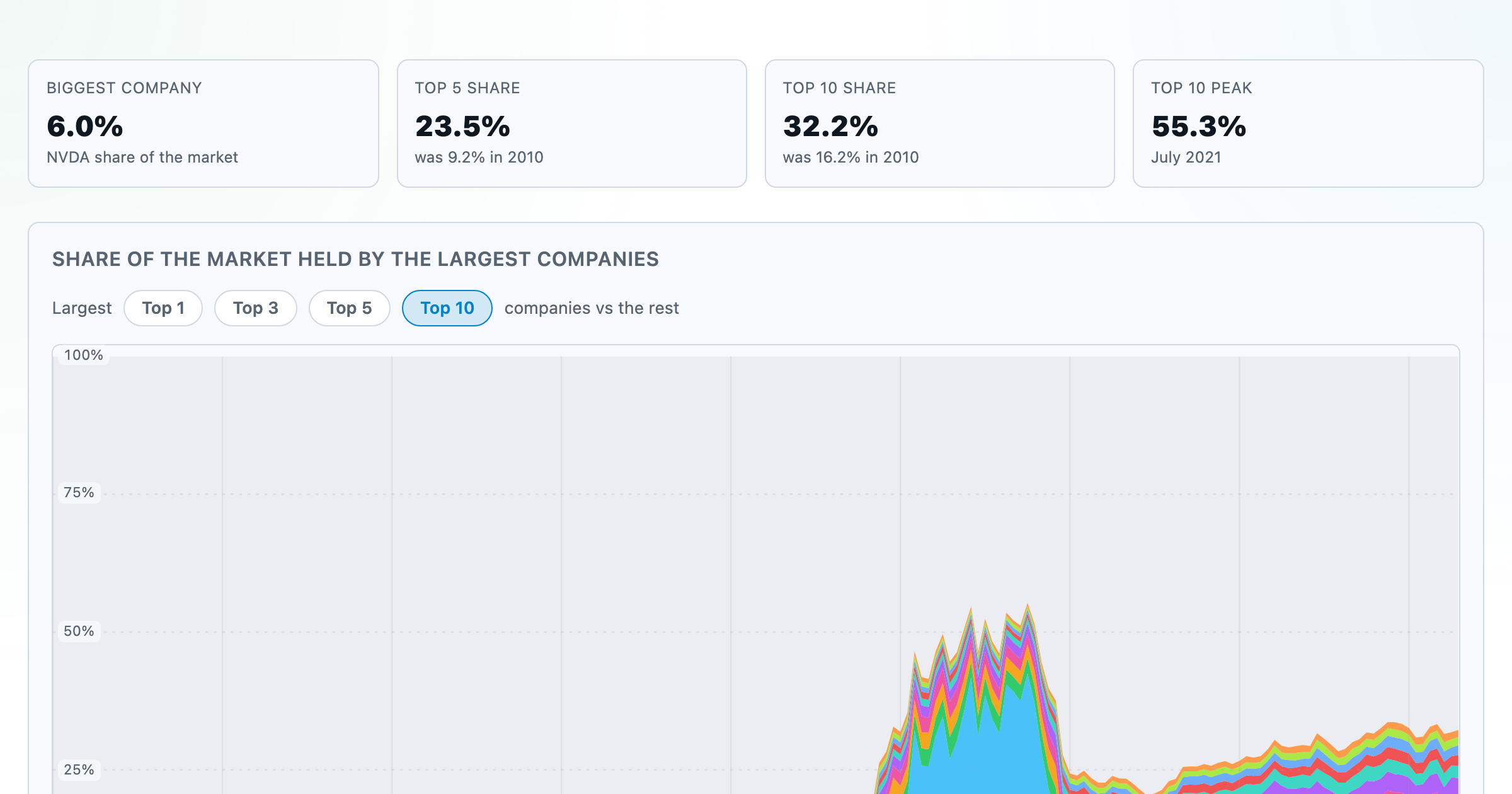
How top-heavy is the market? The top 1–10 companies' share of total market value, month by month since 2010.
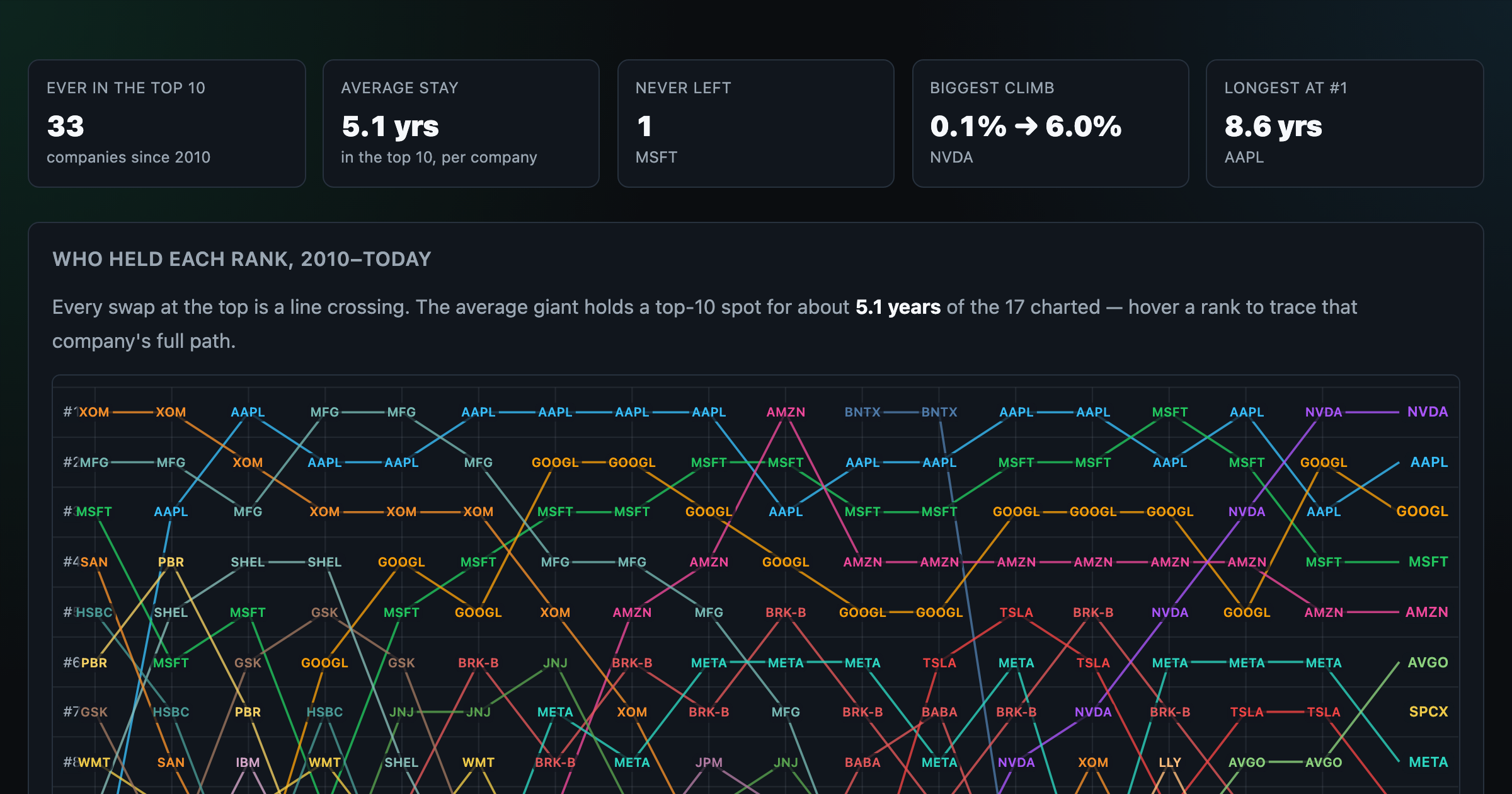
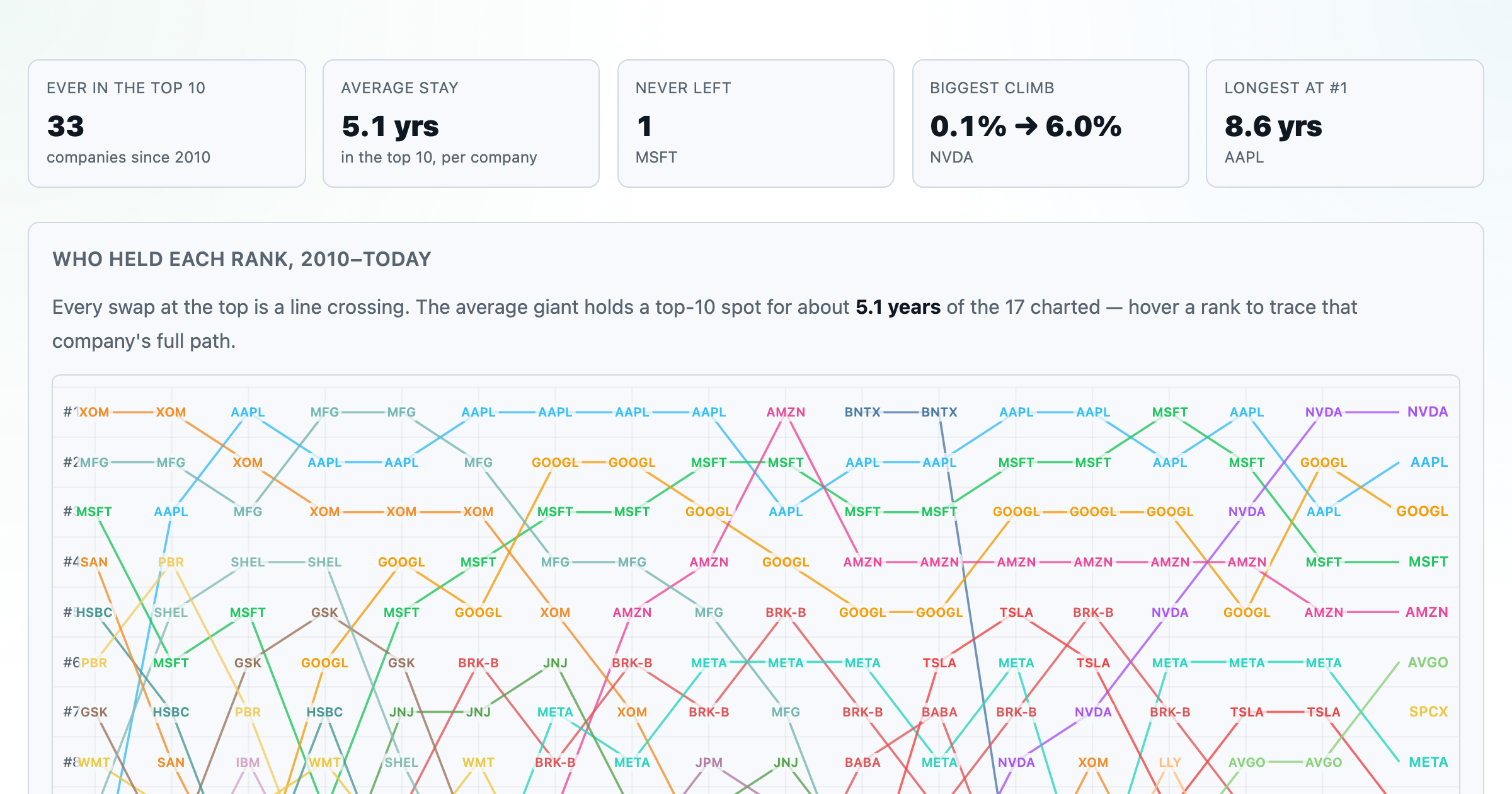
Every company that ever cracked the market's top 10 since 2010 — who climbed, who faded, who never left.
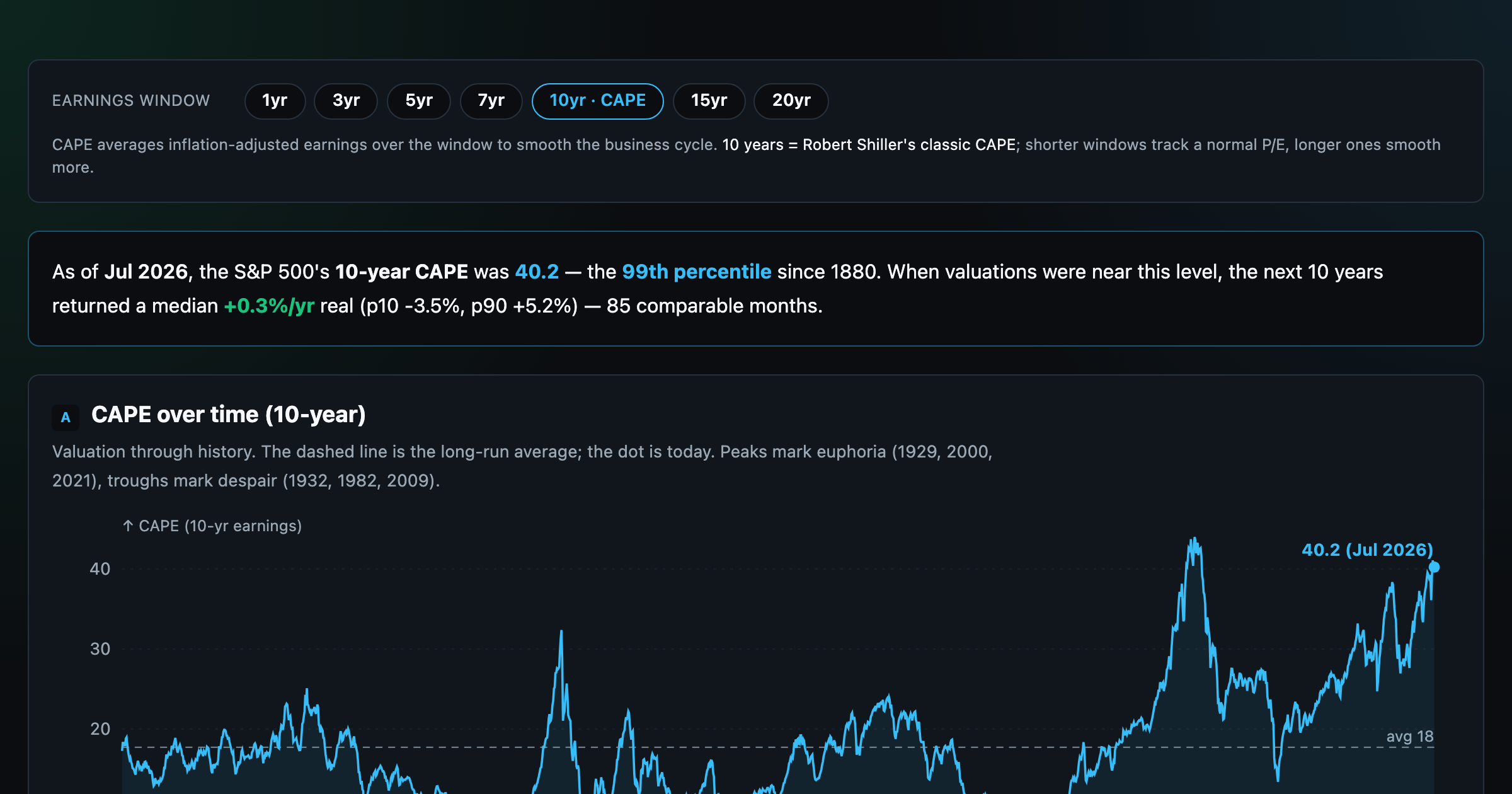
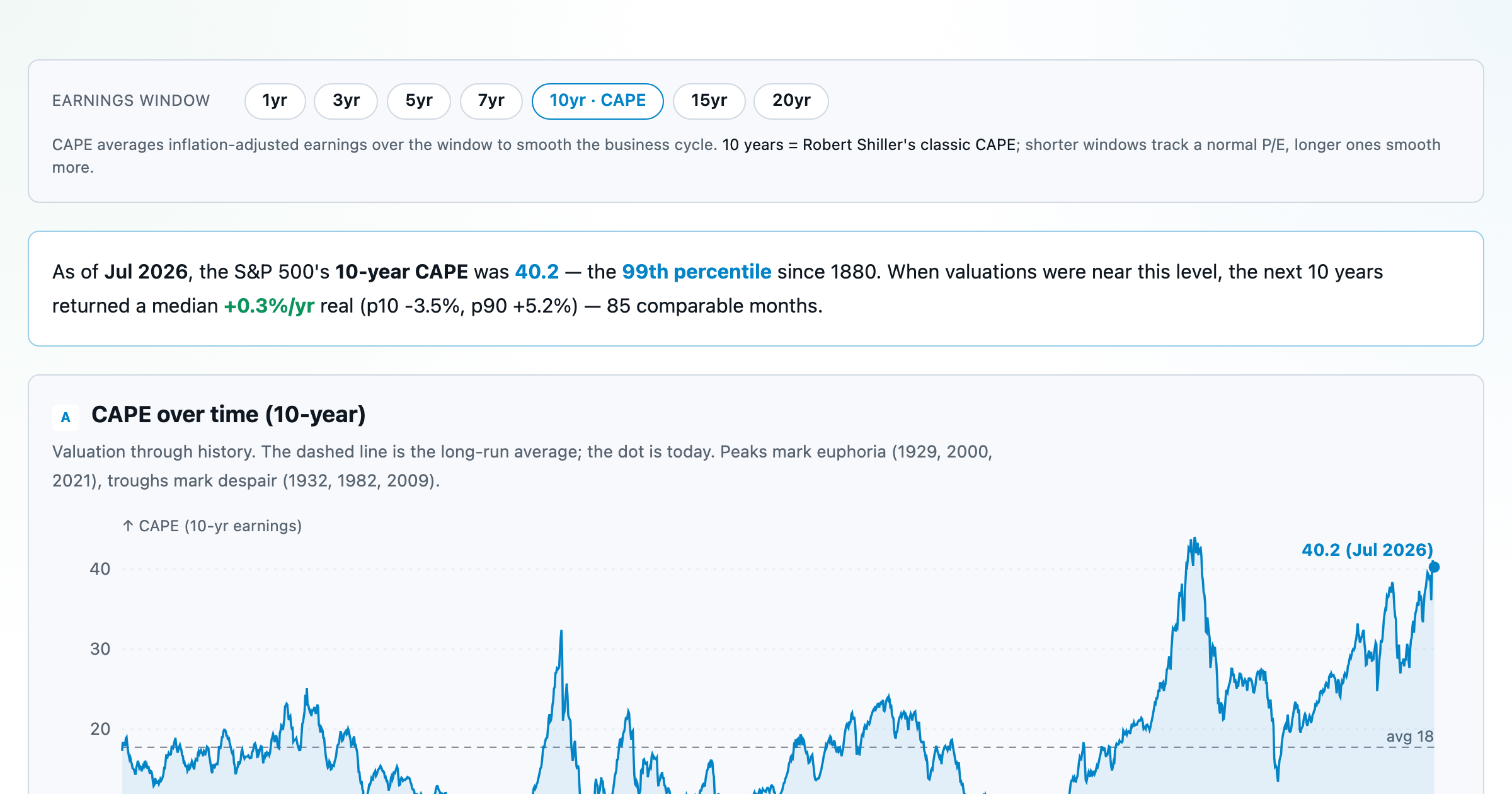
Is the market expensive? The Shiller CAPE back to 1871 and what valuations have meant for the next decade.
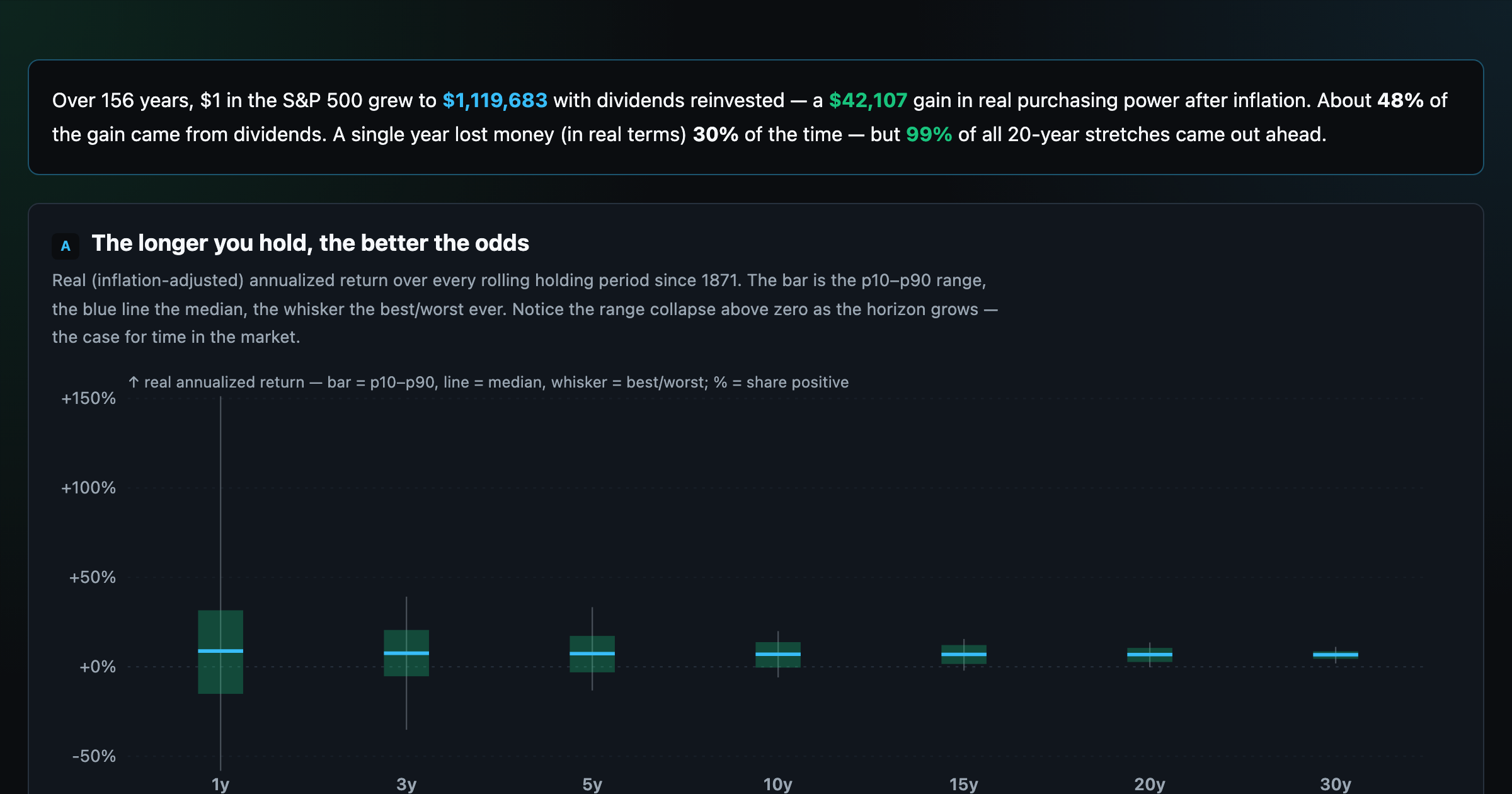
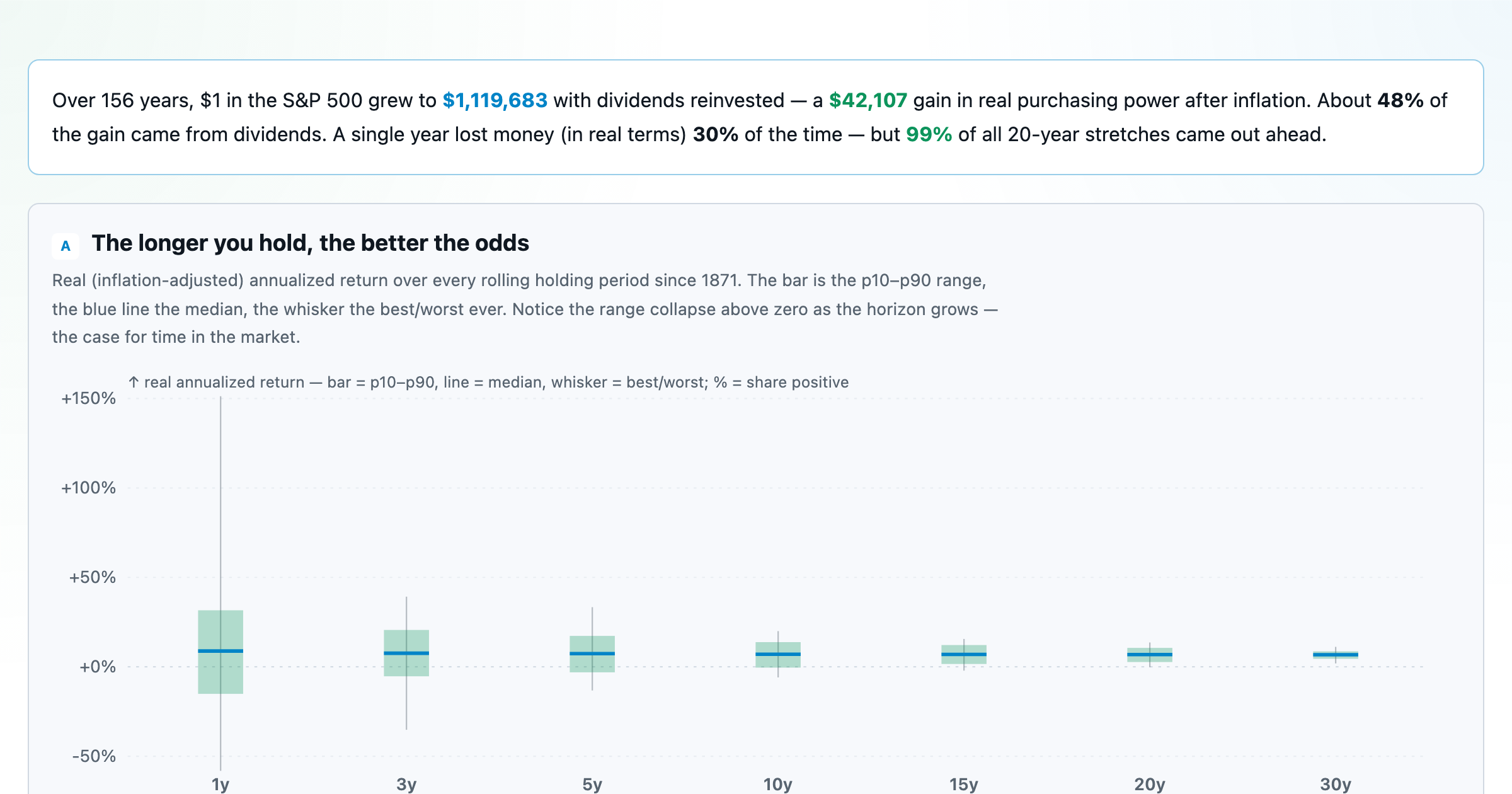
The S&P 500 since 1871 — odds of gain by holding period, real drawdowns, and the growth of $1.
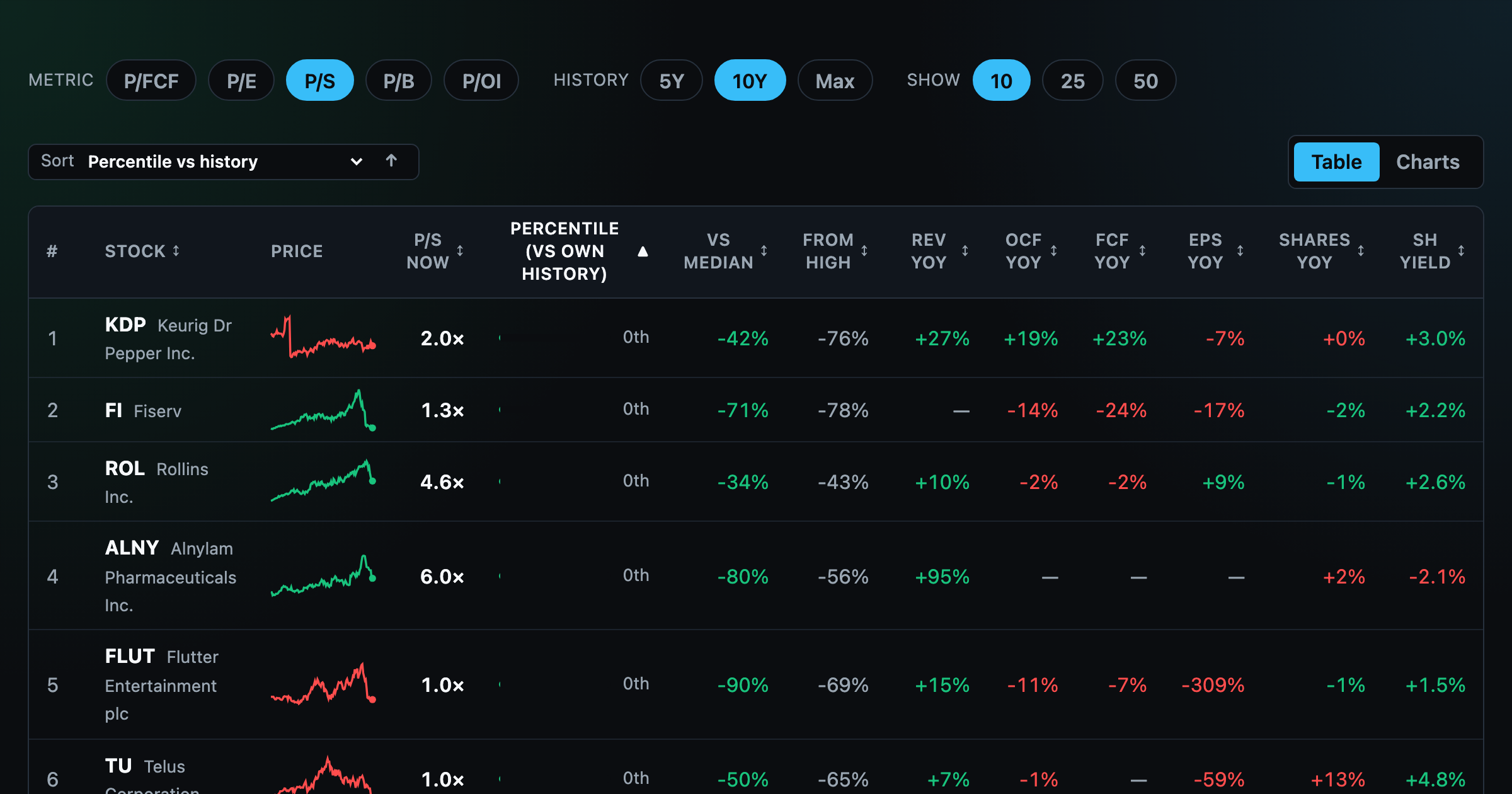
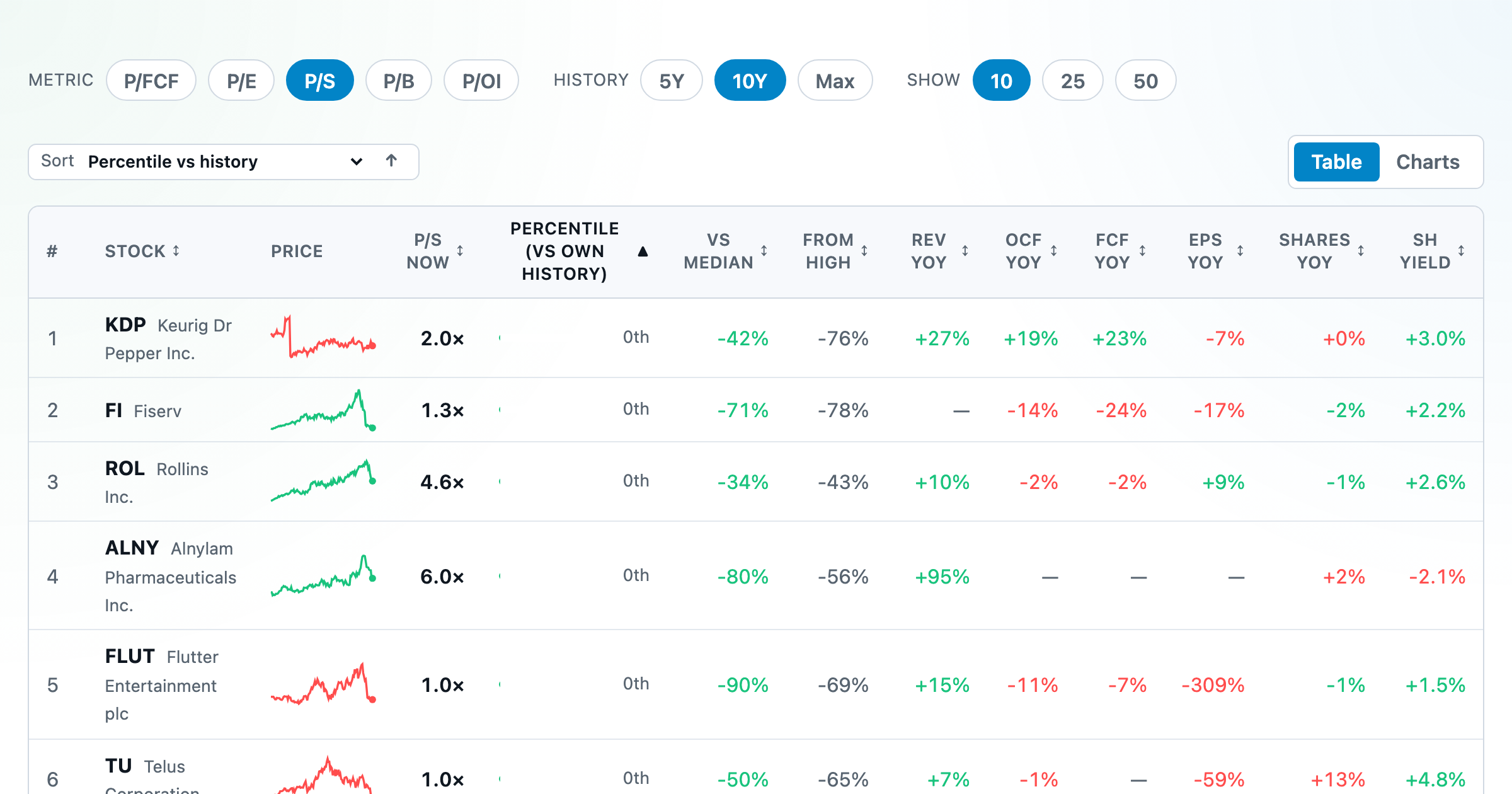
Stocks trading cheapest relative to their own P/E, P/FCF, P/S, or P/B history — with fair-value bands.
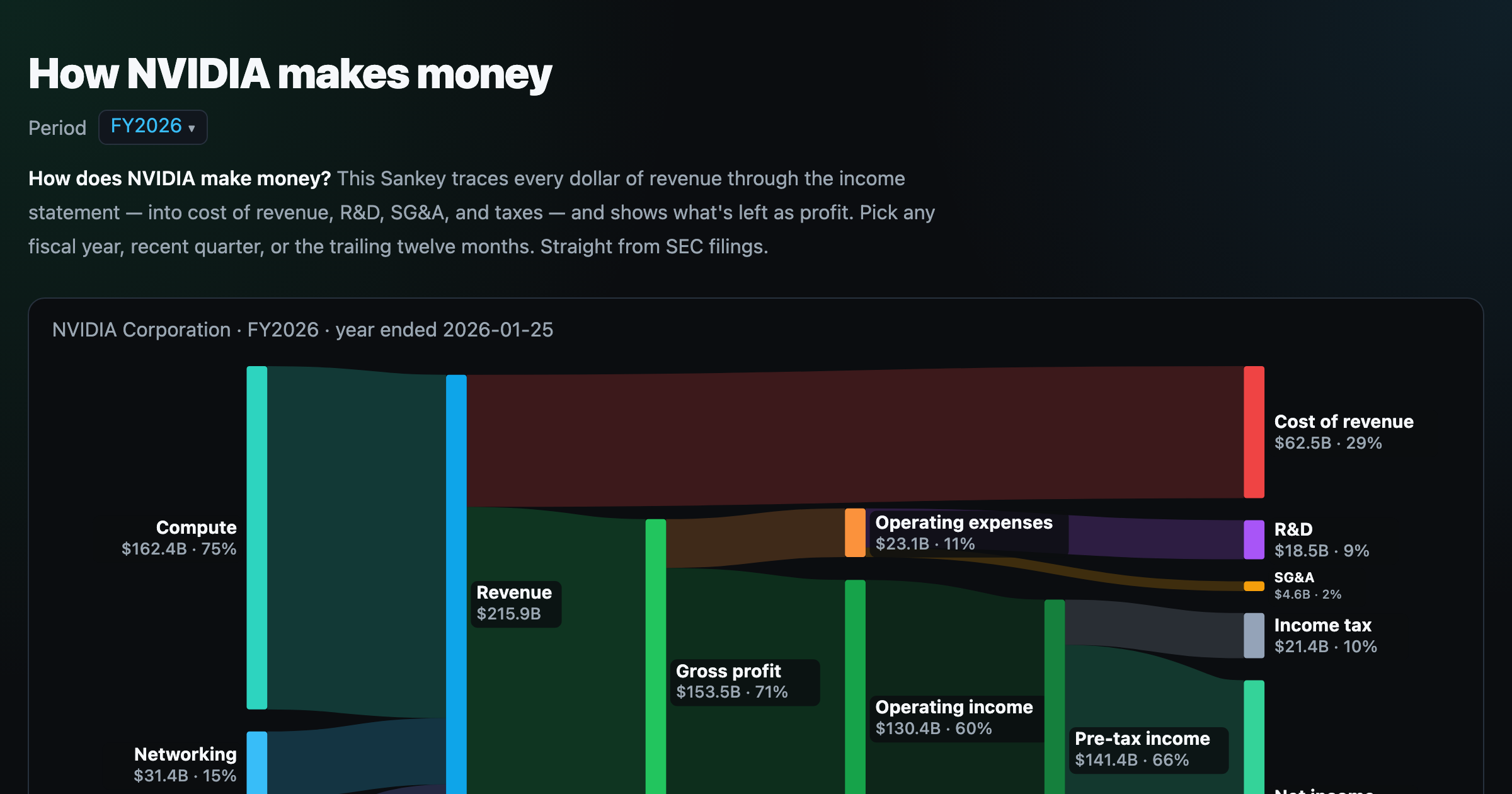
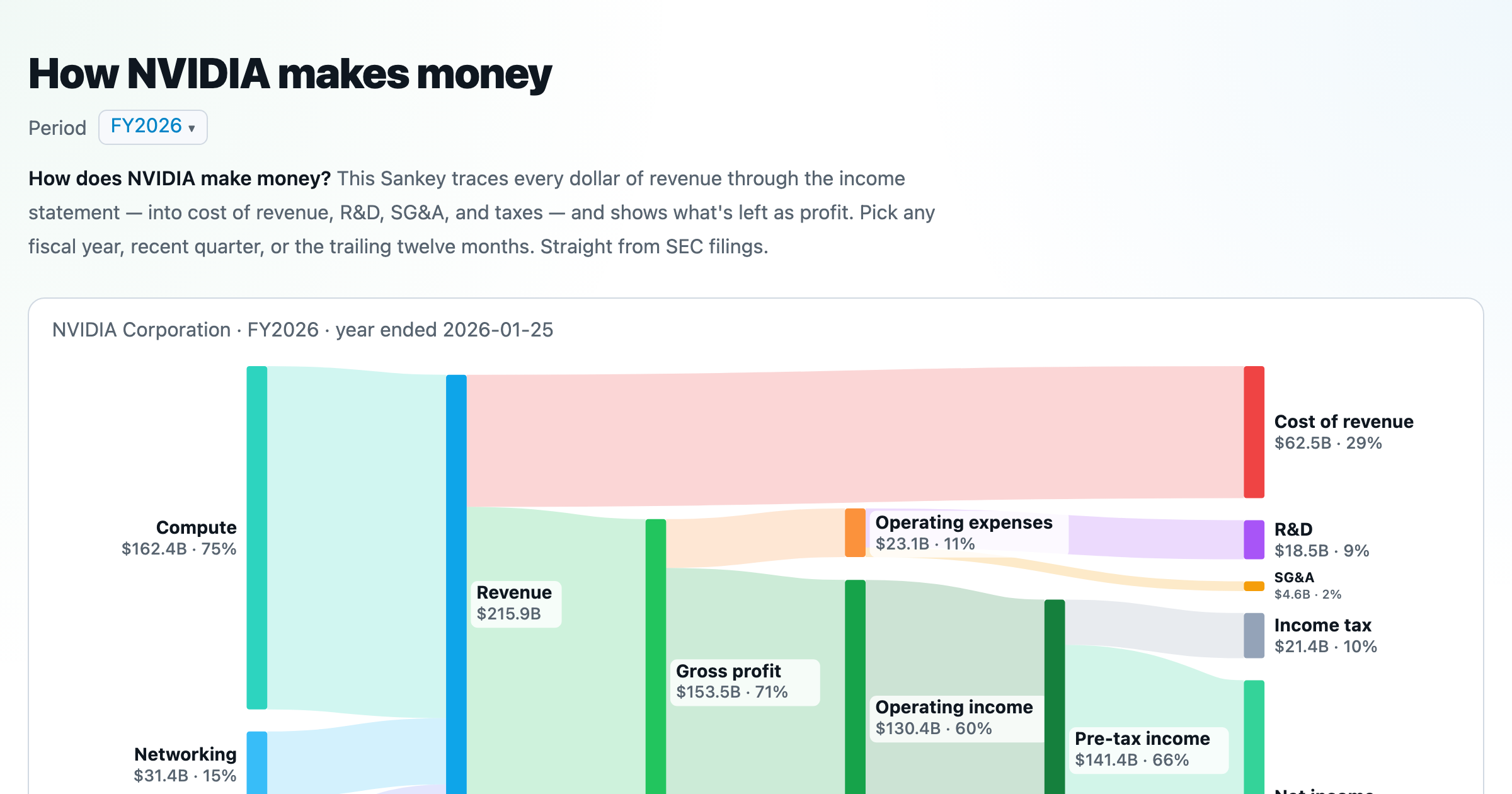
Follow a company's revenue through its income statement as a Sankey — costs, taxes, and profit.
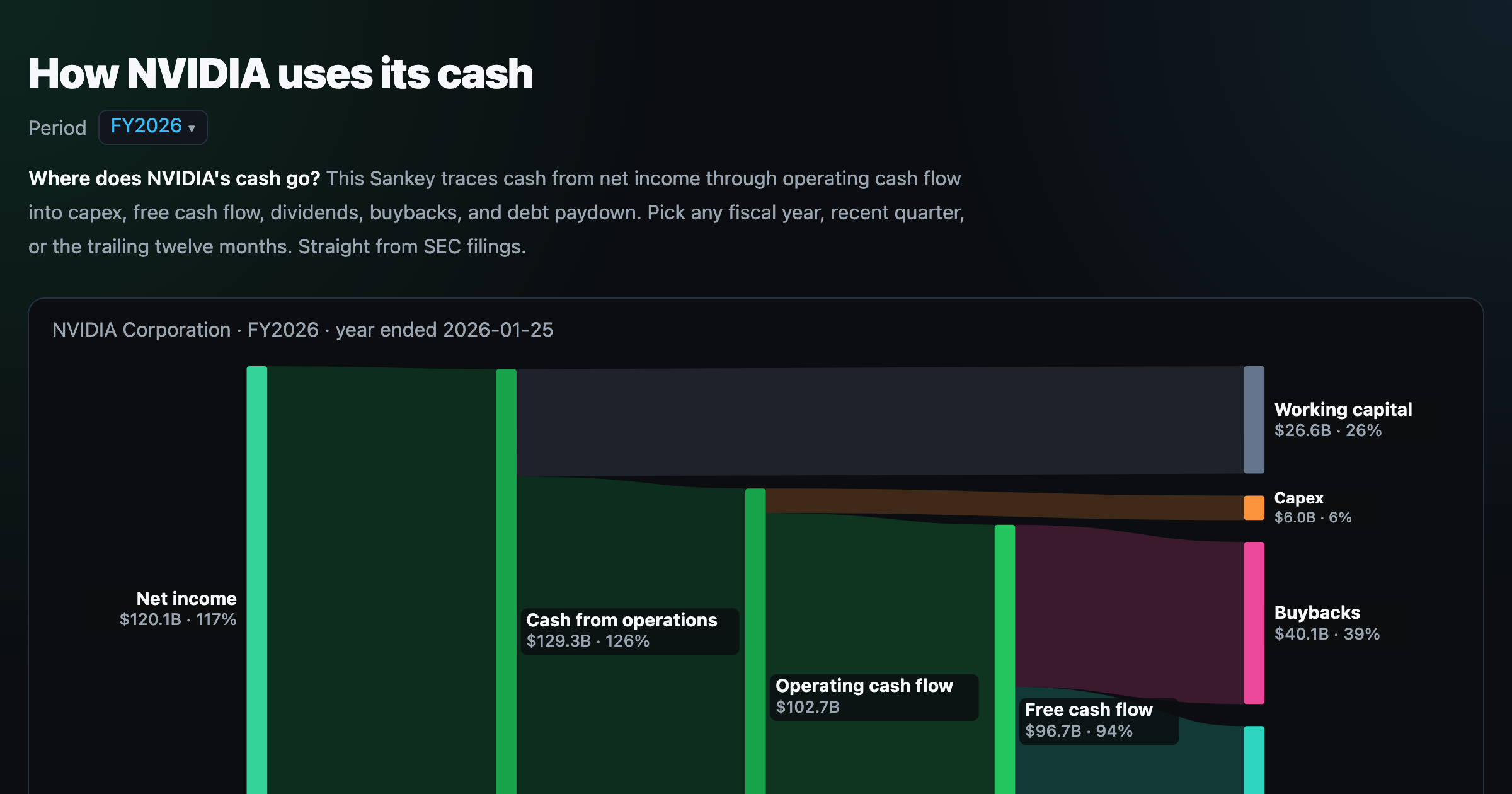
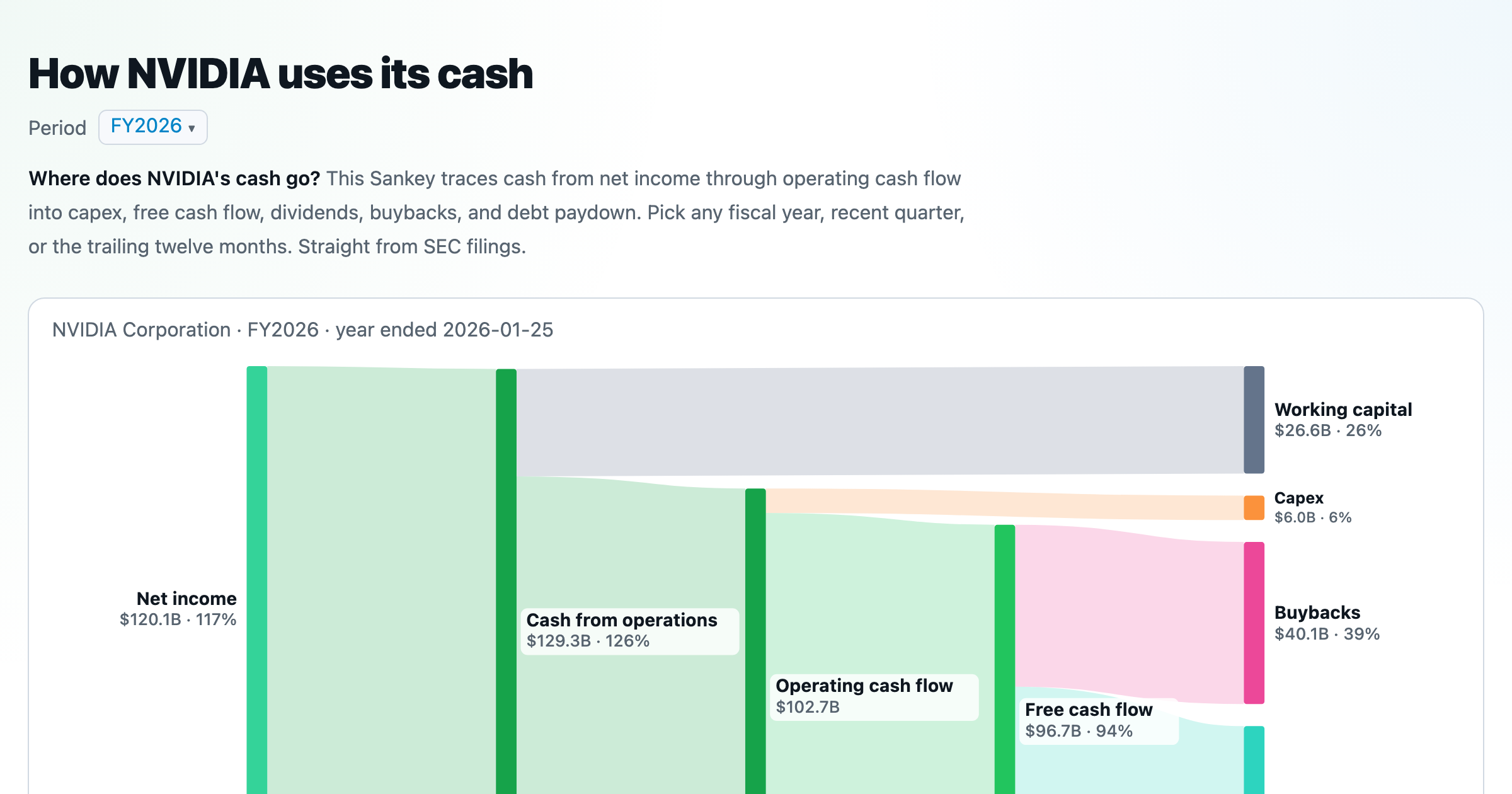
Follow a company's cash from net income through operating cash flow into capex, buybacks, and dividends.
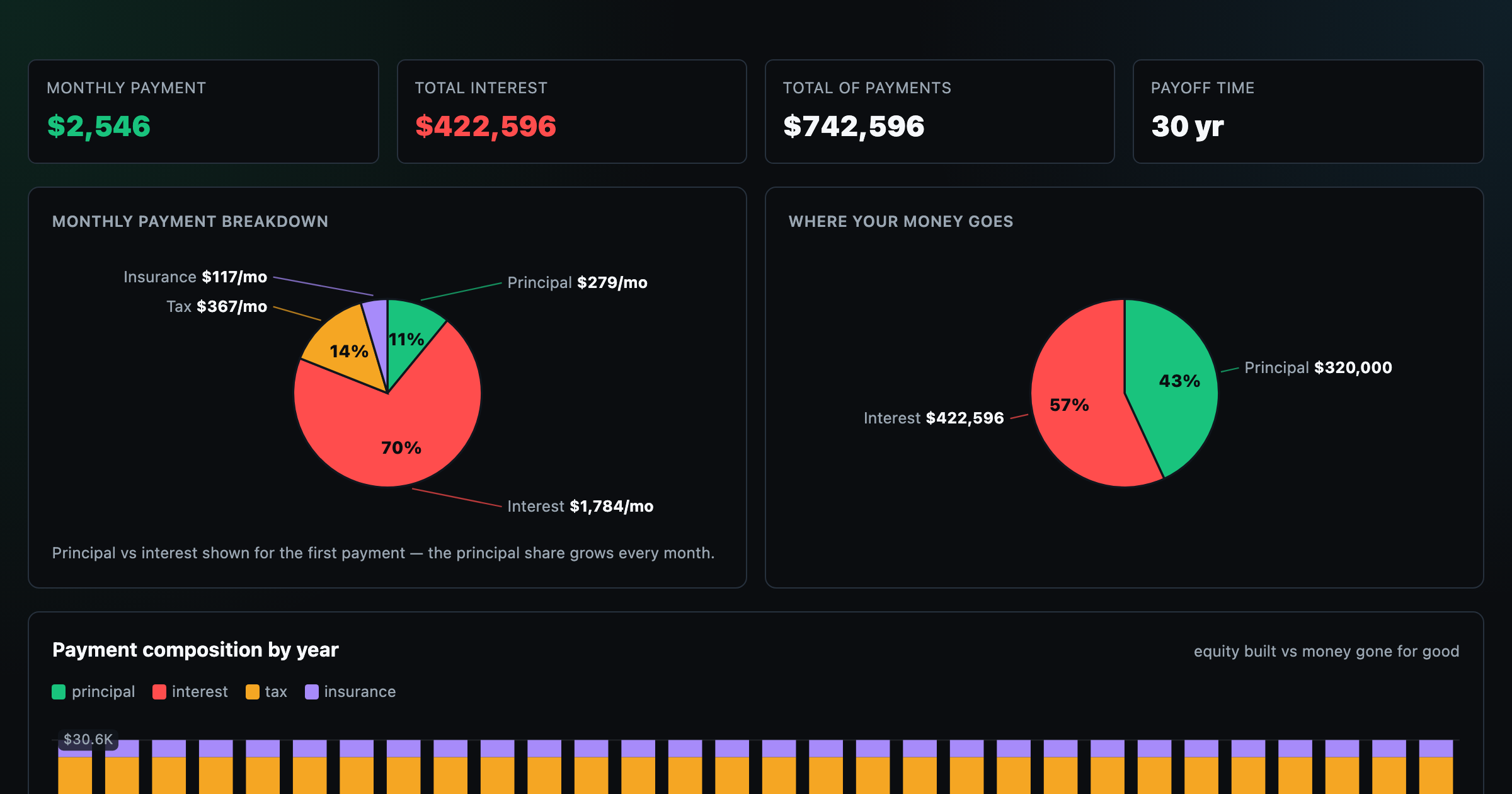
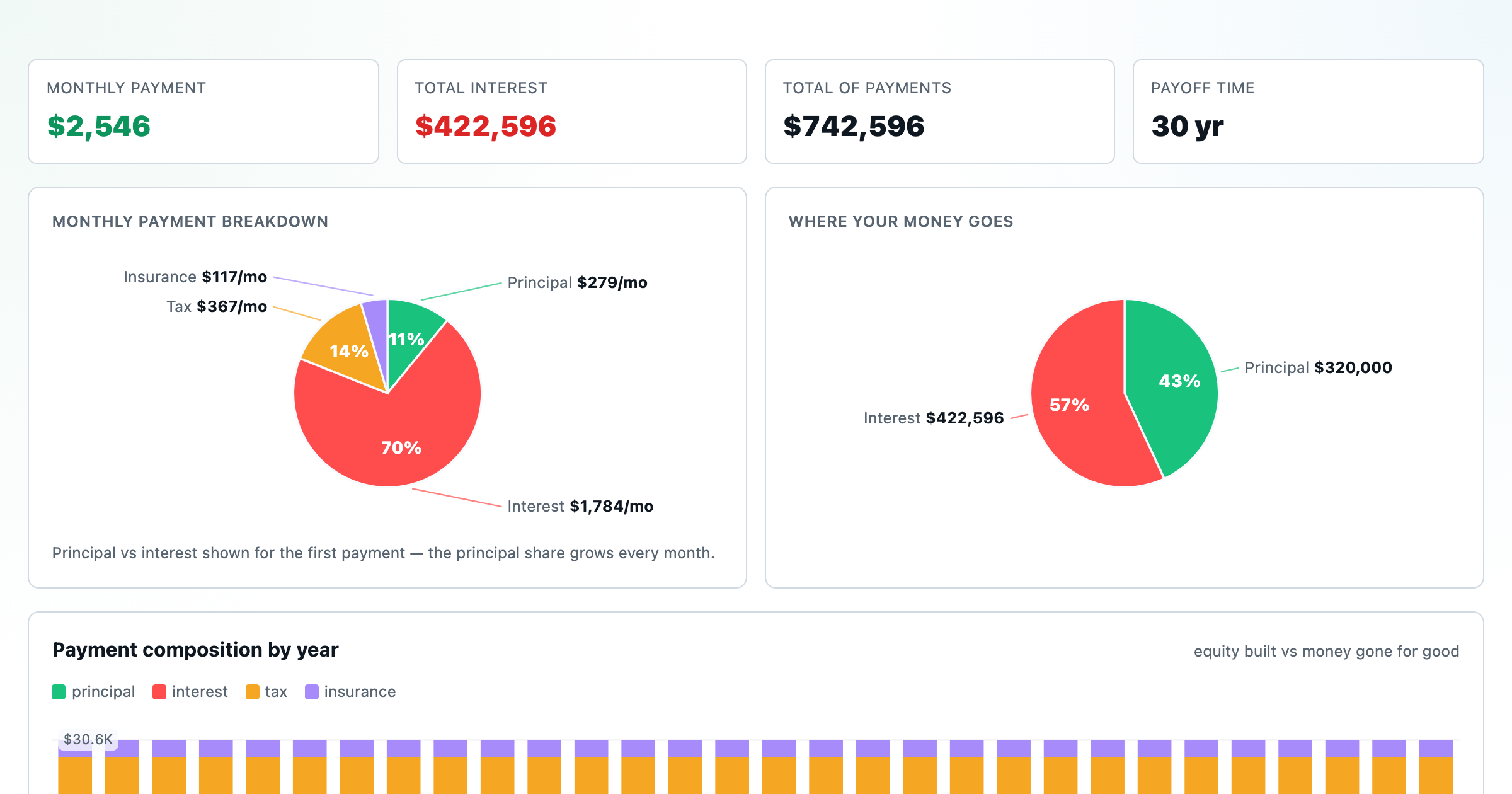
Monthly payment, principal vs interest by year, and the balance paydown — with extra-payment savings.
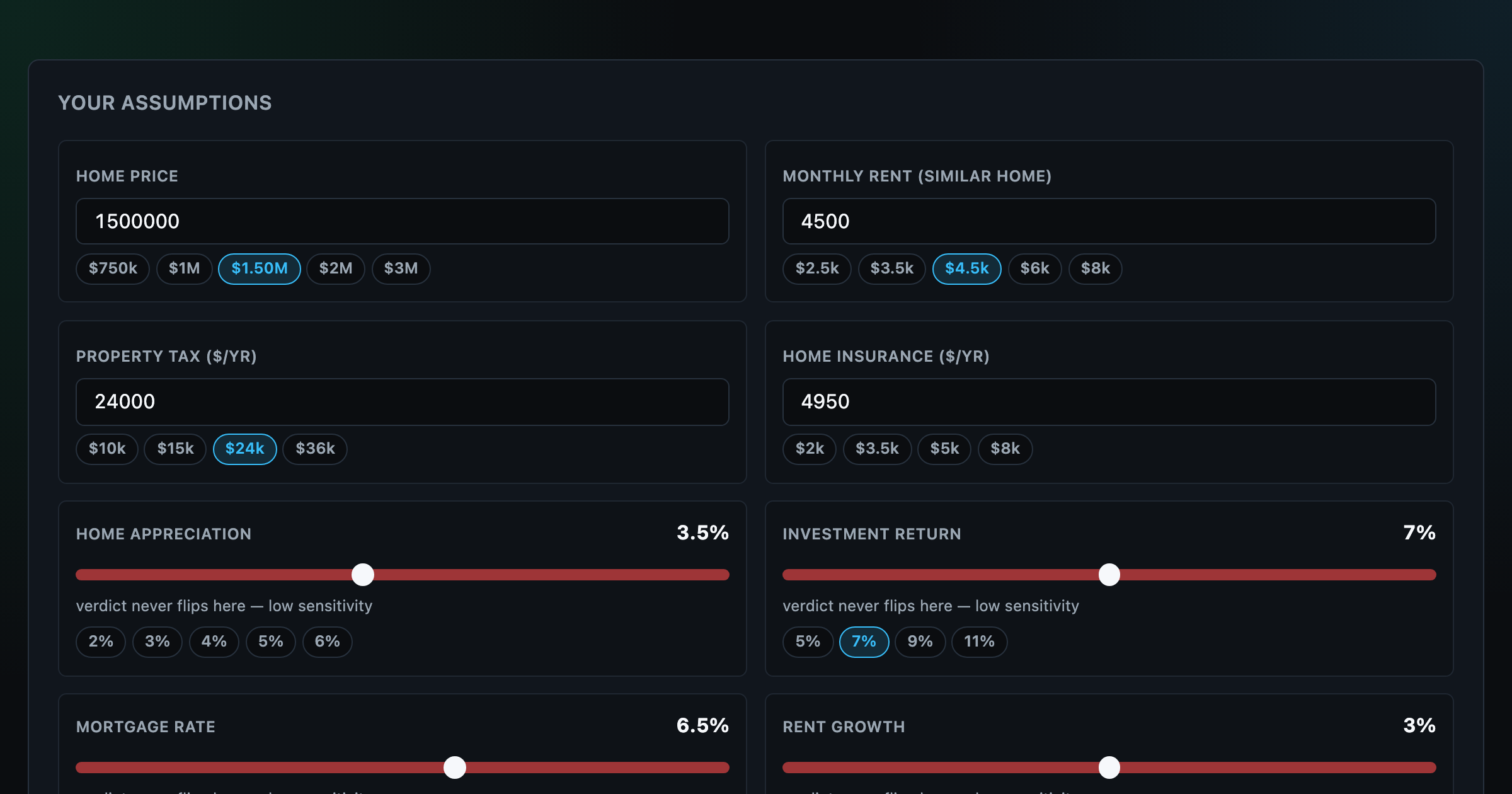
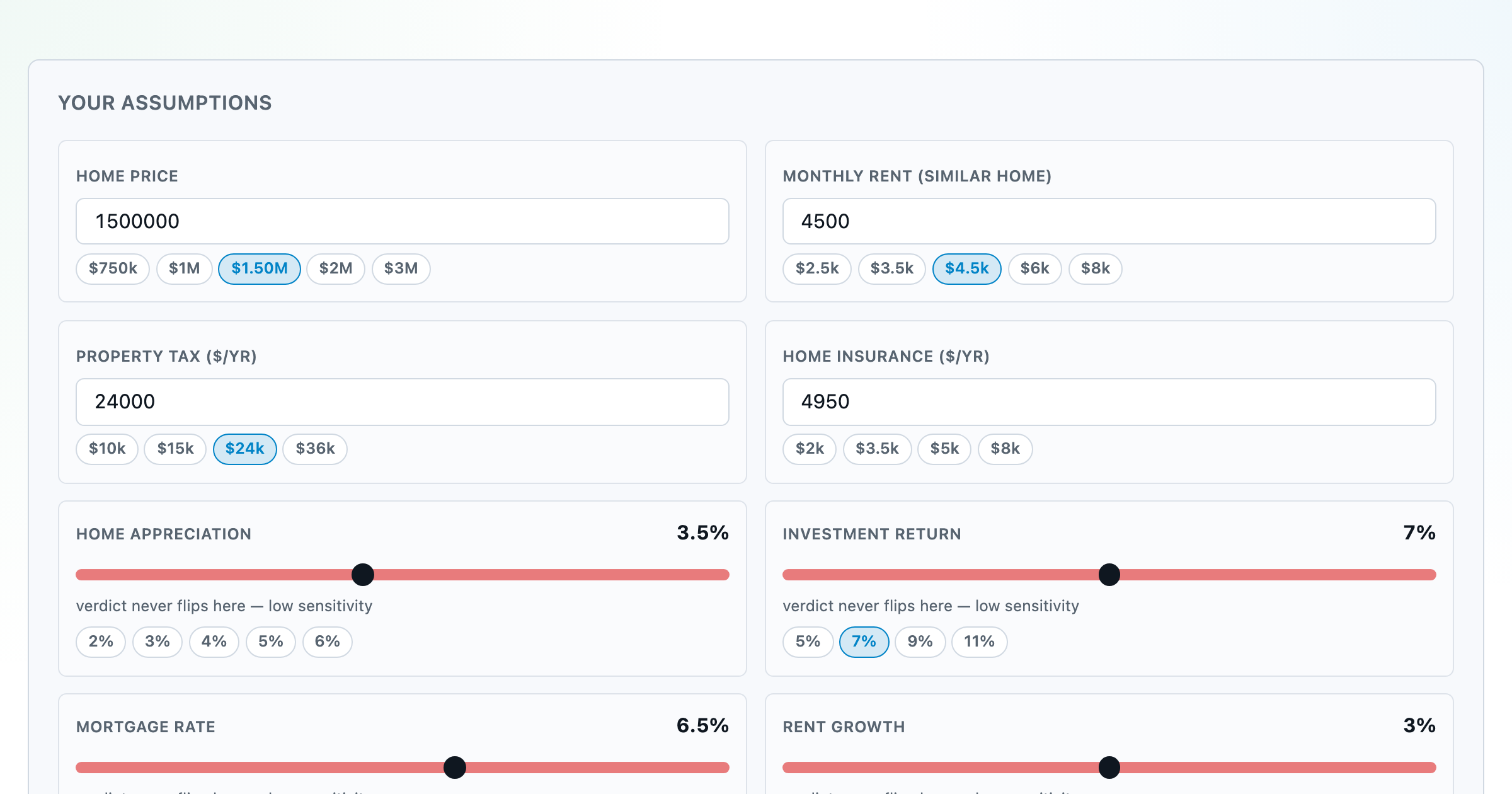
Should you rent or buy? Net-wealth verdict with sensitivity analysis of every assumption.
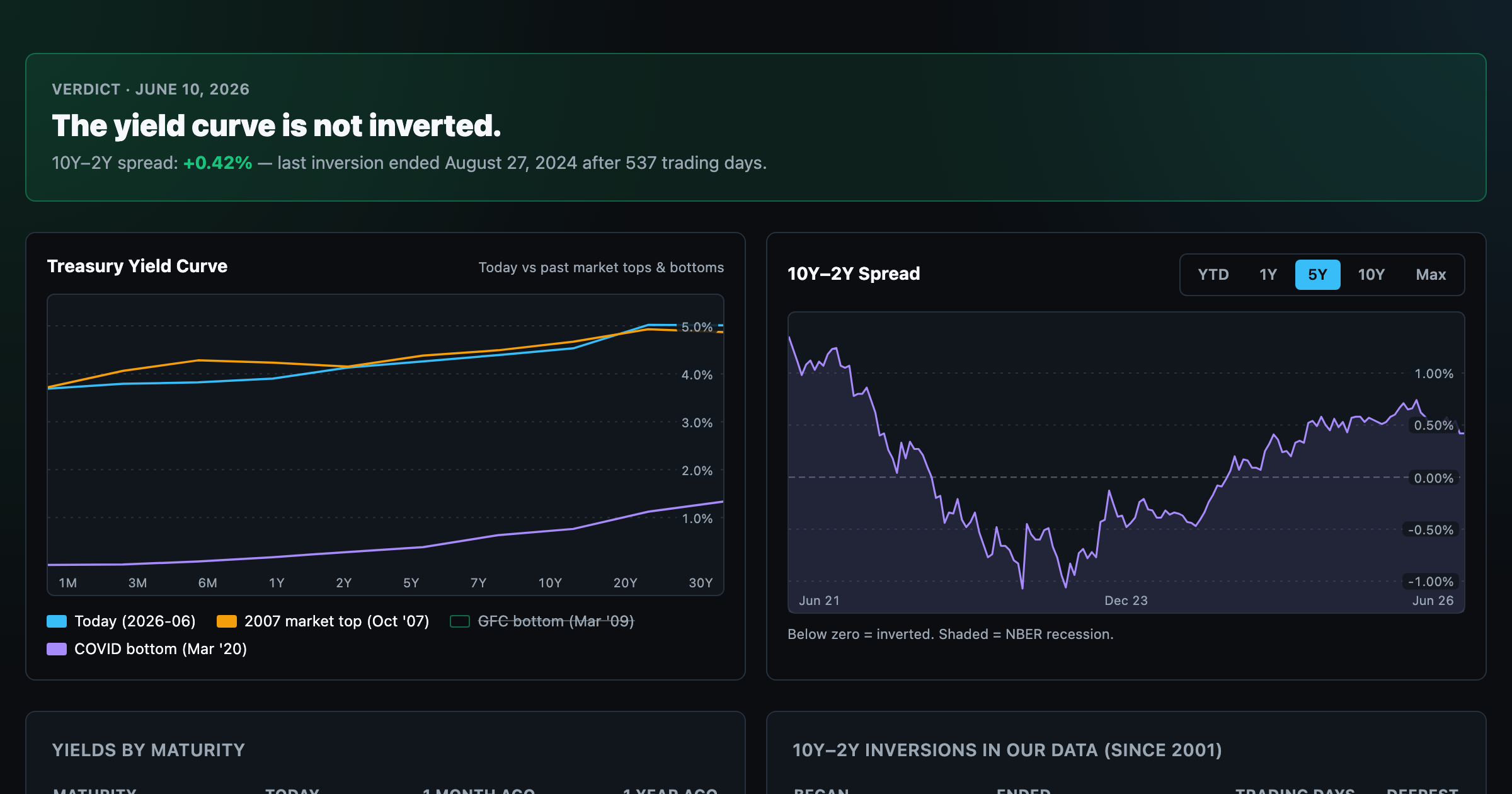
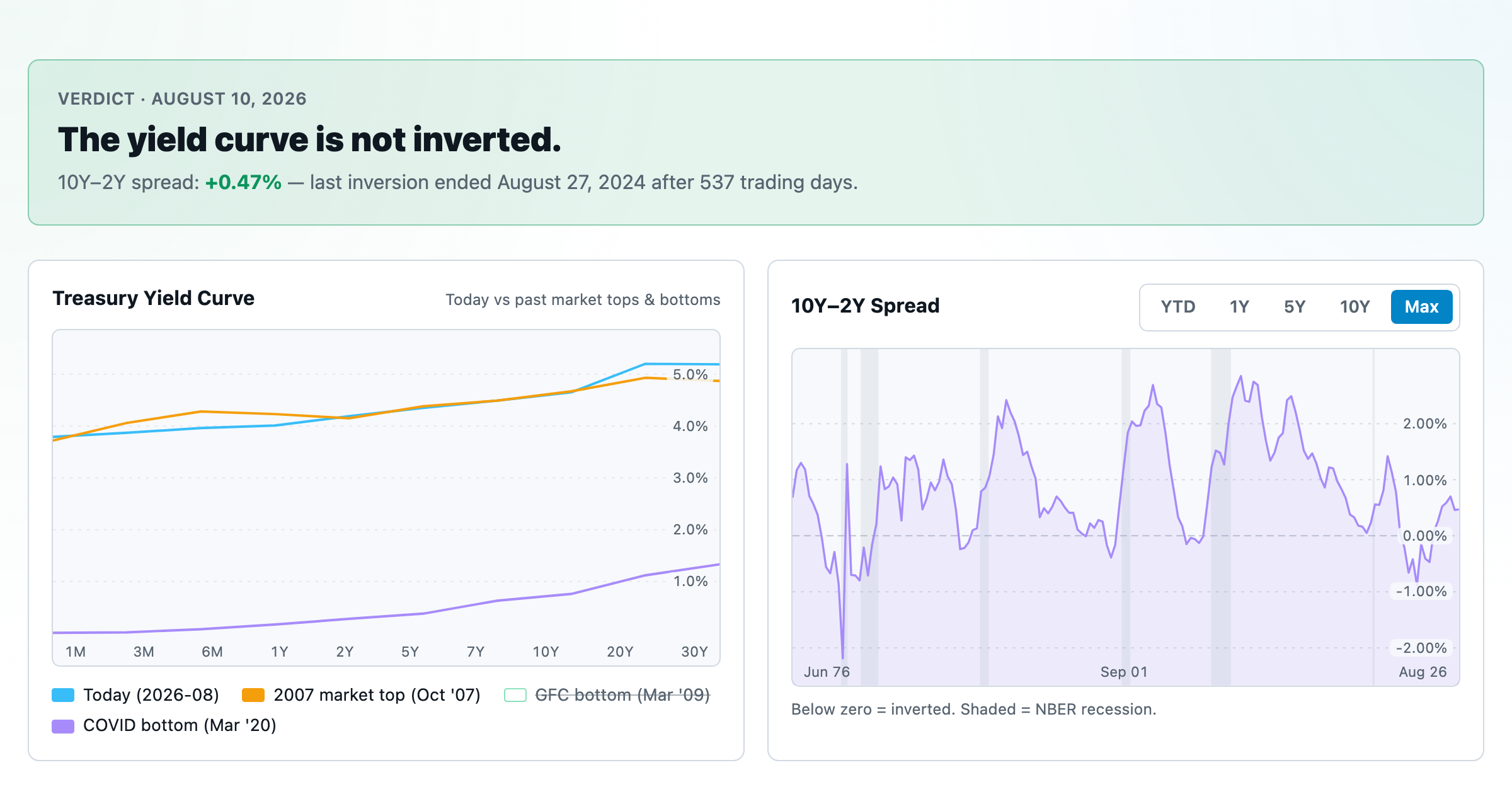
Live term structure, the 10Y–2Y spread, and every inversion episode.