
If you invested in
A $1,000 investment in Taiwan Semiconductor Manufacturing Co. (ADR) (TSM) in January 2016 would be worth $19,426 as of July 2026 with dividends reinvested — 32.9% a year. Use the dropdowns above to try any amount, ticker, or starting month back to October 1997.
Over the same period, the same $1,000 would be worth $4,545 in the S&P 500 (SPY) and $7,377 in the Nasdaq-100 (QQQ). TSM beat both the S&P 500 and the Nasdaq-100 over that period.
Growth of $1,000 in TSM since January 2016#
monthlyTaiwan Semiconductor Manufacturing Co. (ADR) (TSM). Total return approximated via dividend- and split-adjusted closes (no taxes or fees). Not investment advice.
Growth of $1,000 in TSM by starting month#
$1,000 invested in TSM, by starting year#
| Invested in | Worth today | Same in QQQ | Multiple | Annualized |
|---|---|---|---|---|
| 2016 | $19,426 | $7,377 | 19.4× | 32.9% |
| 2017 | $14,046 | $6,099 | 14.0× | 32.4% |
| 2018 | $9,582 | $4,444 | 9.6× | 30.8% |
| 2019 | $11,541 | $4,439 | 11.5× | 39.1% |
| 2020 | $8,049 | $3,380 | 8.0× | 38.4% |
| 2021 | $3,573 | $2,337 | 3.6× | 26.5% |
| 2022 | $3,540 | $2,015 | 3.5× | 33.1% |
| 2023 | $4,682 | $2,465 | 4.7× | 57.1% |
| 2024 | $3,843 | $1,730 | 3.8× | 74.5% |
| 2025 | $2,074 | $1,373 | 2.1× | 67.4% |
Methodology#
Investments are assumed made at the first trading day's close of the chosen year. "Dividends reinvested" uses split- and dividend-adjusted closes (a standard total-return approximation; taxes and fees excluded). "Price-only" uses split-adjusted closes. TSM data begins October 1997; values as of July 2026 and refresh daily. Past performance does not predict future returns; not investment advice.
See the live TSM chart and fundamentals on the TSM quote page or compare with the same investment in SPY.
FAQ
- How much would $1,000 invested in TSM be worth today?
- A $1,000 investment in Taiwan Semiconductor Manufacturing Co. (ADR) (TSM) in January 2016 would be worth about $19,426 as of July 2026, with dividends reinvested. That works out to about 32.9% a year.
- How far back does the TSM calculation go?
- TSM data begins October 1997. You can pick any starting month from then to the present and see what your investment would be worth today.
- Does this include dividends?
- Yes. The default "dividends reinvested" view uses split- and dividend-adjusted closing prices — a standard total-return approximation that excludes taxes and fees. A price-only view (split-adjusted, no dividends) is also available.
More visualizations
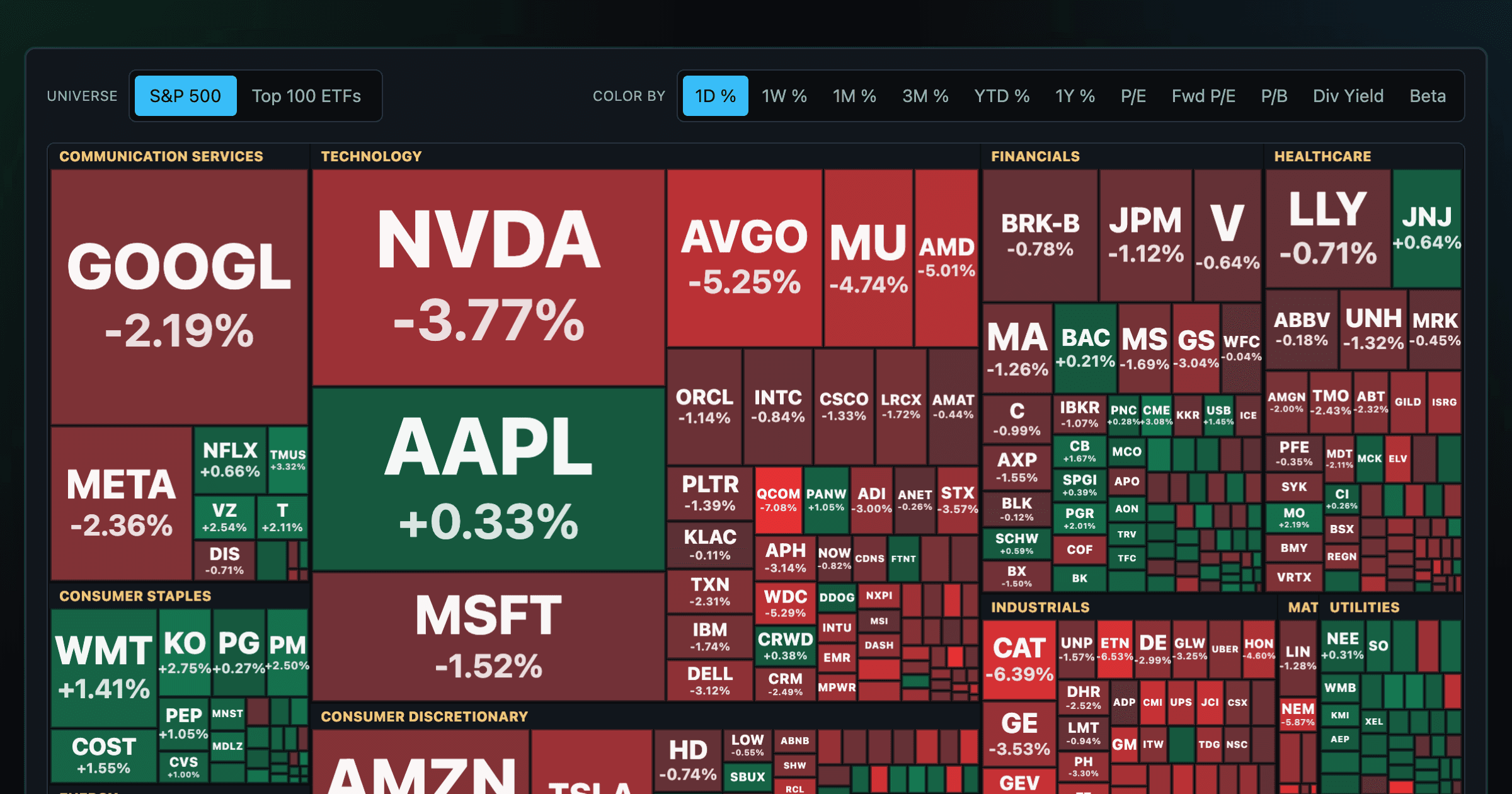
Every S&P 500 company sized by market cap — color by return or valuation.
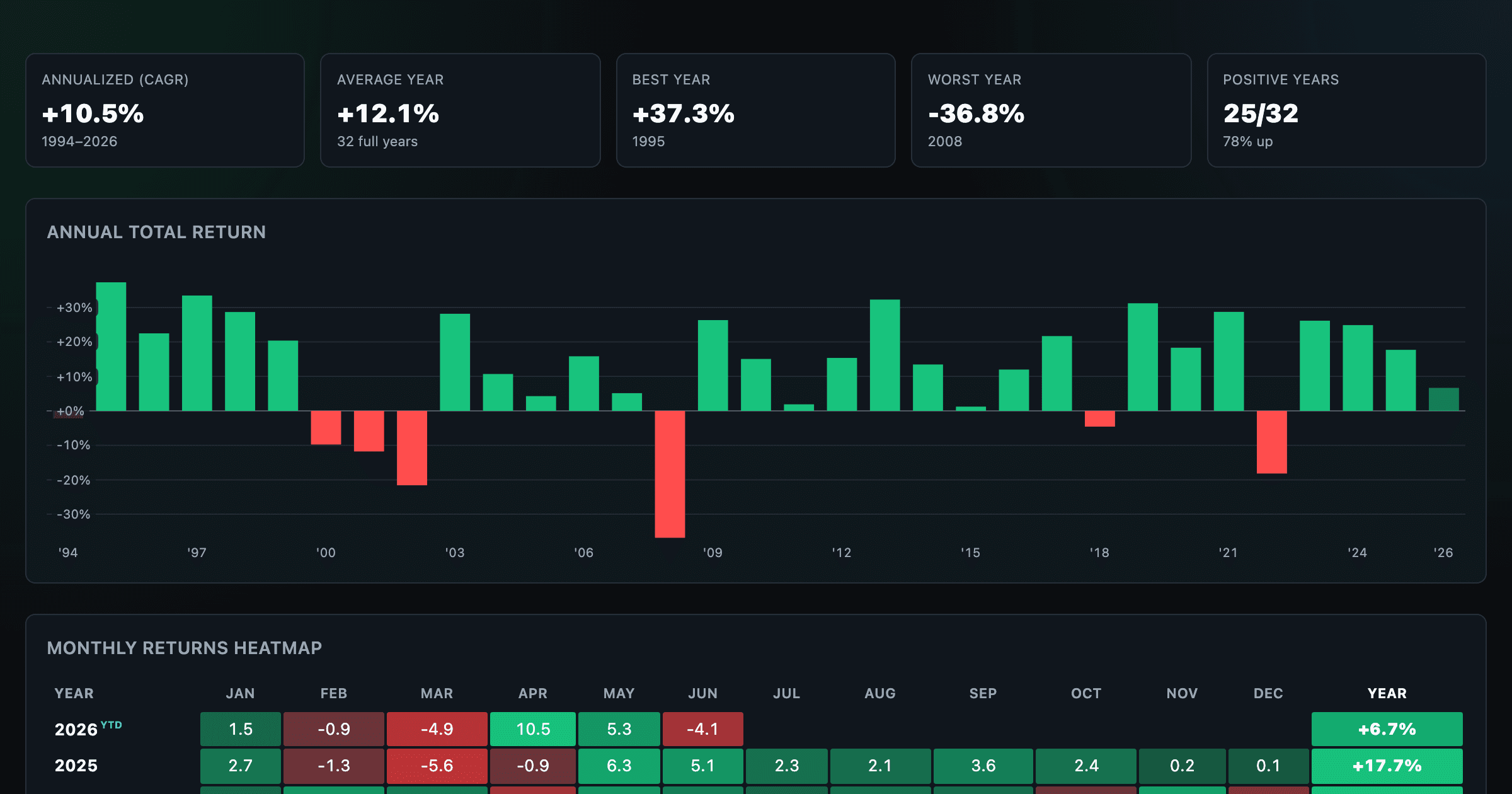
S&P 500 returns by year, month, week and trailing period — total or price return.
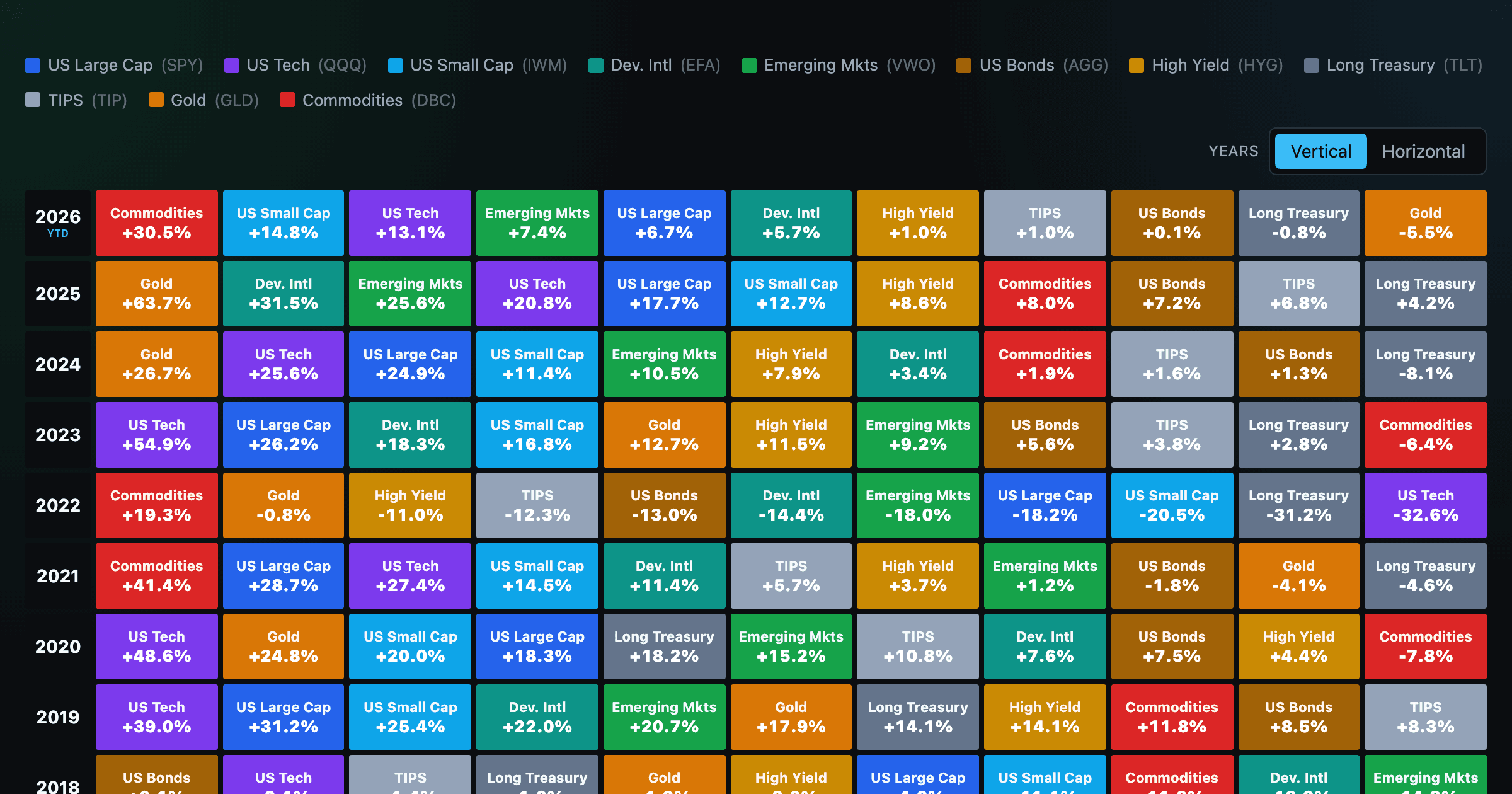
Asset-class returns ranked year by year — the Callan chart / asset allocation quilt.
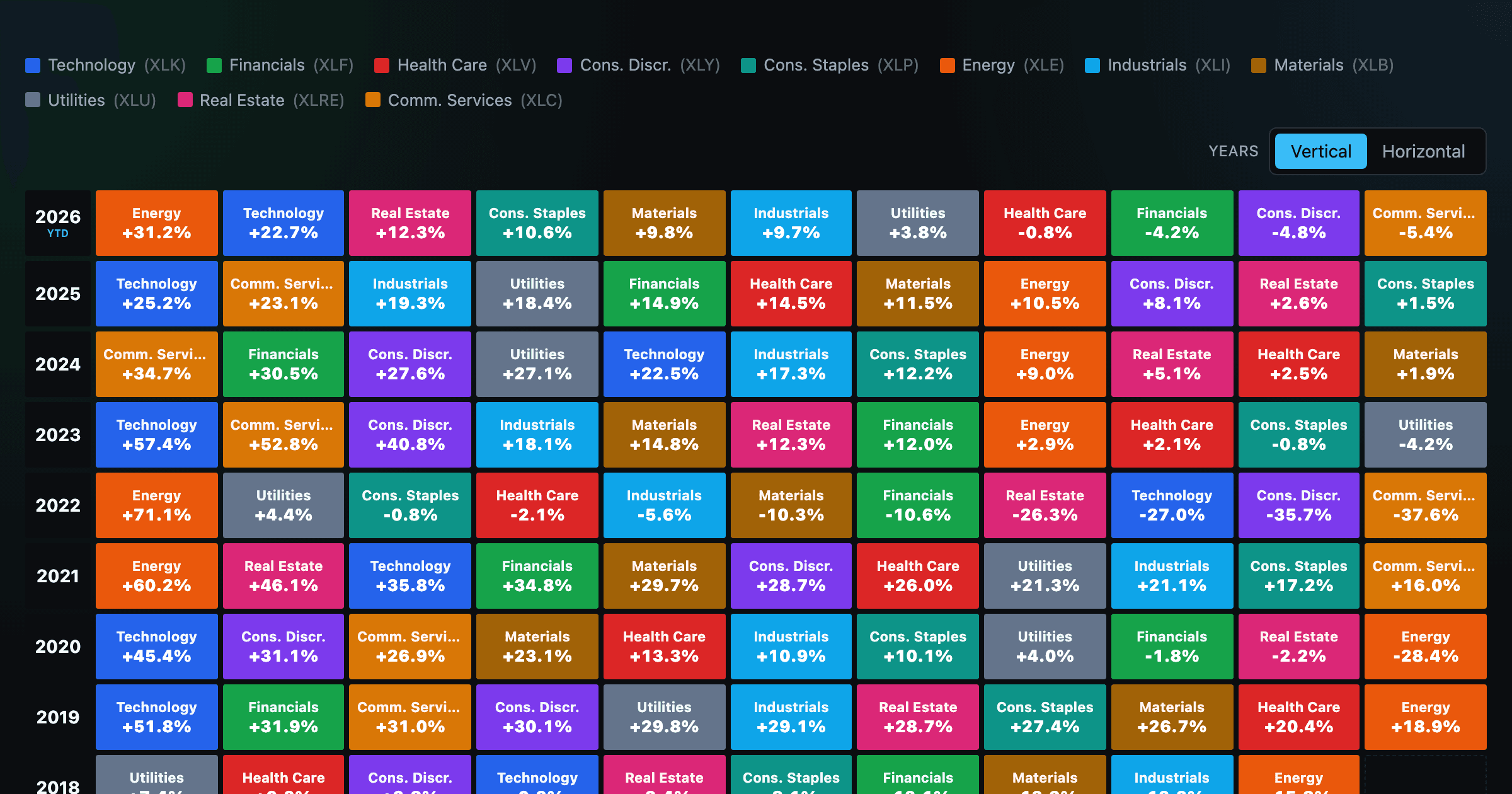
The 11 S&P 500 sectors ranked year by year — a sector quilt chart, back to 1999.
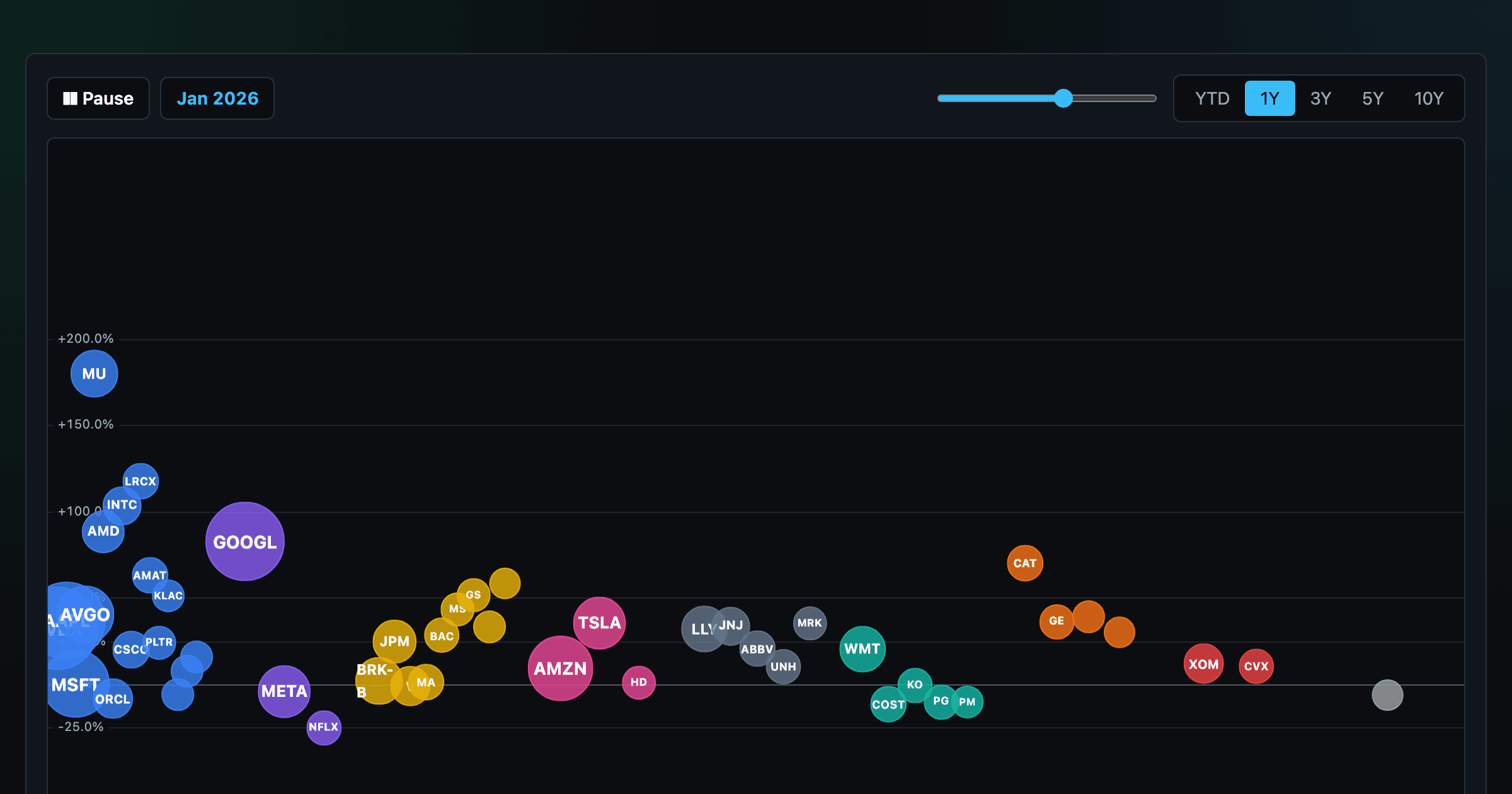
The biggest US companies as animated bubbles, rising and falling with their total return over time.
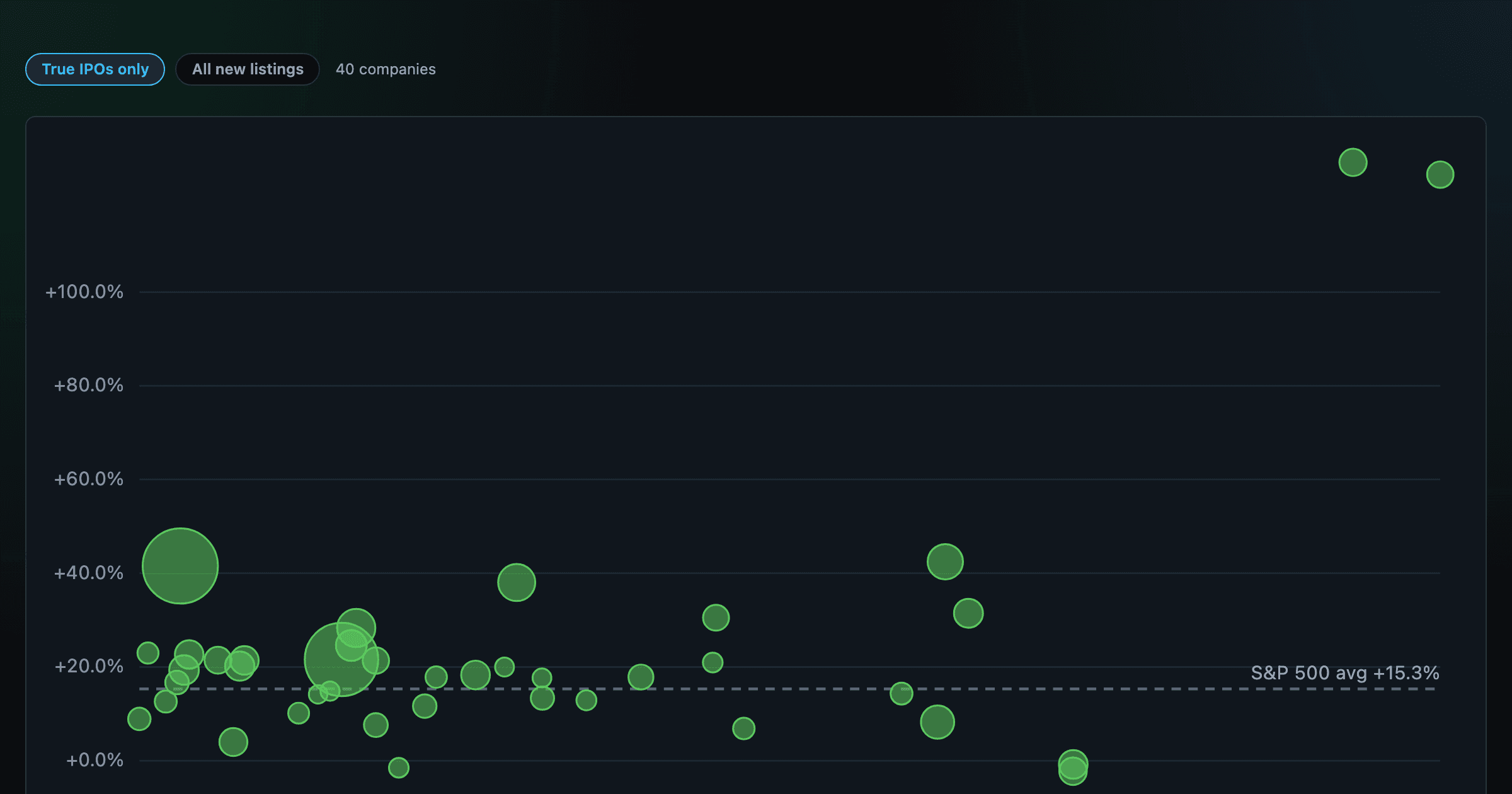
How recent stock-market debuts have performed since listing — annualized, vs the S&P 500, by IPO vs spin-off.
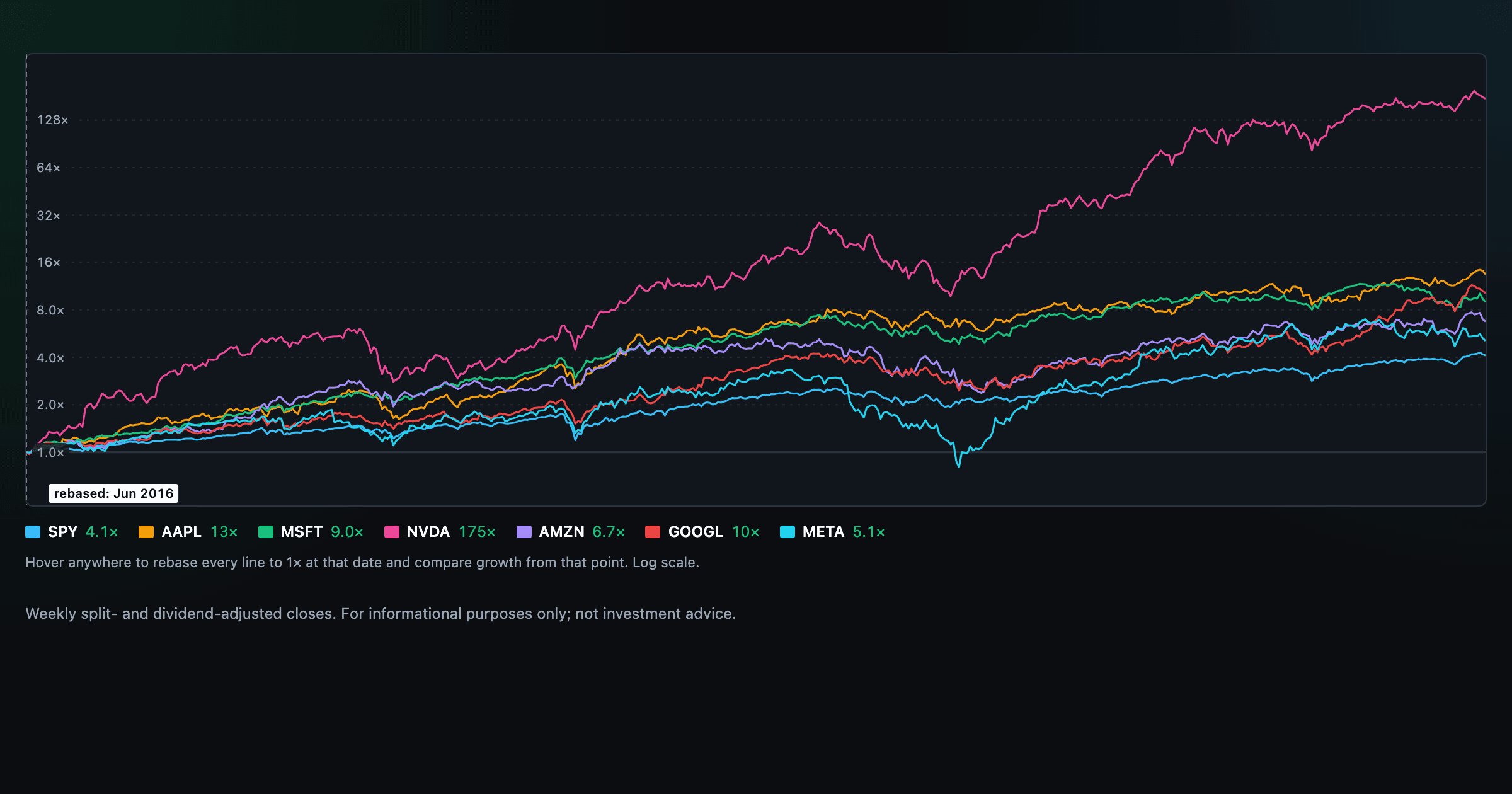
Compare megacaps vs the S&P 500, rebased to 1× at any date you hover.
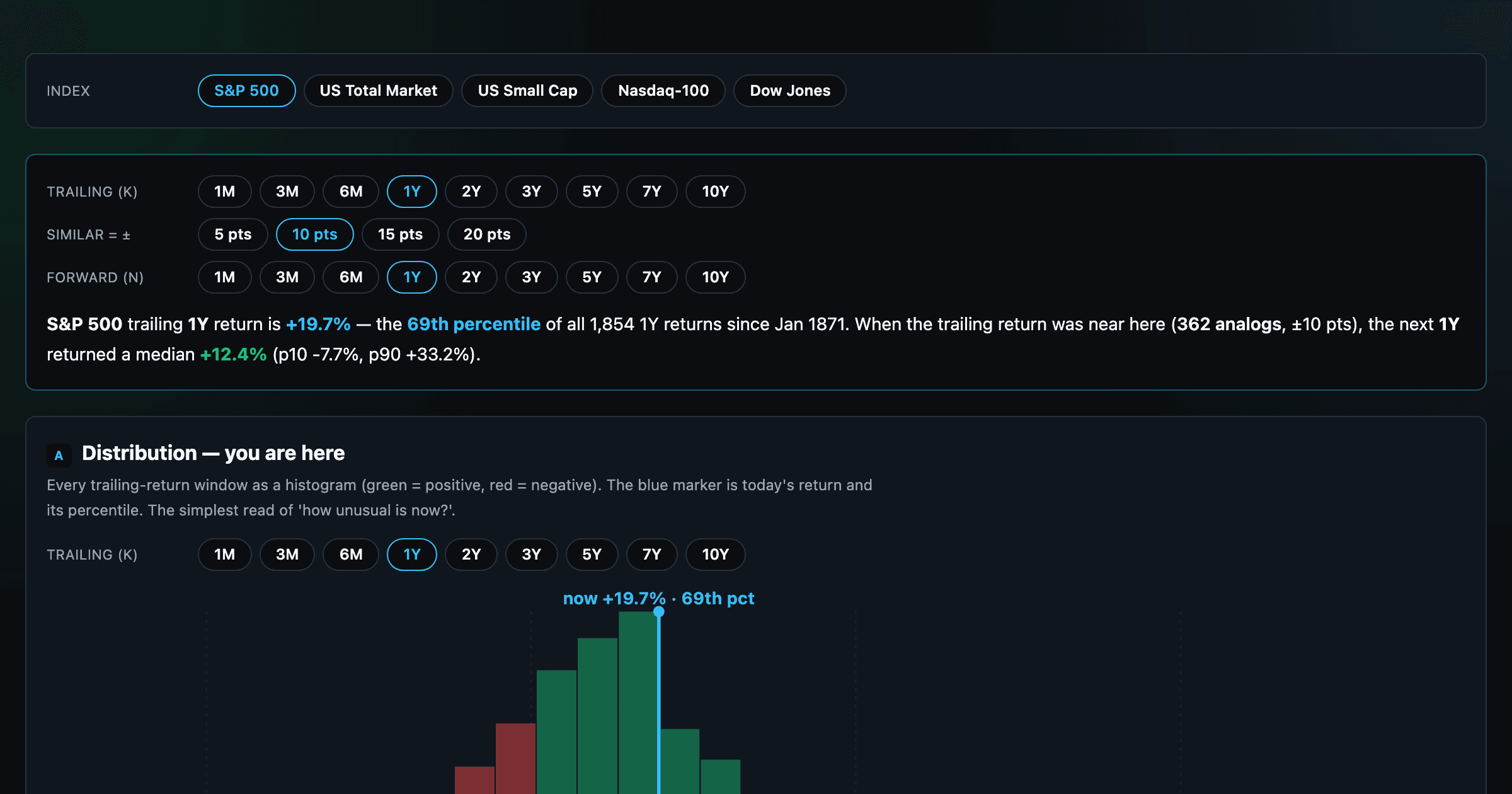
Where today's S&P 500 return ranks against all history — and the forward returns that followed similar moments.
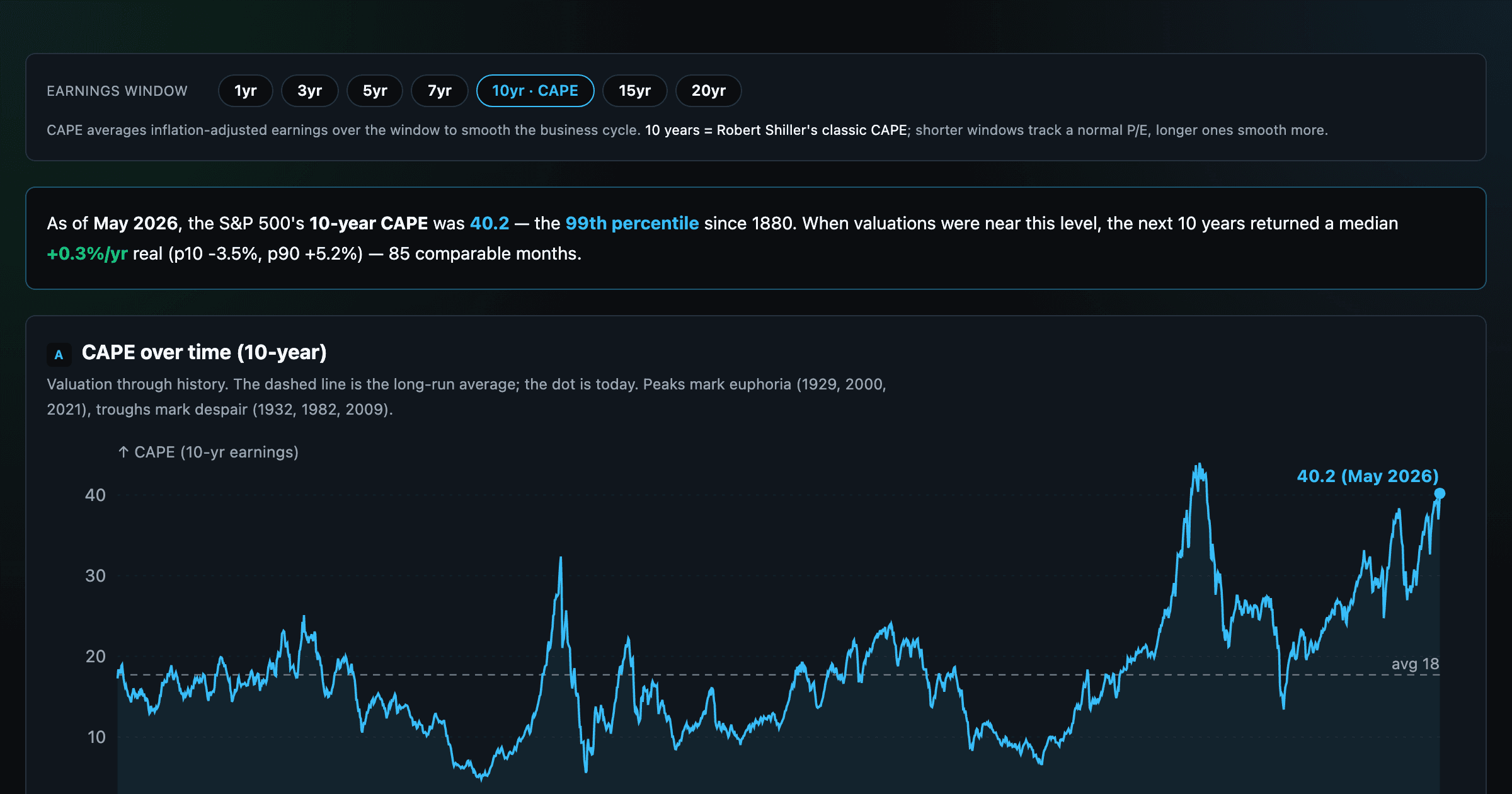
Is the market expensive? The Shiller CAPE back to 1871 and what valuations have meant for the next decade.
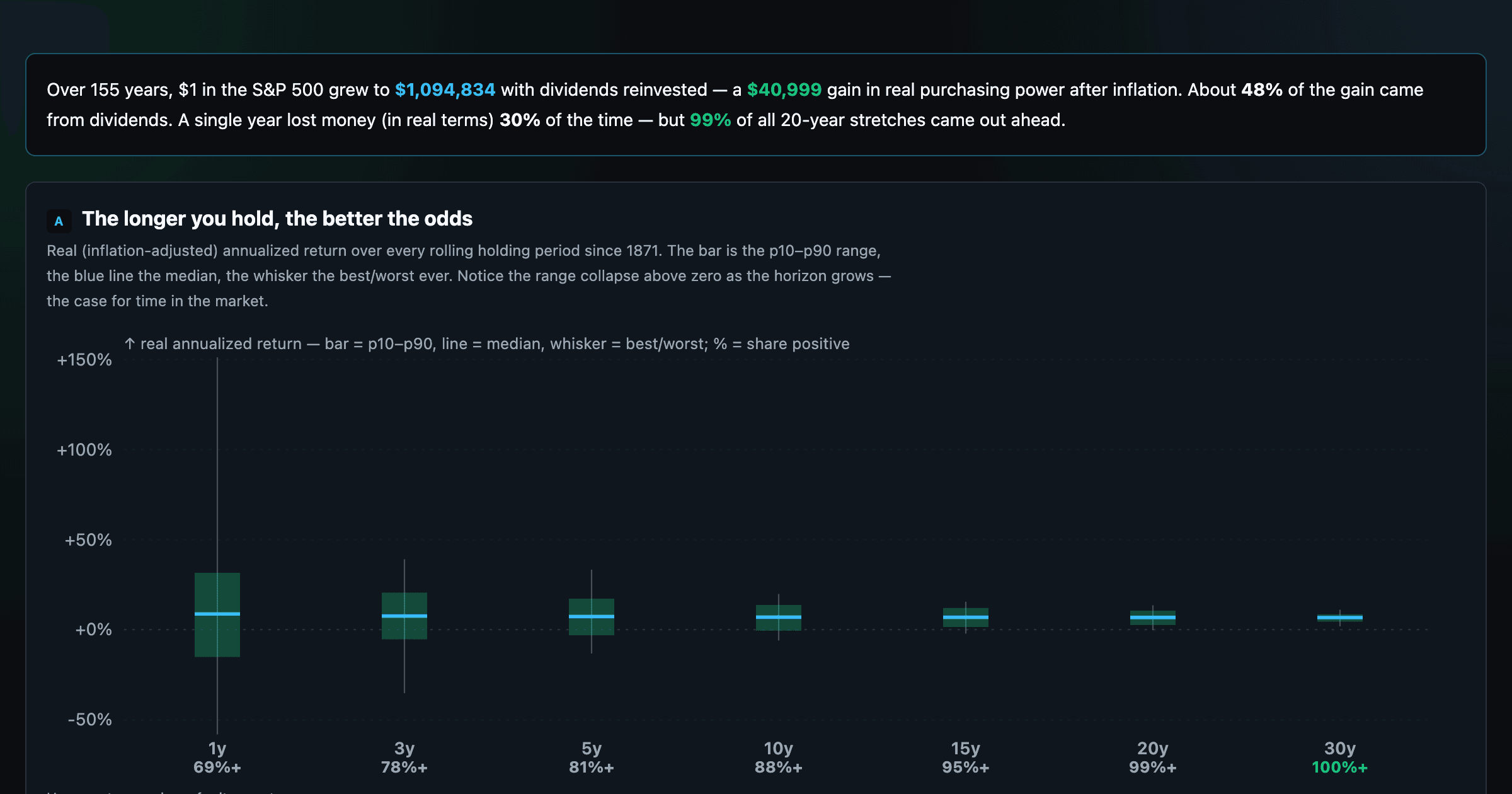
The S&P 500 since 1871 — odds of gain by holding period, real drawdowns, and the growth of $1.
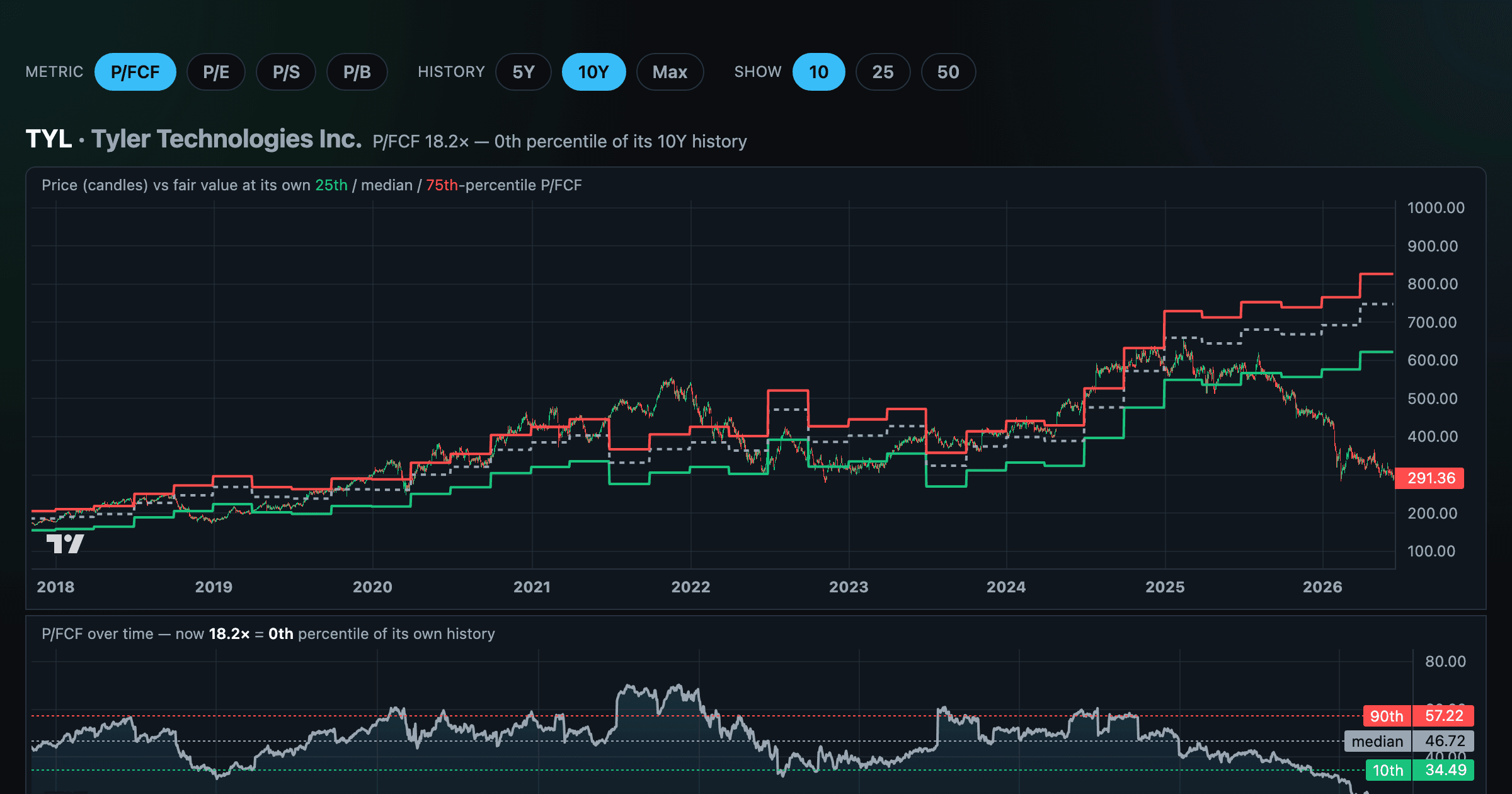
Stocks trading cheapest relative to their own P/E, P/FCF, P/S, or P/B history — with fair-value bands.
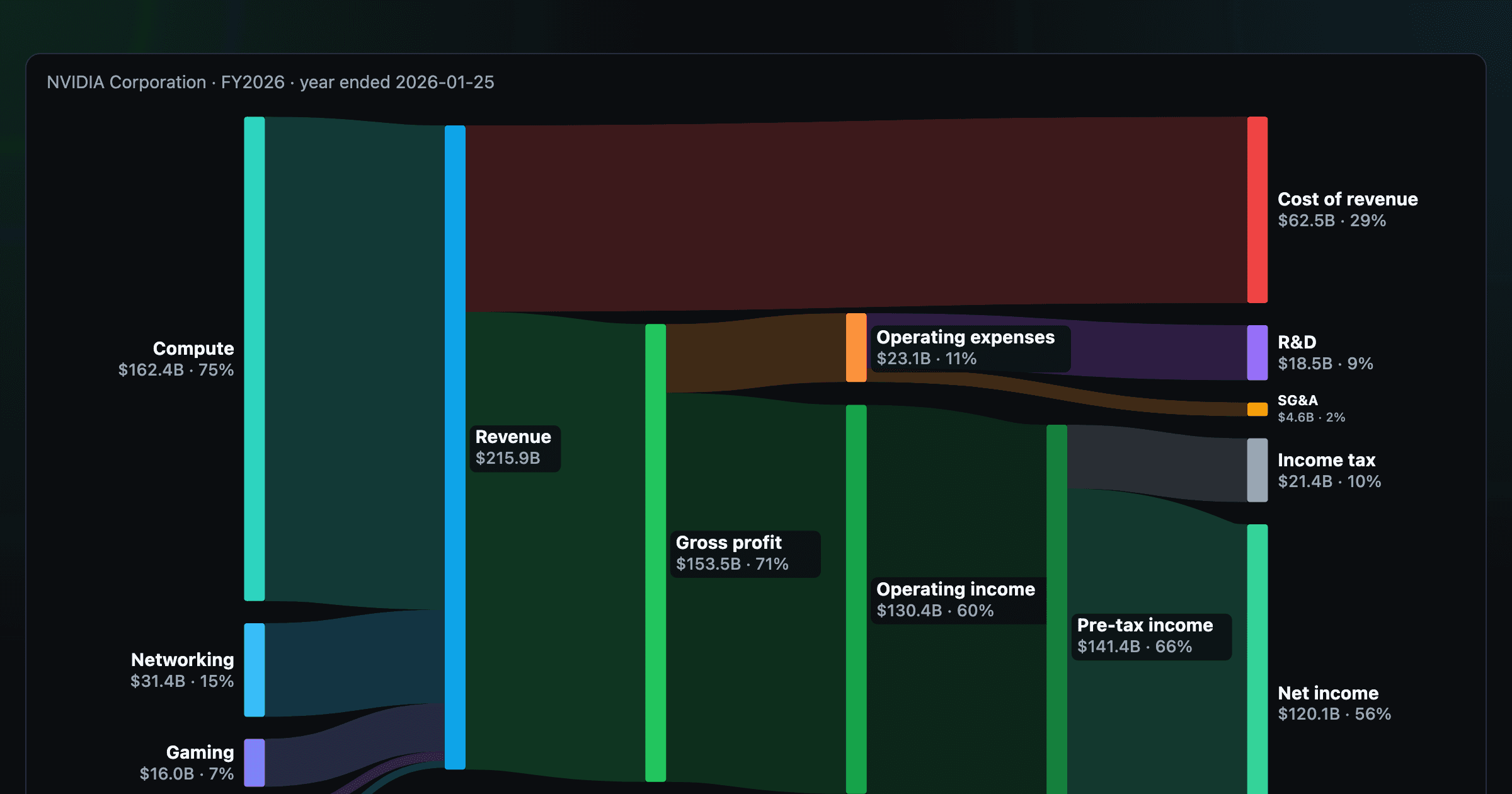
Follow a company's revenue through its income statement as a Sankey — costs, taxes, and profit.
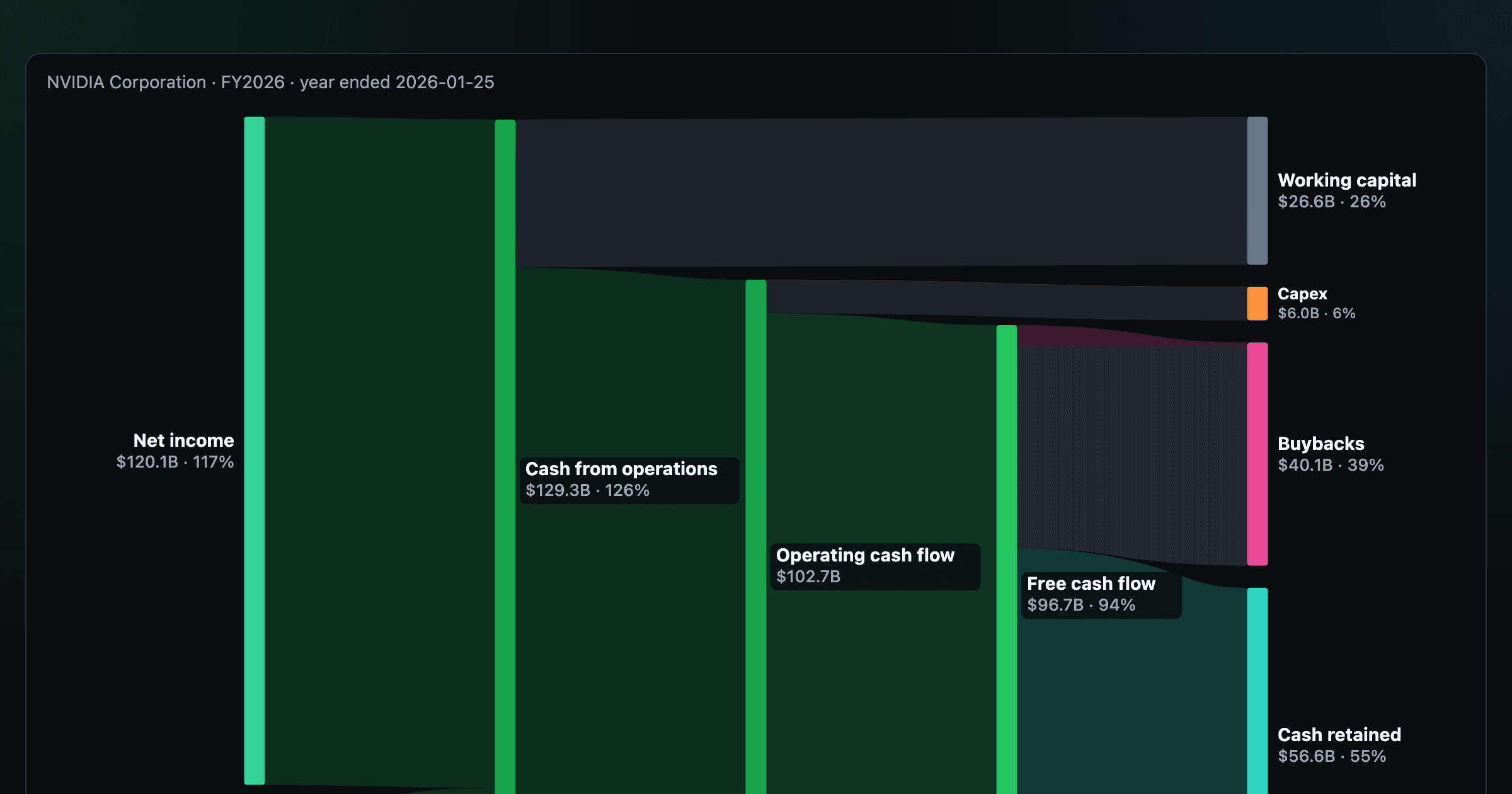
Follow a company's cash from net income through operating cash flow into capex, buybacks, and dividends.
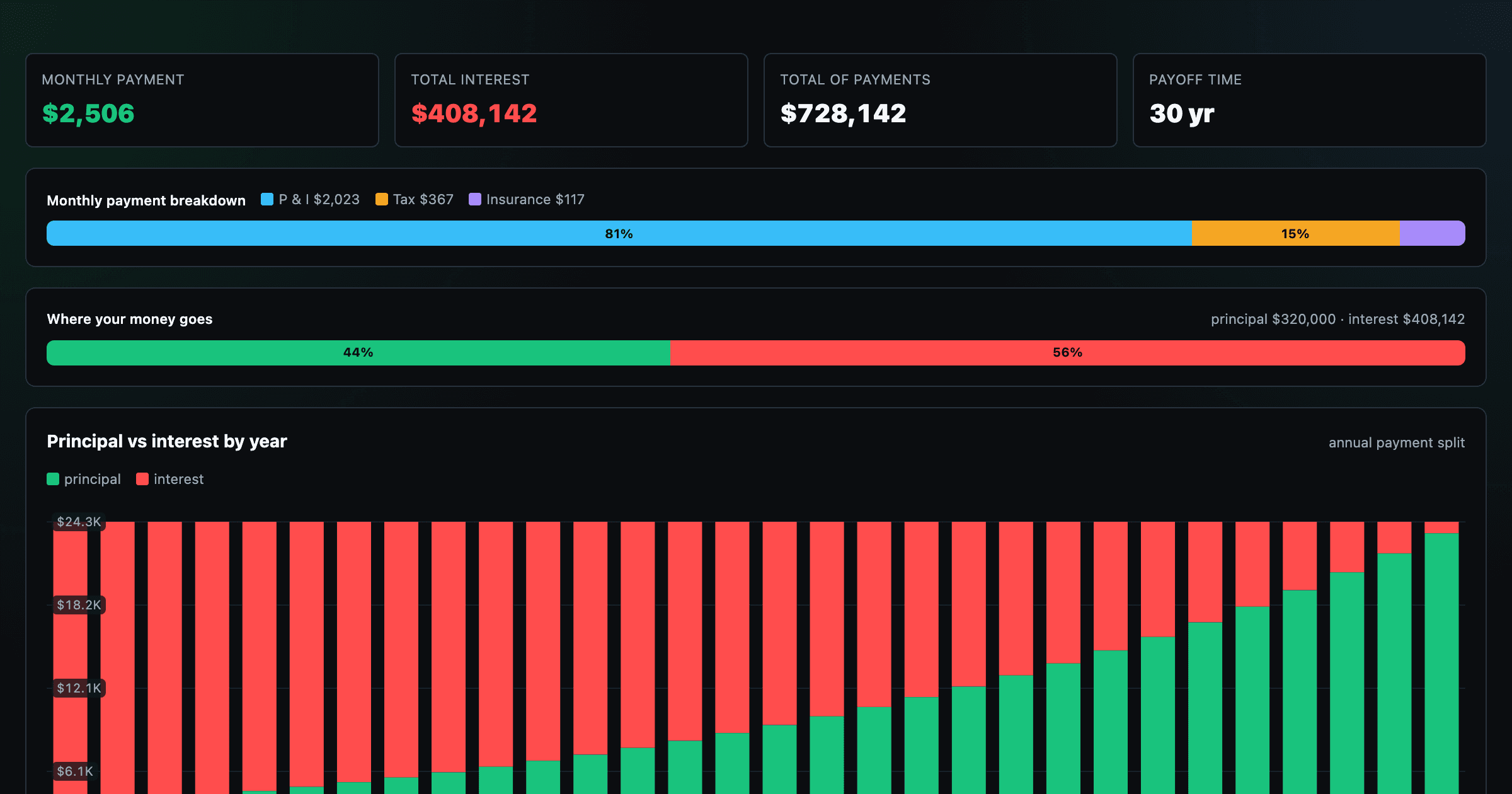
Monthly payment, principal vs interest by year, and the balance paydown — with extra-payment savings.
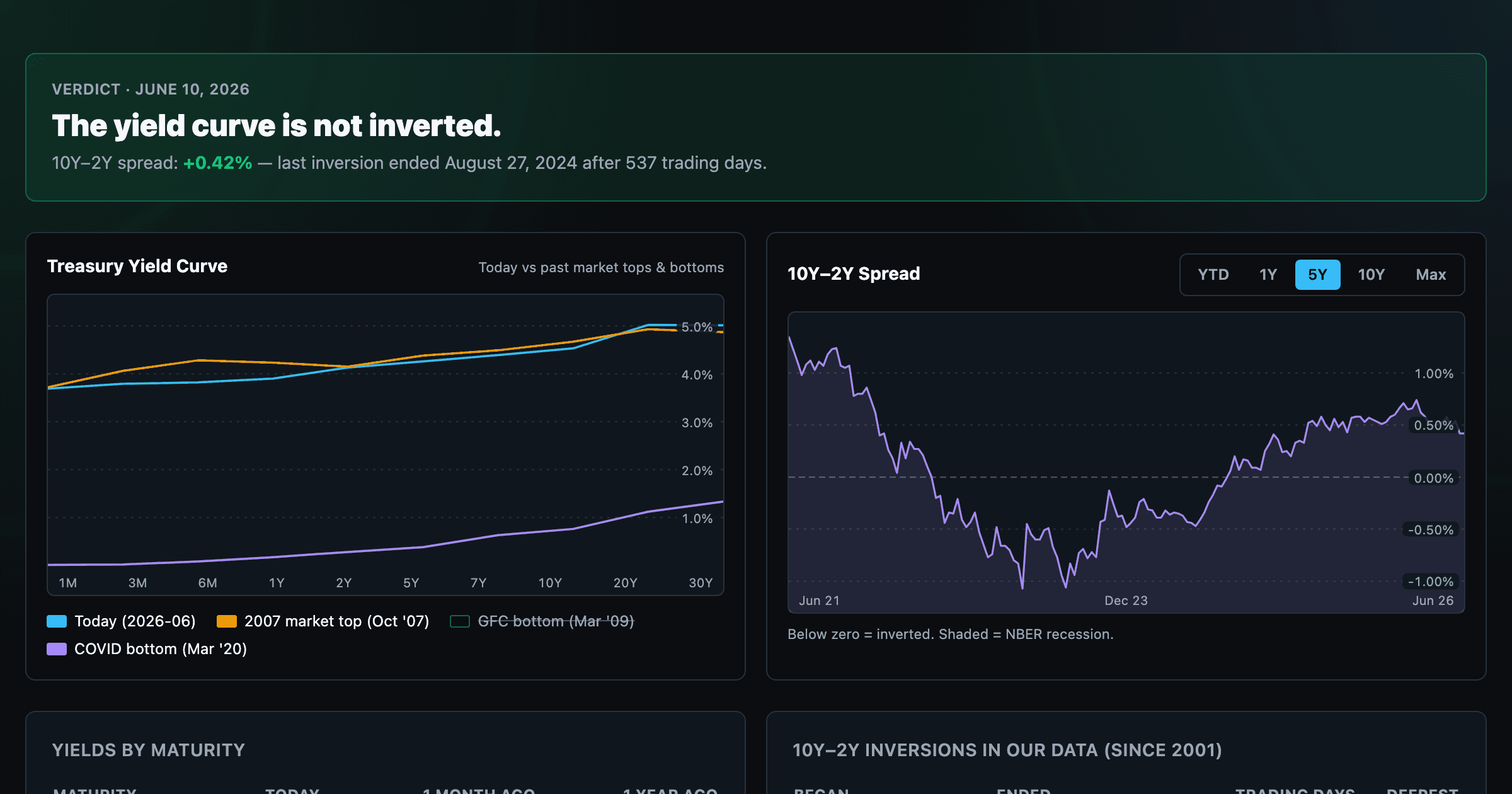
Live term structure, the 10Y–2Y spread, and every inversion episode.